The district and sessions court in Panaji has acquitted Goa revenue minister Atanasio ‘Babush’ Monserrate in a 2016 rape and human trafficking case, bringing to a close a trial that lasted more than ten years.
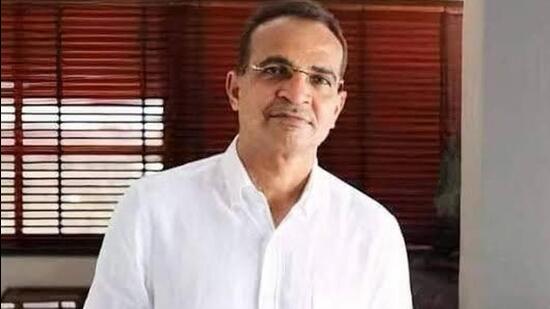
Monserrate and co-accused Rosy Ferros had consistently maintained their innocence throughout the proceedings. The woman had alleged in a statement to police in 2016 that Monserrate bought her for ₹50 lakh from her mother in a deal facilitated by Ferros. She had also accused them of drugging and sexually assaulting her. However, police did not find sufficient evidence to charge the mother.
Speaking to the media outside the court, defence advocate Damodar Dhond said both accused were acquitted of all charges.
Monserrate was charged under sections 376 (rape), 370A (human trafficking), 328 (poisoning) and 324 (wrongful confinement) of the Indian Penal Code, while Ferros faced charges of human trafficking. Although the complainant claimed she was a minor at the time of the alleged offence, the court did not establish her age during the trial.
“I had full faith in the judiciary of our country. I have been acquitted of all the allegations made against me by the district court. It’s been a long wait. It’s been ten years. How each day I have suffered I know. I would like to thank my family, my friends and my supporters who stood by me during this difficult time,” Monserrate said after the verdict.
{{/usCountry}}“I had full faith in the judiciary of our country. I have been acquitted of all the allegations made against me by the district court. It’s been a long wait. It’s been ten years. How each day I have suffered I know. I would like to thank my family, my friends and my supporters who stood by me during this difficult time,” Monserrate said after the verdict.
{{/usCountry}}Dhond said the prosecution failed to prove the charges and argued that inconsistencies in the complainant’s statements were fatal to the case.
“The victim has given six different statements with significant differences, each statement contradicting the other statement. In the first statement she had stated that she visited the home of the accused at around 6pm and while there was given something to eat and drink and consequently fell unconscious and returned to consciousness the following morning at around 11, during which time she said she was raped while unconscious,” Dhond said.
“However, she didn’t specify which date this happened and gave a wide range of 61 days between March and April during which the incident could have taken place, which is absolutely absurd. Her mobile records for the two months were checked. If a person is unconscious they cannot make calls, receive calls, send or receive messages. The police couldn’t find a single date during the duration when they didn’t find calls or messages being sent or received,” he added.
“Later she became nervous and changed her statement. When she was confronted with the contradictions in the statement, she finally conceded that the incident of rape didn’t take place,” he said.
According to Dhond, the complainant later claimed she had fabricated the allegation out of anger towards her mother after watching an episode of the television programme ‘Savdhaan India.’
The case first came to light when the complainant, who was staying in a protective home for women, told a counsellor that she had been raped by Monserrate, then a Congress MLA. The counsellor reported the matter to the police.
During the early stages of the case, Monserrate had alleged that he was being politically targeted by the BJP. On Tuesday, however, he declined to respond to questions from journalists on whether he believed the case was politically motivated.