E-Paper



Green activists flay Kerala govt’s bill to amend Wildlife Protection Act
Leader of the Opposition VD Satheesan signalled the support of the Congress-led UDF for the amendment bill but questioned its legal possibility.

 Prefer HTon Google


The CPI(M)-led government in Kerala on Thursday introduced the contentious Wild Life Protection (Kerala Amendment) Bill 2025, a legislation seeking to amend the Wildlife Protection Act (1972), in the state Assembly, a move that environmentalists and animal rights groups have called ‘unscientific’ and ‘legally unsustainable.’
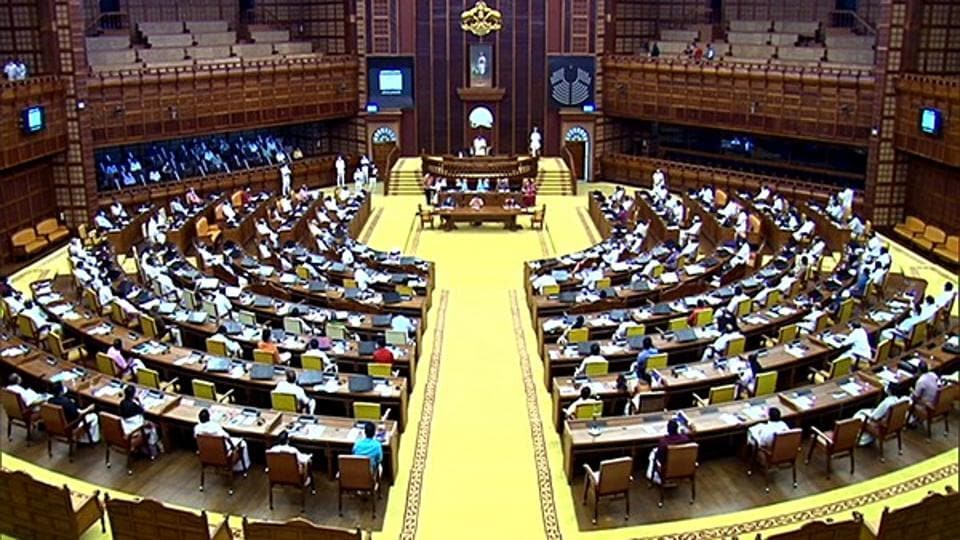
The amendment bill was moved by Kerala forest minister AK Saseendran who argued that the legislation would, to a great extent, mitigate the rising man-animal conflict in the state and help protect both wildlife and the local population. After a brief discussion, it was referred to the subject committee. This is the first time a State in India has moved an amendment to the Wildlife Protection Act, 1972.
“In the past too, this House has unequivocally demanded that some amendments are necessary to the central Wildlife Protection Act, 1972. We intimated the necessity of it through letters and in person with ministers of the union government. But the union government took the stand that such impractical rules would continue. Wildlife belongs to the concurrent list and so legal experts said any amendment law needs ratification from the President of India,” said Saseendran.
Leader of the Opposition VD Satheesan signalled the support of the Congress-led UDF for the amendment bill but questioned its legal possibility since some of the provisions go against those enshrined in the Parliament-passed Act.
“With the central Wildlife Act existing, if the House passes a bill with provisions that are inconsistent with those of the central act, it is a big question whether this bill can become a law. In the central Act, there are several steps that authorities need to take before deciding to shoot to kill a wild animal. It is not clear how a state-passed bill can bypass those provisions in the central Act,” said Satheesan.
He also said the legislation was brought by the LDF government with political objectives.
“I can understand what you (Govt) are doing. You will pass the bill. It will go to the Governor. It will stay there for some time and then it will go to the President where it will remain again for a few months. By then, elections will come and this bill will hang in the air before the voters,” the Congress leader said.
One of the key amendments of the draft bill, accessed by HT, is to section 62 of the central Act which gives the State government the powers to declare a wild animal under Schedule II as ‘vermin’ for a limited period on the basis of a reports submitted by an expert panel appointed by the government and the Chief Wildlife Warden. Under the central Act, only the Union government has that right.
Another contentious amendment to section 11 of the 1972 Act gives the Chief Wildlife Warden, upon a report from the District Collector or a Chief Conservator of Forests, more powers to cause a wild animal to be killed, transquilised, captured or translocated if it attacks or injures a person or is found in a place where people gather. This amendment could result in the killing or capture of a wild animal on mistaken identity.
The draft bill also has clauses empowering the Chief Wildlife Warden to relocate or use birth-control measures on wild animals under Schedule II if he/she is satisfied that it’s population has become dangerous to human population in an area.
The draft bill also proposes to shift the Bonnet Macaque, a common Primates species, from Schedule I to Schedule II with the aim of using translocation measures to counter its threat in residential populations.
Green activists censured the Left government for proposing an ‘unethical’ bill.
“It’s a political gimmick being played by the government ahead of elections to get the votes of those residing in the ‘high-range’ areas. Human-wildlife conflict can never be completely eradicated. It can only be mitigated through things like solar fences, trenches, early alert systems and change in farming practices,” said E Kunhikrishnan, retired zoology professor at University College in Thiruvananthapuram and former resource person for the state forest department.
Kunhikrishnan said the draft bill possesses no legal support. “How can the state move a bill with provisions that go against those in the central Act? If such a thing can happen, then every state can move amendment bills,” he said.
‘Coexistence Collective’, a broad coalition of environment groups in Kerala, said the draft bill, far from wildlife protection, shows ‘ecological irresponsibility’ and bypasses expert authorities.
“The Bill proposes to give the CWW unrestricted power to immediately order the killing of any wild animal alleged to have injured a human being. This ‘shoot first’ approach ignores the possibility of mistaken identity. It encourages indiscriminate killing of endangered species. It bypasses existing safeguards in the Wildlife Act and NTCA guidelines which mandate attempts at capture, tranquilisation and relocation before resorting to lethal force,” it said in a statement.
“This is not protection of human life. It is reckless political populism,” it said.
The group said the bill is ‘anti-science, anti-conservation and anti-people in the long run.’
Harish Vasudevan, a lawyer at Kerala High Court and the National Green Tribunal, said a State can bring forth amendments in wildlife laws provided they do not dilute them.
“A State can make punishments more rigorous and make issues stricter. If the amendments are not in the spirit of the existing statute, they will not get consent. There have been a lot of Supreme Court and high Court judgements interpreting the 1972 Act. We will have to go through those judgements to understand how far a State can go in amending the law,” said Vasudevan.