Bhubaneswar: Three sacred wheels from the chariots of Lord Jagannath and his siblings will soon find a place in the new Parliament building in New Delhi, a symbolic gesture linking the ‘temple of democracy’ with Odisha’s centuries-old Jagannath culture.
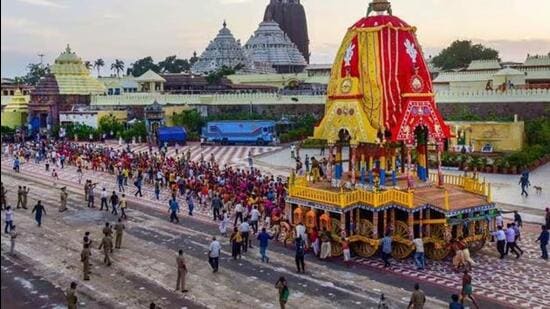
The decision, approved by Lok Sabha Speaker Om Birla following a proposal from the Shree Jagannath Temple Administration (SJTA), involves placing one wheel each from Nandighosha (Lord Jagannath’s chariot), Debadalana (Goddess Subhadra’s chariot), and Darpadalana (Lord Balabhadra’s chariot) inside the Parliament premises.
Confirming the development on social media platform X, SJTA chief administrator Aravind Padhee expressed gratitude to the Speaker for supporting the initiative. “This will strengthen the cultural connection between Odisha’s Jagannath traditions and the nation’s highest democratic institution,” Padhee wrote.
“It is an important moment that underscores both cultural pride and national identity,” said a senior official of the Odisha government.
The chariot wheels have been installed at the Odisha Legislative Assembly premises and at the State Guest House in Bhubaneswar.
The decision has drawn enthusiastic responses from Puri’s Jagannath Temple servitors. Calling it a matter of pride, senior servitor Binayak Das Mahapatra said: “With Mahaprabhu’s wheel in the Parliament complex, Jagannath culture will gain wider recognition. Parliament is a sacred place in itself, and it is only fitting that it houses a symbol of Odisha’s living tradition.”
{{/usCountry}}The decision has drawn enthusiastic responses from Puri’s Jagannath Temple servitors. Calling it a matter of pride, senior servitor Binayak Das Mahapatra said: “With Mahaprabhu’s wheel in the Parliament complex, Jagannath culture will gain wider recognition. Parliament is a sacred place in itself, and it is only fitting that it houses a symbol of Odisha’s living tradition.”
{{/usCountry}}Another servitor, Anath Das Mahapatra, noted that Rath wheels have previously been placed in temples and monasteries across Odisha after elaborate rituals. “Since the wheels are considered part of the Lord Himself, they must be treated with the same sanctity wherever they are placed. That tradition must be observed in Parliament too,” he said.
The sanctity of the wheels stems from the belief that Lord Jagannath Himself rides upon them during the nine-day Rath Yatra. Devotees often keep small pieces of chariot wood in their homes, believing it brings divine blessings and household prosperity.
Every year, three massive wooden chariots are constructed afresh for the Rath Yatra — Nandighosha with 16 wheels, Taladhwaja with 14, and Debadalana with 12. Together, they account for 42 wheels, each seven feet high. The intricate work is carried out by traditional Maharana carpenters from the Vishwakarma community in Puri’s Rath Khala (chariot workshop). For construction, around 865 pieces of wood are used annually, harvested from forests in Khurda, Nayagarh, Daspalla, Bhanjanagar and Ghumusar. Timber species such as dhaura, asana, phasi and simili are typically employed.
By tradition, once the festival concludes, the old chariots are dismantled. Portions of the wood are sold to devotees, while the rest is used as fuel in the temple kitchen to cook Mahaprasad.
The SJTA fixes prices for different chariot parts such as wheels, axles, wooden beams and ornamental pieces and devotees keen to acquire them have to formally apply to the temple office. Temple rules stipulate that once acquired, these sacred items cannot be resold or transferred. They must be preserved in pure spaces, away from any non-vegetarian use, and worshipped with reverence. The items are open to all devotees without restriction, but sanctity is to be strictly maintained.