Amid growing concerns around hybridisation between the Indian grey wolf and stray or free-ranging dogs in areas where wildlife and human ecosystems intersect, the forest department has isolated four hybrid wolf pups – believed to have been born out of crossbreeding between an Indian grey wolf and a dog – identified in the Kadbanwadi area of Indapur tehsil in Pune district. On March 20, forest officials stumbled upon the pups in the grassland ecosystem of Kadbanwadi, a region known for its wolf population. The pups displayed mixed physical traits while being associated with a wolf pack, making the case particularly unusual. Recognising the potential long-term impact on the wild wolf population, the forest department decided to intervene and isolate the pups from their natural surroundings. The pups have now been shifted to the transit treatment centre (TTC) in Bavdhan for close monitoring and further scientific assessment. At the TTC, forest staff are closely monitoring their behaviour, feeding patterns and physical development under controlled conditions. Officials said that the objective is to understand whether the pups exhibit behavioural tendencies closer to wild wolves or dogs, and how such hybrids adapt outside their natural habitat.
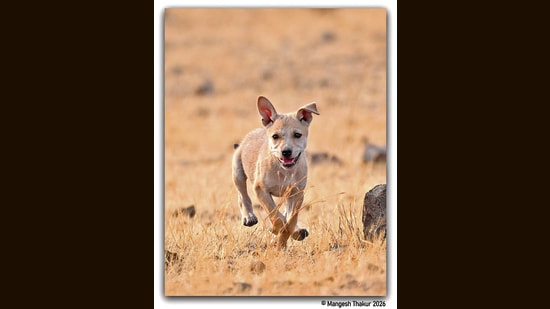
Atul Jainak, assistant conservator of forests, Pune forest department, said that the department has begun coordination with the Wildlife Institute of India to conduct a genetic study of the pups. “We have communicated this finding to the Wildlife Institute of India, Dehradun, and also requested them to conduct the genetic study. The institute has responded positively and the sample will be collected for this study in the upcoming days. As the sample kit will be provided by the institute, we are yet to get an idea of exactly what samples are being collected. Meanwhile, we are observing the pups at our TTC,” Jainak said. Forest officials said that the genetic analysis will play a crucial role in confirming the extent of hybridisation, and will help determine the future course of action regarding the pups.
Hybridisation between the Indian grey wolf and domestic/stray dogs is a growing conservation concern, as it leads to genetic dilution and weakens key survival traits like hunting skills, territorial behaviour and natural fear of humans. Over time, this reduces the species’ adaptability in the wild. Additionally, the presence of stray dogs increases the risk of disease transmission. Infections such as rabies, canine distemper and parvovirus can spread to wolves through contact or shared resources, potentially causing severe outbreaks and sudden decline in already vulnerable wolf populations. There is also growing apprehension that if hybrid traits are passed on or if behavioural patterns shift, it could lead to increased aggression among the stray dog population. This is particularly concerning for Pune, which is already grappling with a stray dog problem in both urban and peri-urban areas.
{{/usCountry}}Hybridisation between the Indian grey wolf and domestic/stray dogs is a growing conservation concern, as it leads to genetic dilution and weakens key survival traits like hunting skills, territorial behaviour and natural fear of humans. Over time, this reduces the species’ adaptability in the wild. Additionally, the presence of stray dogs increases the risk of disease transmission. Infections such as rabies, canine distemper and parvovirus can spread to wolves through contact or shared resources, potentially causing severe outbreaks and sudden decline in already vulnerable wolf populations. There is also growing apprehension that if hybrid traits are passed on or if behavioural patterns shift, it could lead to increased aggression among the stray dog population. This is particularly concerning for Pune, which is already grappling with a stray dog problem in both urban and peri-urban areas.
{{/usCountry}}Furthermore, the case has highlighted the increasing overlap between human settlements, domestic/stray animals, and wildlife habitats in regions like Kadbanwadi. Officials noted that the presence of free-ranging dogs in forest and grassland areas is a key factor contributing to the incidence of such hybridisation. The forest department is finding it increasingly challenging to control the movement and population of stray dogs in such mixed-use landscapes. The coexistence of villages, agricultural land and wildlife habitats creates conditions where direct intervention is not always feasible. Officials said that the current situation is being handled with caution, as any decision regarding the pups must balance ecological concerns with ethical and scientific considerations. As the forest department awaits the genetic study and continues behavioural observations, the incident has underscored the urgent need for sustained monitoring and proactive management in areas where wildlife and human ecosystems intersect.