The Food and Drug Administration’s (FDA) recent actions against some of the best-known eateries, including Roopali and Vaishali, have come as a surprise to many regular customers. Both have been around for decades and are part of the city’s eating-out culture. Yet, FDA inspections found food stored in open corridors, kitchen equipment placed close to toilets, inadequate protection against insects and the possibility of cross-contamination between raw and cooked food. Both establishments had their licences suspended.
The action under FDA commissioner Tukaram Mundhe’s ‘Safe Food, Safe Maharashtra’ campaign has brought food hygiene back into public discussion. It also shows that an established name and a loyal clientele do not necessarily guarantee compliance. What makes the Vaishali case more significant is that the restaurant had reportedly been inspected in June and asked to address deficiencies. Similar problems were found during the November inspection.
There is little to argue against action where violations are found as customers, too, have a right to expect safe food, whether they are paying ₹50 for a snack or several hundred rupees for a meal. But, the attention that raids on popular restaurants attract also raises a question about the other end of Pune’s food business.
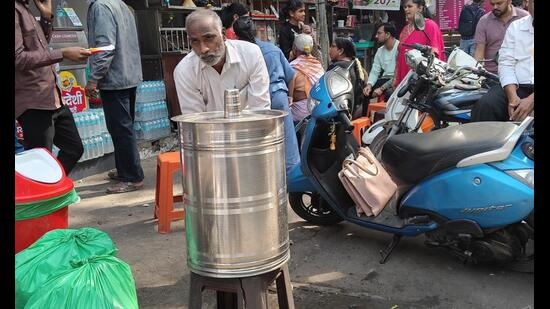
A large number of people eat at roadside stalls, small eateries, breakfast joints and tapris every day. For students, office-goers and daily wage earners, these are often the most affordable options and, therefore, offer significant help to many. A plate of poha, misal, vada pav or roadside Chinese food is part of the city’s everyday routine, yet the conditions in which food is prepared at some of these places are hardly reassuring.
{{/usCountry}}A large number of people eat at roadside stalls, small eateries, breakfast joints and tapris every day. For students, office-goers and daily wage earners, these are often the most affordable options and, therefore, offer significant help to many. A plate of poha, misal, vada pav or roadside Chinese food is part of the city’s everyday routine, yet the conditions in which food is prepared at some of these places are hardly reassuring.
{{/usCountry}}Cooking is often done in cramped spaces, sometimes right next to busy roads. Water for washing utensils is limited, food is left uncovered, and waste and drainage arrangements are poor. At some stalls, the same oil is used repeatedly through the day. Ingredients are sometimes stored in the open, exposed to dust and flies. Customers may see all this, but they rarely know what goes into the food they are eating or how long it has been stored.
This is not to say that every roadside vendor is careless about hygiene. Many try to maintain cleanliness despite working with limited space and facilities. But, the problems are visible enough for citizens to keep raising complaints.
Mundhe had indicated in August that the FDA would inspect roadside Chinese food stalls following complaints about the quality of food and ingredients. It would be useful to know how many such inspections have since been conducted and what action was taken. The announcement had raised expectations that the drive would extend to the smaller establishments as well.
The FDA’s enforcement figures do indicate a wider exercise. Between May 25 and August 31, the Pune division recorded 4,261 inspections and 168 licence suspensions. On November 5, FDA teams seized 5,199 kg of suspected substandard food products worth nearly ₹14.9 lakh across Pune, Pimpri-Chinchwad, Satara and Kolhapur. They also destroyed 559 kg of perishable or suspected unsafe products. These figures suggest that the department is undertaking inspections beyond a few well-known restaurants.
However, the challenge is different when it comes to the informal food sector. Established restaurants have fixed premises, identifiable owners and licences that can be suspended. Many roadside vendors operate from temporary structures, sometimes without access to clean water, proper drainage or waste collection. This makes inspections more difficult, but it also means the FDA will need to work with the municipal corporation to address some of the basic problems.
There is a difference between conducting raids and ensuring that food safety practices improve across the city. Action against prominent restaurants may encourage others to take compliance seriously. However, the smaller outlets cannot remain outside the regular inspection system simply because they are harder to monitor.
For most Punekars, eating out does not always mean visiting a restaurant. It could just as easily mean a quick breakfast at a roadside stall or an evening snack from a tapri. The FDA’s campaign has brought attention to what happens inside restaurant kitchens. It now needs to show that the food served on the city’s streets receives comparable attention.