At Hathras, a gaggle of media and OB vans descended on the house gutted by tragedy. Reporting from the scene, Khabar Lahariya (KL)’s editor Kavita Bundelkhandi and reporter Meera Devi clambered up onto the roof to take a look. What they saw were swarms of police and a media melee where excitable reporters, who had taken over the house, chatted, laughed, ate biscuits, and, every now and then, shrieked into their microphones.
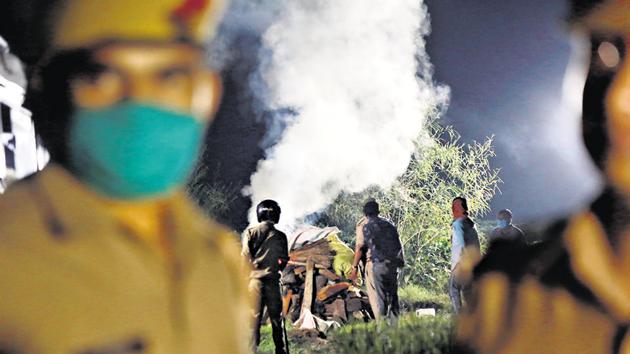
“The family is pleading that they have no strength to speak but the media has not stopped thrusting mics into their faces,” reported Kavita. The bereaved and beleagured family has had no time to even cook and the children are hungry.
The women-led digital platform that today counts 30 reporters and stringers across 13 districts in Bundelkhand has, for close to two decades, been chronicling a side of India that is seldom written about. Despite the fact that 65.5% of the population lives in rural India, stories from the hinterland constitute a negligible proportion of all stories in the mainstream press. When these stories are told, they tend to fall into two buckets: The sensational crime report or heart-rending agrarian distress. When you think of exceptions, People’s Archive of Rural India (PARI) comes to mind, taking the trouble to also look for human interest stories of aspiration and hope.
Started as a two-page, black and white newspaper in 2002, KL has stuck to its course of reporting hyperlocal issues, telling the stories of Bundelkhand, a hard, hilly region that spills over from north Madhya Pradesh into southern Uttar Pradesh. When it was launched, the only journalists in the region were upper caste, educated men. But, says Kavita, “We wanted to challenge the idea that women are weak, could not do journalism and were only suited to 9-5 jobs like teaching and nursing.” There was no precedent, so KL drew up its own blueprint. They would hire Dalit, Muslim and Adivasi women. Conduct their own training. Take all editorial decisions collectively. And, perhaps most crucially, look at stories through a nariwadi chashma (feminist lens), whether on Chitrakoot’s erratic water supply, a mental health crisis among young people in Bundelkhand or what women farmers thought of the farm bills (timed with Women Farmers’ Day on October 15).
{{/usCountry}}Started as a two-page, black and white newspaper in 2002, KL has stuck to its course of reporting hyperlocal issues, telling the stories of Bundelkhand, a hard, hilly region that spills over from north Madhya Pradesh into southern Uttar Pradesh. When it was launched, the only journalists in the region were upper caste, educated men. But, says Kavita, “We wanted to challenge the idea that women are weak, could not do journalism and were only suited to 9-5 jobs like teaching and nursing.” There was no precedent, so KL drew up its own blueprint. They would hire Dalit, Muslim and Adivasi women. Conduct their own training. Take all editorial decisions collectively. And, perhaps most crucially, look at stories through a nariwadi chashma (feminist lens), whether on Chitrakoot’s erratic water supply, a mental health crisis among young people in Bundelkhand or what women farmers thought of the farm bills (timed with Women Farmers’ Day on October 15).
{{/usCountry}}If India’s largely social media-driven MeToo movement was urban, KL’s Disha Mullick filled the gap with #MeTooBundelkhand, asking: “What does the workplace look like for women who are resetting centuries of gender, class and caste oppression?”
The idea of a feminist framework might not always fit into mainstream media’s understanding of rural life in India. Priorities—unemployment, migrant labour, farmer issues, caste—will invariably differ. But, as KL’s Pooja Pande says, change will come when we straddle both worlds and understand that urban or rural, we face the same enemy — patriarchy. Meanwhile, KL continues to shape its world, and ours, one story at a time.