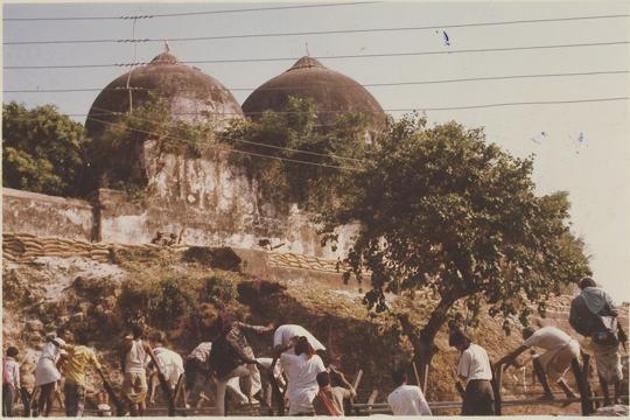
The litigation over the Ayodhya title dispute finally appears to be heading towards a conclusion. The chief justice has targeted completing the hearing this month, and pronouncing the judgment next month. Whether this will mean the dispute is settled will depend on the reaction of both sides to the judgment. The only way to prevent this leading to more enmity, and, possibly, more violence, is for Hindu and Muslim organisations contesting the case to have a dialogue to discover common principles. So far, the Ayodhya dispute has been a dialogue of the deaf, a shouting-match between Hindu and Muslim leaders, making no effort to understand each others’ positions.
Dharma is a recently published collection of lectures given by the late philosopher-civil servant, Chaturvedi Badrinath. The lectures delve into the history of the Hinduism-Islam dialogue, and the impact reviving that dialogue could have on “overcoming the inexpressible suffering of violence and hatred in the world today”.
Badrinath starts with a dialogue going back as far as the 11th century when the Iranian polymath al-Biruni arrived in India. He had an intense dialogue with Hinduism, studying the Upanishads and the Gita among other sacred texts. But he concluded that Hindus “totally differ from us in religion, as we believe in nothing in which they believe, and vice-versa”. But he also found other Hindus who “march on the path to liberation, or those who study philosophy and theology, and who desire abstract truth which they call sara, and are entirely free from worshipping anything but God alone”. Unfortunately, it’s al-Biruni’s opinion that there can be no dialogue between Hinduism and Islam which has survived without qualification.
Down the centuries, however, there have been fruitful dialogues between Hinduism and Islam. For instance, Badrinath says, in the 15th and 16th centuries, the teachings of both Kabir and Guru Nanak were “rooted in Dharmic perspectives and Sufi teachings”. Emperor Akbar broke away from the exclusive claims of Islam to formulate in, what Badrinath called, “a very dharmic fashion”, a new religion called Din-i-Ilahi. In the 19th century, in order to experience other faiths, Ramakrishna Paramhamsa lived them for brief periods. After living as a Muslim, he had “the full realisation of the result of the practices according to that faith”. Ramakrishna’s experience of religions other than Hinduism led him to believe that they all had the same aim, the realisation of God, and, so, there was no justification for any strife or violence between them.
{{/usCountry}}Down the centuries, however, there have been fruitful dialogues between Hinduism and Islam. For instance, Badrinath says, in the 15th and 16th centuries, the teachings of both Kabir and Guru Nanak were “rooted in Dharmic perspectives and Sufi teachings”. Emperor Akbar broke away from the exclusive claims of Islam to formulate in, what Badrinath called, “a very dharmic fashion”, a new religion called Din-i-Ilahi. In the 19th century, in order to experience other faiths, Ramakrishna Paramhamsa lived them for brief periods. After living as a Muslim, he had “the full realisation of the result of the practices according to that faith”. Ramakrishna’s experience of religions other than Hinduism led him to believe that they all had the same aim, the realisation of God, and, so, there was no justification for any strife or violence between them.
{{/usCountry}}The Rashtriya Swayamsevak Sangh reverence for Ramakrishna’s disciple, Swami Vivekananda, makes his dialogue with Islam particularly relevant. It recently published a book on him urging people to put his thoughts into action. Vivekananda believed “mankind ought to be taught that religions are but the varied expression of The Religion which is oneness, so that each may chose the path which suits him best”. He deeply admired Islam for its insistence on the equality of all people, and, while being a devout Hindu, was very critical of certain aspects of Hinduism.
Summing up his lecture on the dialogue between the two faiths, Badrinath quoted the Prophet Mohammed as saying, “Do you love your creator? Then love your fellow beings first.” Badrinath added, “This is the substance of dharma too”.
If Hindu and Muslim leaders involved in the Ayodhya dispute could only have a dialogue, discussing the application of this principle to their reactions to the court’s judgment, whatever it may be, the dispute could be laid to rest. If the judgment is greeted with triumphalism on one side, and bitter resentment on the other, it will continue to contribute to the violence and hatred in today’s world.
The views expressed are personal