The Samosa Caucus, as the five Indian American members of United States Congress are sometimes called, is unevenly divided on the two leading contenders for the Democratic Party’s presidential nomination.
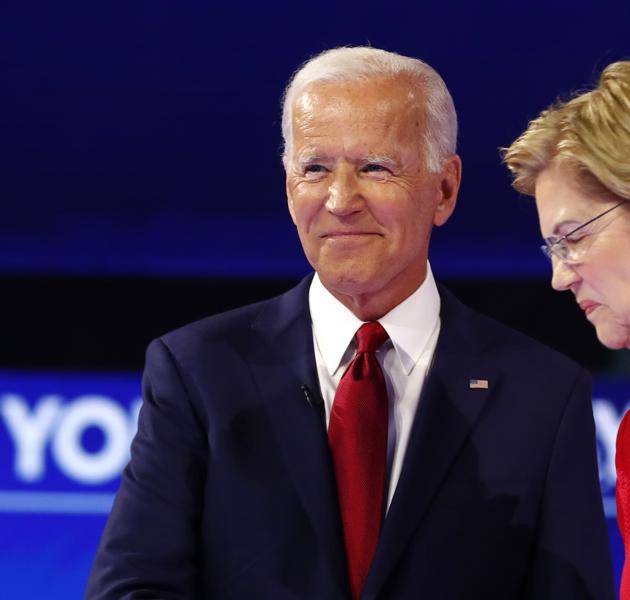
Three members — Senator Kamala Harris and Representatives Ami Bera and Raja Krishnamoorthi — are supporting former vice-president Joe Biden. Two — Representatives Pramila Jayapal and Ro Khanna — are with Senator Bernie Sanders. That’s only for now. Once the Democrats have settled on one of them as their nominee, everyone is expected to rally around that person to take on President Donald Trump in November. The Samosa Caucus is a close manifestation of the Democratic Party and the country, and as demographically diverse. Five people of colour, two of them women and two of them born outside the US (Jayapal and Krishnamoorthi).
The divide among the five reflects the ideological divide in the party — between moderates, who are rallying around Biden, one of their own; and progressives, represented by Sanders, though the senator has never been a member of the Democratic Party and has run and won elections as an independent. Harris, Bera and Krishnamoorthi are moderates, whereas Jayapal has been a progressive, long before Sanders turned it into a presidential plank. Khanna, who represents a constituency that is home to Silicon Valley, is an unlikely subscriber to the cause championed by a man who describes himself as a Democratic Socialist.
The Democratic Party is indeed divided between moderates and progressives. Moderates are mostly older, more experienced and more pragmatic Democrats who are committed to pursuing political principles and positions that they grew up on — chiefly racial, gender and economic equality at home and promoting democracy and nuclear non-proliferation abroad. Biden, Speaker Nancy Pelosi (the senior-most Democrat in the country now, and second in line to the presidency), and the senior-most in the Senate, minority leader Chuck Schumer, lead this flank. Progressives, on the other hand, are mostly younger in comparison (Sanders and Senator Elizabeth Warren, their other icons, are anomalies) and more aggressive on health care, higher daily wages, the climate crisis, and human rights and freedoms, both at home and abroad.
{{/usCountry}}The Democratic Party is indeed divided between moderates and progressives. Moderates are mostly older, more experienced and more pragmatic Democrats who are committed to pursuing political principles and positions that they grew up on — chiefly racial, gender and economic equality at home and promoting democracy and nuclear non-proliferation abroad. Biden, Speaker Nancy Pelosi (the senior-most Democrat in the country now, and second in line to the presidency), and the senior-most in the Senate, minority leader Chuck Schumer, lead this flank. Progressives, on the other hand, are mostly younger in comparison (Sanders and Senator Elizabeth Warren, their other icons, are anomalies) and more aggressive on health care, higher daily wages, the climate crisis, and human rights and freedoms, both at home and abroad.
{{/usCountry}}India should not pick sides now in the primaries or in the elections further down the road. But forced to choose, it will, and should, go for now with Biden, who supported the game-changing nuclear deal, set indulgently lofty targets for India-US trade ties and, more importantly for the Narendra Modi government, desisted from inserting himself into the Kashmir and Citizenship (Amendment) Act (CAA) controversies. Sanders, on the other hand, has been anything but helpful. He voted against the nuclear deal, and has recently been very critical of India on Kashmir, the CAA and the Trump administration’s failure to criticise India. But India should look beyond Sanders to reach out to this progressive faction, which will be important in determining the future of the Democratic Party.