
Reports of a massive power struggle between Virat Kohli and Rohit Sharma proliferated last week, polarising fans and leaving the media and aficionados confounded about what exactly was going on in Indian cricket. Wednesday’s press conference with Kohli, however, startlingly suggested that the crux of the problem was not so much him and Rohit, rather the BCCI.
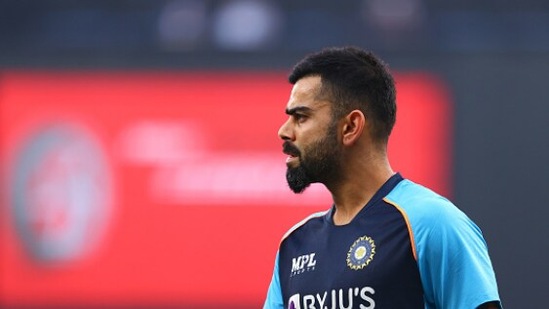
Kohli debunked the theory swirling around that he was going to skip the ODI series in South Africa because he was unwilling to
Reports of a massive power struggle between Virat Kohli and Rohit Sharma proliferated last week, polarising fans and leaving the media and aficionados confounded about what exactly was going on in Indian cricket. Wednesday’s press conference with Kohli, however, startlingly suggested that the crux of the problem was not so much him and Rohit, rather the BCCI.
Kohli debunked the theory swirling around that he was going to skip the ODI series in South Africa because he was unwilling to play under Rohit. In fact, he candidly accepted that his captaincy in this format too had been on the line (after he surrendered the T20 leadership) because he hadn’t won any ICC title, and then went on to acknowledge Rohit’s tactical capabilities.
But Kohli also revealed that neither was he asked to not quit the T20 captaincy, nor was the ODI leadership discussed with him till an hour or so before the Test squad for South Africa was announced a few days back, as had been claimed by BCCI president Sourav Ganguly a couple of days back..
Unless there was grave misunderstanding between Kohli and Ganguly, this reflects muddled and manipulative thinking within the establishment (including the selection committee) on such important matters, compounded by bumbling incompetence in getting its point of view across effectively.
Kohli doesn’t wear a halo, of course. That Anil Kumble was discarded as chief coach in 2017 at his behest sits uneasily in his legacy. Even then, it was the BCCI’s malleability and disregard for principles that made it possible. Considering that an iconic figure like Ganguly who’s seen all sides and shades of Indian cricket heads BCCI today makes it even more lamentable.
Splitting the captaincy between Kohli and Rohit, seen as cause for their purported dispute, was never the problem as it emerged. Apart from not winning any multi-nation tournament—which Kohli accepted as a reason for the change, his batting form in the last couple of years had withered too, compelling the BCCI—justifiably—to consider whether easing the burden on him would help him and Indian cricket.
Meanwhile, Rohit’s form had soared to dizzying heights. Along with his success as captain in IPL and the few times he led India in Kohli’s absence, he became a strong captaincy option. In making the transition, however, the BCCI revealed surprising disenchantment with Kohli.
Rohit’s ascension to ODI captaincy was put out in a press release announcing the Test squad to South Africa: in the last para, in icy cold tenor, without a word of thanks for Kohli’s enormous contribution. This was poor form on the BCCI’s part.
Unless there was serious breach of conduct for bringing Indian cricket into disrepute, the Board cannot be so dismissive of any player—certainly not one of Kohli’s stature and contribution, who ironically had been aggressively promoted as the face of Indian cricket by the BCCI itself for several years!
The BCCI moved into damage control the next day with Ganguly given the thankless task of explaining the low on logic decisions which were no-balled by Kohli in his press conference. If Kohli would have retained captaincy in all formats had he not quit the T20 leadership, was Rohit made T20 and ODI captain by default rather than on merit? Moreover, why wasn’t the change in ODI captaincy announced at the same time Rohit was made T20 captain if split captaincy is what the BCCI wanted in any case?
The Board's moves and silences festered nonsensical conspiracy theories. That one player would deliberately undermine the prospects of the other by being unavailable to play as was being bandied in the media and the grapevine. That would be diabolically peevish and counter-productive too.
This does not mean the dressing room is an idyllic haunt of angels. It’s a microcosm of life itself where individual ambition and pursuit of reward/power co-exist with friendship and camaraderie of different levels, from the very weak to the robust.
Generally, dissonance is sublimated by finding common cause, which is playing for team, country and personally to the best of one’s ability. Conflicting players resolve their problems among themselves. Occasionally though things may reach a flashpoint. Such situations arise more often than not where captaincy is involved.
Timing, sensitivity, firmness and effective communication are the crucial constituents in interventions by the administration in prickly situations. The BCCI has been found wanting this time, creating an unsavoury episode which—unless cleared irrefutably—has tarnished the image of Indian cricket.
One Subscription.
Get 360° coverage—from daily headlines
to 100 year archives.
Archives
HT App & Website