


 Live Score
 Teams
Teams Players
End of cricket's most dramatic all-round package: Ben Stokes proved that greatness was never only about runs and wickets
Ben Stokes retires as a unique cricketer, leaving a legacy of remarkable achievements and unforgettable moments.

 Prefer HTon Google


Ben Stokes did not retire like a normal cricketer because he was never a normal cricketer. The announcement came in the middle of a Test match, during the deciding game against New Zealand at Trent Bridge, with England still trying to save a series and Stokes still trying to bend one last contest to his will. He then took a wicket moments after the news broke, walked out to open in his final innings, smashed 30 off 20 balls, and left to a standing ovation.
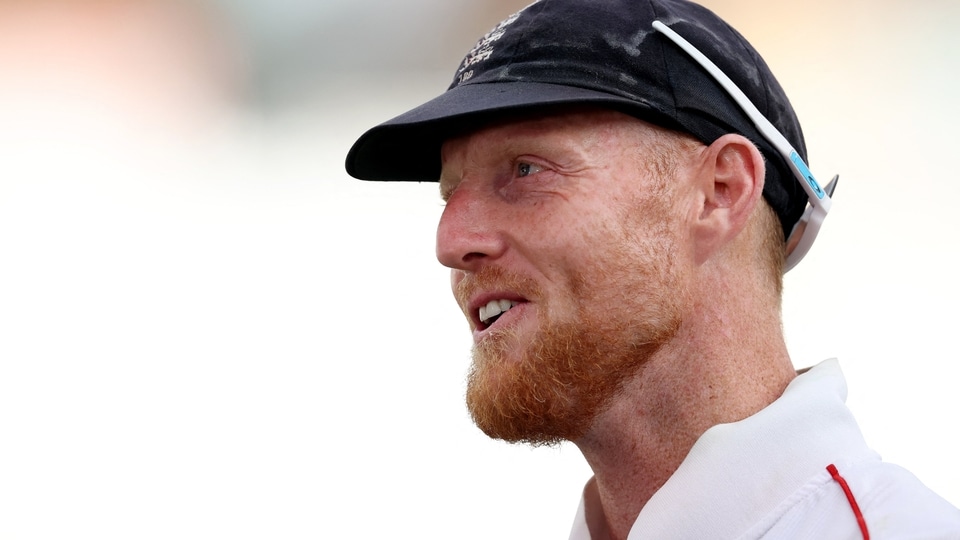
That was Stokes in one frame: drama, defiance, theatre, skill, chaos and consequence.
The numbers are big enough to demand respect. He leaves Test cricket with 122 matches, 7,273 runs and 252 wickets. Across formats, he played 279 internationals, scoring 11,321 runs and taking 352 wickets. He made 19 international hundreds, took England through two World Cup finals, and became only the second cricketer after Jacques Kallis to complete the double of 7,000 Test runs and 250 Test wickets.
But the question with Stokes was never only about numbers. Purely statistically, he was not the greatest all-rounder. Kallis was a superior batter. Imran Khan and Richard Hadlee were superior bowlers. Garry Sobers had a level of genius that still sits almost outside comparison. Even Ian Botham’s early peak was more explosive in the scorebook.
Stokes’ claim is different. He might be cricket’s most complete modern all-rounder because he could affect a match in almost every way possible.
Not flawless, but frighteningly complete
As a Test batter, Stokes was not consistently elite. A career in the mid-30s average bracket tells its own story. He had loose periods, rash dismissals, and long stretches where the idea of Stokes was more dangerous than the actual output. Fourteen Test hundreds in 122 matches is excellent for an all-rounder, but it is not the record of a great specialist batter.
His white-ball bowling numbers are also not untouchable. In ODIs, he made 3,463 runs at over 41, but his 74 wickets came at a high average. In T20Is, 585 runs and 26 wickets do not explain his legend by themselves.
Yet cricket is not played on spreadsheets alone. Stokes’ career lives in the moments where normal calculation collapsed.
The 2019 World Cup final needed nerve; he made 84 not out and batted again in the Super Over. Headingley 2019 needed madness; he made 135 not out and turned an impossible Ashes chase into folklore. The 2022 T20 World Cup final needed restraint; he made an unbeaten half-century in a chase where panic could have swallowed England.
That range is the real argument. Stokes could bat time, launch counterattacks, bowl hostile spells, change fields, take blinders, carry a dressing room, and drag a team emotionally through crisis. He was not just an all-rounder. He was an event-management system in spikes.
The flaws matter too. The 2016 T20 World Cup final scar, the 2017 off-field controversy, injuries, mental exhaustion, the Ashes hole in his captaincy record, and Bazball’s occasional stubbornness all belong in the same career. Stokes was not clean, calm or statistically perfect.
But completeness is not perfection. It is usefulness under every condition. And for more than a decade, when England needed a batter, bowler, captain, fighter, finisher or symbol, Stokes kept finding a way to become whichever version the match demanded.
That is why his retirement feels bigger than one player leaving. It feels like the end of cricket’s most dramatic all-round package.


