


 Live Score
 Cricket Teams
 Cricket Players
England can’t believe Vihaan Malhotra’s luck, only themselves to blame as umpire reverses decision: What ICC rules say
In the World Cup final, a caught-and-bowled decision involving Farhan Ahmed sparked debate when the third umpire overturned it.


In a World Cup final already tilted by Vaibhav Sooryavanshi’s run-fest, the moment that really lit up the noise — and the debate — wasn’t a six. It was a check on a caught-and-bowled that England thought had finally swung the game their way.
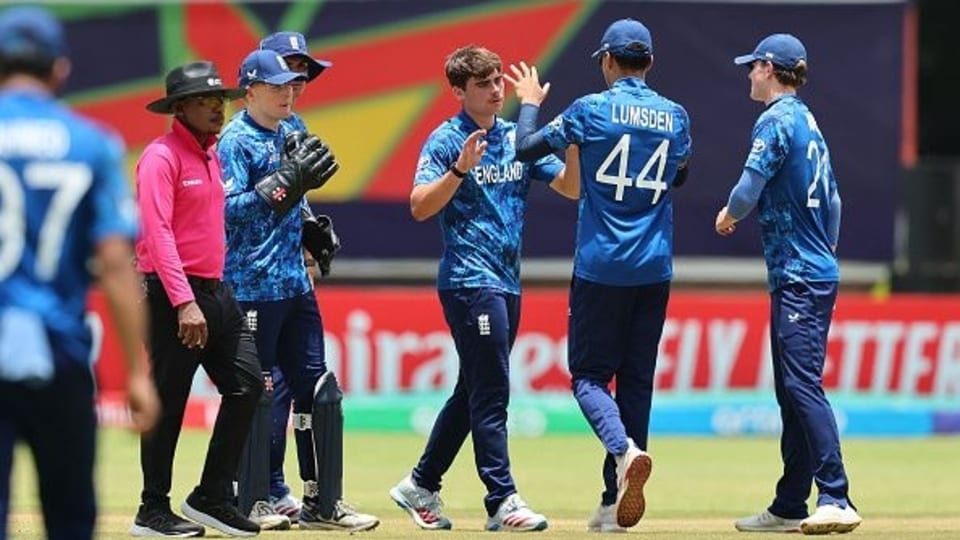
The flashpoint came when Farhan Ahmed, in his follow-through, dived to his left to complete a sharp return catch. The on-field decision went in England’s favour. India’s batter began to walk. Then the third umpire intervened, went through the replays, and overturned the dismissal. Not out. One of those split-second, high-stakes calls that can change the emotional temperature of a final.
Why was it overturned? Because in cricket, a catch isn’t just about the first clean contact. It’s about whether the fielder has completed the action of the catch without the ball touching the ground — and without the ground helping the fielder “finish” the catch.
The key idea in the Laws of Cricket is this: the act of making a catch starts the moment the ball first touches the fielder and ends only when the fielder has complete control over both (a) the ball and (b) their own movement. That second part is what creates controversy in tumbling, rolling, diving efforts. You can appear to have the ball secure, but if you’re still in the act of falling, sliding, or getting up, the catch is not considered complete yet.
There’s also a detail many fans get wrong: a hand touching the ground does not automatically make it not out. A catch can still be fair even if the fielder’s hand is on the turf, as long as the ball itself has not touched the ground and is held under full control.
What the third umpire appeared to focus on in this case was the sequence after the initial grab — as Ahmed tried to regain balance and rise. If the ball is seen to have been grounded, or pressed into the turf while the fielder is still completing the motion and not yet in full control, then the catch is ruled incomplete. In simple terms: you can’t “use” the ball against the ground to steady yourself before you’ve completed the catch.
That’s why this moment became a talking point. England will feel the athleticism deserved a wicket. The law is colder and far more technical: until there’s clear, continuous control of the ball and the body movement is completed, it isn’t out — no matter how brilliant it looked in real time.


