


 Live Score
 Teams
Teams Players
The Vaibhav Sooryavanshi experiment enters a new phase: Can leadership make Indian cricket's wonderkid even better?
Indian cricket's Vaibhav Sooryavanshi experiment enters a new phase as leadership tests whether responsibility can sharpen or disrupt his extraordinary growth.

 Prefer HTon Google


There is almost nothing conventional about Vaibhav Sooryavanshi's rise, so perhaps it was inevitable that his route into leadership would not be conventional either.
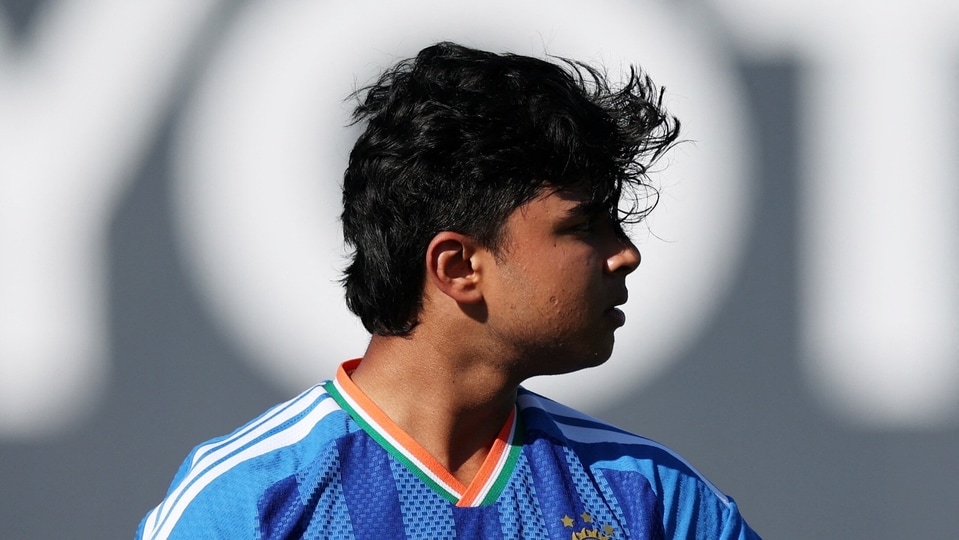
East Zone's decision to appoint the 15-year-old as Ishan Kishan's vice-captain for the upcoming Duleep Trophy has inevitably raised eyebrows. After all, this is a squad containing Mohammed Shami, Abhimanyu Easwaran, Mukesh Kumar and several players with vastly greater experience of senior domestic cricket. Sooryavanshi himself has played only eight first-class matches.
Yet the East Zone have looked beyond hierarchy. Selector Pravanjan Mullick has explained that the teenager has deliberately been given additional responsibility in the belief that it could accelerate his maturity. Kishan remains captain and, as a wicketkeeper, should be involved in most of the tactical decision-making anyway. Sooryavanshi, therefore, can effectively operate as an apprentice rather than carry the complete burden of running a four-day side.
That distinction could determine whether this becomes an inspired developmental experiment or an unnecessary complication in the growth of perhaps the most extraordinary teenage batter Indian cricket has produced in decades.
Because there are really two possibilities here. Leadership could force Sooryavanshi to understand cricket beyond the few seconds between a bowler beginning his run-up and the ball disappearing into the stands. It could improve his tactical awareness, teach him to understand spells, fields, conditions and phases of a four-day match, and ultimately make him a more complete batter.
Or Indian cricket could begin filling the head of a 15-year-old with responsibilities when one of the reasons he has become special is precisely how little seems to happen between seeing the ball and reacting to it.
That is the balance East Zone are attempting to strike.
There is already evidence that responsibility suits Sooryavanshi
This is not actually the first time cricket administrators have looked at Sooryavanshi and seen a potential leader. Bihar made him vice-captain for the opening matches of their 2025-26 Ranji Trophy season when he was only 14, under Sakibul Gani.
More significantly, he captained India U19 during their three-match Youth ODI series in South Africa earlier this year after regular skipper Ayush Mhatre was unavailable.
His first innings as captain produced only 11 from 12 balls. What followed was rather more revealing. Sooryavanshi smashed 68 from 24 balls in the second match and followed it with 127 from 74 in the third. India completed a 3-0 sweep, and Sooryavanshi finished the series as Player of the Series. Across his three matches as captain, he scored 206 runs.
It is an extremely small sample, and youth one-day cricket is very different from a Duleep Trophy match, but it offers at least one useful clue: attaching leadership responsibility to Sooryavanshi did not immediately make him cautious.
He remained Sooryavanshi.
Ten sixes came during that 24-ball 68. Another ten came during the 127. Captaincy did not turn an instinctive attacking batter into somebody suddenly worried about setting an example by occupying the crease. That is important because the best-case scenario for East Zone is not to change Sooryavanshi's personality. It is to broaden his understanding of the game without disturbing it. And four-day cricket offers an education that T20 cricket simply cannot.
A vice-captain sitting alongside Kishan must begin noticing why Shami wants a particular field. Why a batter who appeared comfortable half an hour earlier suddenly looks vulnerable. Why a bowler keeps operating from one end. Why the old ball behaves differently. Why a session in which only 70 runs are scored can still completely change a match.
For Sooryavanshi the batter, those lessons could be enormously valuable. His greatest gifts are already obvious: extremely early ball recognition, unusual power, conviction in his strokeplay and a willingness to attack deliveries other batters merely negotiate.
His first-class numbers show what remains unfinished. In eight matches, Sooryavanshi has scored 207 runs from 12 innings at an average of 17.25, with one fifty and a highest score of 93. His Youth Test record is healthier — 331 runs at 33.10, including two centuries — but senior red-ball cricket remains the format he has solved least convincingly.
Leadership could help precisely because it requires him to start looking at batting from the opposite perspective. Instead of merely wondering how he can score against a bowler, he begins asking how that bowler is trying to dismiss a batter.
What is the trap? Where is the pressure coming from? Why has the field changed? What happens if the batter refuses the temptation for three overs?
For a teenager attempting to translate extraordinary white-ball ability into sustained first-class success, those questions could be invaluable. Leadership, handled correctly, could become another form of batting education.
The danger is not pressure
The counterargument, however, is powerful. Perhaps Sooryavanshi does not need another responsibility. Perhaps he simply needs time.
There has been a tendency throughout his extraordinary rise for one achievement to immediately create demand for the next. Dominating junior cricket led quickly to senior cricket. IPL success intensified the calls for India selection. International exposure has now been followed by conversations about Test cricket and long-term leadership.
Development does not always have to mean adding something. Sometimes the correct developmental decision is to leave something alone.
Sachin Tendulkar made a particularly relevant observation about Sooryavanshi earlier this year. Tendulkar spoke about the speed with which the youngster sees the ball and responds to it, warning that the challenge would arrive if that signal was interrupted by placing too many instructions or hurdles between recognition and reaction. He argued that Sooryavanshi should initially be allowed the freedom to play before gradually learning the game's other challenges.
That warning could almost have been written specifically for the leadership debate. Because leadership creates thoughts. A batter can ordinarily walk away from a dismissal and begin processing his own innings. A leader cannot always do that. He may immediately have to think about a bowler's workload, a field change, an opposition partnership or the state of the match.
Sooryavanshi's batting, at its most devastating, currently appears almost uncluttered. See the ball. Make the decision. Commit completely. The risk is not that vice-captaincy suddenly frightens him. Nothing about his career so far suggests a teenager easily intimidated by an occasion.
Indian cricket could accidentally begin teaching him to think about everything before he has completely mastered the one thing that matters most: his own batting. And the contrast between his white-ball dominance and first-class numbers makes that concern particularly relevant. He made 776 IPL runs in 2026 at an average of 48.50 and a strike rate of 237.30. His senior first-class average remains 17.25.
There is still a red-ball batter under construction. East Zone must ensure they do not become more interested in building the future captain than completing the batter.
Responsibility has improved great batters before
There is, of course, no universal rule that leadership damages batting. Cricket history offers enough evidence in the opposite direction.
When South Africa made Graeme Smith Test captain in 2003, he was only 22 and had played eight Tests. During that year's England series, his first major assignment away from home, Smith amassed 714 runs, including monumental innings of 277 at Edgbaston and 259 at Lord's.
More recently, Shubman Gill responded spectacularly to becoming India's Test captain. On his first tour as skipper in England in 2025, Gill scored 754 runs at 75.40 with four hundreds, including 269 and 161 in the same Test at Edgbaston.
For certain batters, responsibility does not drain them. It organises them. It forces greater emotional control. It makes the player's own wicket feel more valuable. It can encourage a deeper understanding of match situations and provide a larger purpose to an innings.
Sooryavanshi's brief India U19 captaincy experience offers at least the possibility that he belongs in that category.
But even Smith was 22. Sooryavanshi is 15. That seven-year difference is enormous when the discussion is not merely about cricketing ability but emotional and intellectual development.
Which is why East Zone's decision works only if the word "vice" remains more important than the word "captain". He does not need to become the loudest voice in a dressing room containing Shami and Easwaran. He does not need to demonstrate command merely because a designation now sits beside his name.
Let him stand next to Kishan when fields are discussed. Let him ask Shami why he wants a third slip rather than another catcher on the leg side. Let him understand what Mukesh is attempting with an old ball. Ask him what he would do, then allow him to understand why an experienced cricketer might do something different.
That is leadership development without leadership theatre. And if East Zone approach it that way, the appointment starts looking considerably less reckless. The success of this experiment should not ultimately be judged by whether Vaibhav Sooryavanshi becomes an India captain one day. It should be judged by what happens to Vaibhav Sooryavanshi the cricketer.
If spending four-day matches thinking about fields, bowling plans and opposition batters helps him understand his own game better, East Zone may have discovered a clever way of turning extraordinary instinct into deeper cricketing intelligence. If the title starts producing caution, distraction or an unnecessary feeling that he must behave like a senior professional at 15, they should be willing to remove the responsibility just as quickly as they gave it.
Sooryavanshi does not need leadership because Indian cricket has decided every prodigy must eventually become a captain. He needs experiences that make him a better cricketer.
For now, East Zone have decided leadership can be one of them. The experiment is worth attempting. The challenge will be knowing exactly how far to take it.


