It’s never a good idea to join the IPL party late. Ask Pune Warriors, Kochi Tuskers, Sunrisers Hyderabad, Rising Pune Super Giants or Gujarat Lions. Four of these teams are history; they could never build a winning squad. SRH, who arrived in 2013, were finally able to put it all together after going for a squad overhaul, winning their only IPL title in 2016.
Now, Lucknow Super Giants and Gujarat Titans have splurged ₹7,090 crore and ₹5,625 crore
It’s never a good idea to join the IPL party late. Ask Pune Warriors, Kochi Tuskers, Sunrisers Hyderabad, Rising Pune Super Giants or Gujarat Lions. Four of these teams are history; they could never build a winning squad. SRH, who arrived in 2013, were finally able to put it all together after going for a squad overhaul, winning their only IPL title in 2016.
Now, Lucknow Super Giants and Gujarat Titans have splurged ₹7,090 crore and ₹5,625 crore respectively to join IPL and compete against many established teams. Do they stand a chance?
They are much better off than teams in the past, and this is why.
Previously, new teams either went into player auction with retention rules skewed in favour of the old guard, or had to inherit teams that were someone else’s brainchild. When Pune Warriors and Kochi Tuskers broke the bank to enter the IPL fold in 2011, they were not allowed to sign players from the existing pool. Although they were allowed to choose from a long list in the mega auction, smarter teams like Chennai Super Kings and Mumbai Indians had already retained four players each, who formed their core in the years to come. Not surprisingly, CSK and MI are the most successful IPL teams. Royal Challengers Bangalore retained Virat Kohli, arguably the most marketable player in the league’s history, in the same auction. Kohli has stayed put despite feelers from other teams over the years.
When SRH arrived in 2013, they had to play the first season effectively with a squad assembled by Deccan Chargers, who they had replaced. In the absence of a mega auction, they went on to retain 20 DC players.
In 2016-17, when CSK and Rajasthan Royals were suspended for two years over the spot-fixing scandal, businessman Sanjeev Goenka got his first taste of IPL through RPSG, and Intex came in to own GL for two years. With IPL treating them as interim sides, their core was formed through player drafts where they got to pick five players each from a list of 50 CSK and RR players. Both teams then went into the auction with a depleted purse of ₹27 crore.
While the jury is still out on whether Goenka and CVC Capitals have paid excessively to own franchises, the February 12-13 mega auction is likely to present them a lot more level-playing field than was the case for past IPL beginners. While the existing eight teams still benefited as they retained 27 players among them, LSG and GT have also got to pick (“retain”) three players each of their choice before going into the auction.
NO RIGHT TO MATCH
The game-changer for the new teams could be the removal of the Right-To-Match (RTM) card (a team’s right to buy a player matching the highest bid if he was with it the previous season) from the auction. RTM was first allowed in the mega auction of 2014. In a list of 66 players retained by franchises, 24 came from retentions before the auction, 13 through RTM, and only 29 via bidding at the auction.
In the 2018 mega auction, RTM was used liberally, for 19 players. Many franchises preferred the RTM route over player retentions, to keep their key players without having their total purse pruned sharply. Rashid Khan, the best T20 spinner, remained with SRH, costing them only ₹9 crore through RTM. Delhi could retain SA quick Kagiso Rabada for a steal, ₹4 crore. RCB used the RTM to retain spinner Yuzvendra Chahal for ₹6 crore.
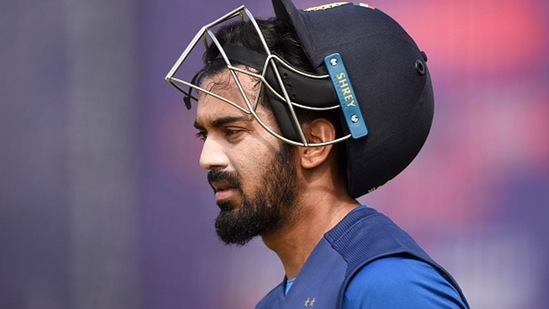
This time, with none of the existing teams having the competitive advantage that RTM provides, the new teams are more upbeat about the mega auction. LSG and GT have already named captains of their choice, KL Rahul and Hardik Pandya. It is Punjab Kings, Kolkata Knight Riders and RCB from the current sides that will search for a new captain at the auction. Even CSK may be on the lookout for MS Dhoni’s long-term successor as skipper.
“It is a new era for us. We can start from scratch, can create a new culture,” GT captain Pandya said last week. Goenka, who was quick to take away the captaincy off Dhoni after a lacklustre IPL for RPSG in 2016, is predicting that Rahul will ‘emerge as a phenomenal leader’.
“We’re looking at not only building a team for one or two seasons, as we did in the case of Pune (RPSG), but actually building the foundation for a team which will compete successfully for many years. We are also looking for players with more than one facet, so not singular-dimension players,” he told Star Sports.
One Subscription.
Get 360° coverage—from daily headlines
to 100 year archives.
Archives
HT App & Website