Preparations for the IPL 2027 edition are gradually picking up pace. The teams are currently engaged in trade negotiations, ahead of the retention deadline on November 17. The franchises will be looking to hold on to a strong-performing core while freeing up space and budgets for meaningful new additions.
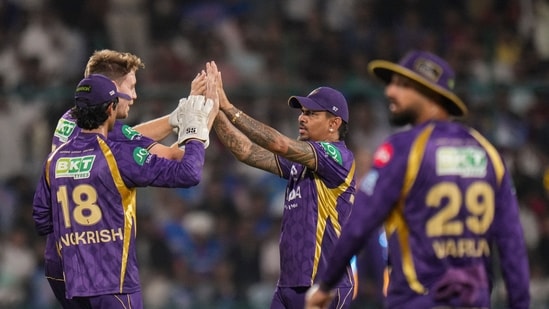
Three-time IPL champions KKR finished seventh in IPL 2026. For the second consecutive time they did not make the playoffs. They will now look to address their weaknesses and bounce back next season.
For starters, Ajinkya Rahane has retired from cricket, freeing up ₹1.6 crore of KKR’s budget. They will now have to look for a top-order Indian batter and a potential captain in the trade window or auction, which is on December 16.
Where KKR fell short
The key deficiency in KKR’s campaign was in their batting. Their Powerplay batting strike rate was 139.71 compared to the league average of 158.94, ranking ninth. Even in the middle overs, KKR managed only 143.79 against the league standard of 148.27, ranking eighth.
However, the bowling performed well overall. Their middle-overs economy was 7.89, the best in the league, and they conceded 10 runs per over at the death, the second-best in the league. However, these figures were skewed by the genius of Sunil Narine. That makes it easier to justify retaining the core of the attack.
{{/usCountry}}However, the bowling performed well overall. Their middle-overs economy was 7.89, the best in the league, and they conceded 10 runs per over at the death, the second-best in the league. However, these figures were skewed by the genius of Sunil Narine. That makes it easier to justify retaining the core of the attack.
{{/usCountry}}
The core KKR must preserve
Narine took 15 wickets at an economy of 6.65 in IPL 2026. An impact model devised by the author shows positive returns for Narine in all 13 of his games. Besides, Narine's legacy with KKR too makes him an obvious retention.
Finn Allen was one of the better buys at ₹2 crore. He scored 349 runs at a strike rate of 214.1, providing firepower in an otherwise circumspect top order. Angkrish Raghuvanshi also delivered value: the ₹3 crore investment returned 422 runs at a strike rate of 146.5. His wicketkeeping adds flexibility, particularly when KKR need to balance their overseas slots. These two batters will most probably be retained.
There was discussion about Rinku Singh’s returns, but his value lies in his explosiveness towards the end of an innings. He scored 183 death-over runs at a strike rate of 192.6 in the last edition.
Varun Chakravarthy too is difficult to replace. He conceded 7.60 runs per over in the middle overs while picking up 11 wickets in IPL 2026. He compounded the pressure created by Narine in the middle overs, and it is unlikely that KKR will separate their spin twins.
Pace depth and big investments
However, the pace department was plagued with injuries. Harshit Rana and Akash Deep were ruled out, and their return could provide solutions to the new-ball problem. Kartik Tyagi emerged their leading bowler with 18 wickets, albeit at an economy rate of 9.76. Saurabh Dubey impressed with five wickets in four games. Vaibhav Arora took 11 wickets but conceded 10.26 runs per over. KKR may prefer to help work on his consistency than release him.
The harder questions concern Cameron Green and Matheesha Pathirana, who cost a combined ₹43.20 crore. Green scored 322 runs at a strike rate of 145 across 14 matches, but KKR paid ₹25.20 crore for his all-round abilities. A back injury limited his bowling workload. The management saw him as a replacement for Andre Russell, so it remains to be seen if they would release the Aussie, a substantial strategic investment, after one season.
Pathirana, an ₹18 crore bowler, delivered just eight balls before injury ended his campaign. He could address the death-over weakness masked by Narine’s numbers. But his diminishing returns since 2025 and susceptibility to injury makes fitness central to his retention.
Release candidates and the difficult middle ground
Beyond those expensive decisions, the case for releasing certain fringe players is clearer. Umran Malik has not appeared for KKR in two seasons. His inconsistency makes him a genuine release candidate despite his pace. Tim Seifert managed 19 runs from 18 balls in three games; with Allen and Indian wicketkeeping options available, an overseas slot may be better used elsewhere. Replacements Navdeep Saini and Blessing Muzarabani also failed to impress. Saini conceded 37 in three overs without a wicket, while Muzarabani took four wickets for 75 in seven overs.
Among others, Ramandeep Singh has power-hitting ability and can bowl a few overs, but the presence of Russell and Rinku, and later Green, pushed him down the order. KKR must either offer him a clearer role or consider releasing him.
Rovman Powell remains inexpensive overseas cover, while Tejasvi Dahiya had too few opportunities to be judged. Rachin Ravindra was not utilised, but his batting and spin bowling make him worth retaining.
Manish Pandey and Anukul Roy offer inexpensive, proven depth. Rahul Tripathi and Luvnith Sisodia warrant consideration despite limited opportunities, while Sarthak Ranjan, Prashant Solanki and Daksh Kamra should be assessed on domestic performances and squad needs.
With a mini-auction ahead, KKR must strike a balance between retaining proven talent, backing long-term investments and cutting players who no longer serve a defined purpose.