It is a common grouse that performances in Ranji are often ignored and Jalaj Saxena, Sheldon Jackson, Faiz Fazal, Jaydev Unadkat—all domestic cricket tigers—are missing from the short list of the national selectors.
It’s been a very narrow escape. Just when players thought the Ranji Trophy would get scrapped yet again, the BCCI announced a lifeline— a plan to conduct the tournament in two halves, before and after the IPL, like old Hindi films that had an interval at half time.
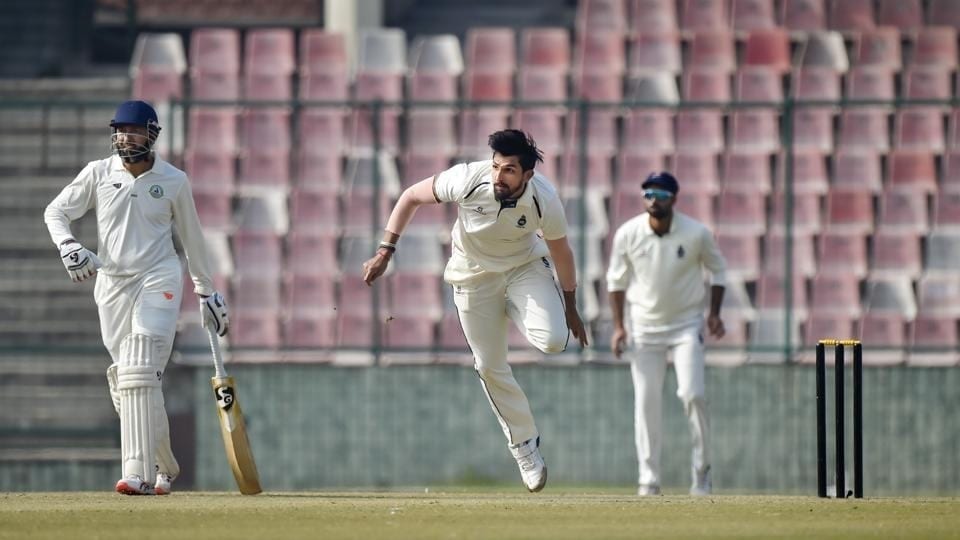
Ishant Sharma in action during the Ranji Trophy (PTI/File Photo)
But even this lifeline doesn’t change the grim reality that Ranji is decidedly low priority compared to its younger white ball cousins who are “must haves” on the domestic circuit. Cold facts confirm Ranji is devalued, not considered important enough. Many players also see limited value in it and some would say it counts for nothing.
Even then, it’s a relief that Ranji is happening because on it depends the careers of cricketers. Losing out on one more season would have been a terrible blow. A senior player explained the situation as “students preparing all year for an exam that doesn’t take place”.
Ranji has been under attack on several fronts for some time. With focus on the shorter formats, a 38-team championship with 4-day games is a four-course meal at a time when everyone’s looking for a quick snack. Fans shifted loyalty to T20 cricket and administrators lost interest in a tournament that is too big, consumes too much time and is commercially irrelevant.
The recent introduction of new teams, some clearly not fit for the level, dealt another blow as it reduced quality. There was also a broader point—about the wisdom of equating new entrants Manipur, Mizoram and Meghalaya with Mumbai, winners 41 times.
Also, the name itself is a reminder of our troubled colonial past. Why should India’s national first-class championship, started in 1934, celebrate Ranji the cricketer who never played for India and contributed nothing to Indian cricket? The only point made by his 25000 runs with 72 centuries in England is that non-whites could play this sport.
It is a common grouse that performances in Ranji are often ignored and Jalaj Saxena, Sheldon Jackson, Faiz Fazal, Jaydev Unadkat—all domestic cricket tigers—are missing from the short list of the national selectors. Ranji needs respect because it is the foundation, the basic building block that shapes players who represent India. Ignoring the “spine” (so described by Ravi Shastri) can hurt Indian cricket badly.
Ranji must remain the pathway to national selection because its intense scrutiny and relentless grind trains players to succeed in Tests, especially overseas. Fast track promotion of players through 20-over cricket is a short-term, short-sighted solution. But when the system is short-circuited it delivers a shock, as we found out to our horror in South Africa.
Besides respect, domestic players deserve a more generous financial deal. International players have IPL deals and BCCI’s annual retainer contracts, Ranji players have neither. Without jobs and contracts, they have no safety net to survive a financial fall. As Ranji fees are dependent on selection, those who desperately need support have to fight their own battles. If a player misses a match due to injury, poor form or a family emergency, his income drops to zero.
Ranji must reform to remain relevant, and to do this it only has to look at the IPL and adopt its best practices. To raise overall standards, data use has to play a more central role, with teams looking beyond the video analyst sitting behind a computer screen and logging deliveries. The quality of support staff requires serious upgrade because most states have coaches who are untrained, unqualified and inexperienced.
The BCCI should step in to make playing Ranji a non-negotiable eligibility condition for the IPL and ensure that contracted players participate when free from Team India duty. It must also insist the broadcaster promotes games with commentary done by the top guys, not by newcomers auditioning for future assignments. Ranji must also change its drab dhoti-kurta look and become more modern in appearance.
But ultimately it boils down to money. The winner’s cheque for Ranji is ₹2 crores, compared to 7 crore given to A Plus contracted players like Virat Kohli or Rohit Sharma or the ₹3 crore for B contract holders, like Bhuvneshwar Kumar or Wriddhiman Saha, who are not even regulars in any format for the national team. It would be a big incentive if Ranji winners get a fat reward and its top five batsmen/bowlers are given cash awards equal to the amount for capped players in the IPL.


 Live Score
 Cricket Teams
 Cricket Players