In a fresh twist to the Board of Control for Cricket in India versus the Lodha panel on Friday, the Attorney General of India has urged the Supreme Court to recall the radical reforms suggested to bring greater transparency in the Indian cricket Board.
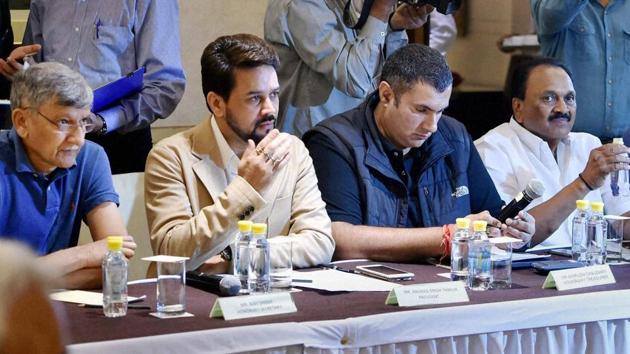
On a day the Supreme Court was to name a set of administrators for the BCCI, Attorney General of India Mukul Rohatgi brought a dramatic twist to the script when he argued that the implementation of the Lodha reforms needed a bigger debate and must be referred to a larger bench.
{{/usCountry}}On a day the Supreme Court was to name a set of administrators for the BCCI, Attorney General of India Mukul Rohatgi brought a dramatic twist to the script when he argued that the implementation of the Lodha reforms needed a bigger debate and must be referred to a larger bench.
{{/usCountry}}Rohatgi’s argument can be seen as a tacit backing from the Indian government since several affiliated units of the BCCI -- Railways, Services and the Universities -- were stripped of their voting rights. Rohatgi appeared for the Union Ministry of Railways, Armed Forces and the Association of Universities.
Rohatgi made the submissions before a new bench led by Justice Dipak Misra. When the Lodha reforms were made binding on the BCCI earlier this month, the bench was headed by Chief Justice of India TS Thakur, who subsequently retired. The other two members of the bench -- justices AM Khanwilkar and DY CHandrachud -- remain.
The Supreme Court on Friday said it will name the administrators on January 24 (Tuesday). Nine names have been submitted in a sealed envelope.
On January 2, the Supreme Court, in a landmark judgement, sacked Anurag Thakur and Ajay Shirke as the president and secretary, respectively, of the BCCI.
The Lodha panel had suggested age and tenure caps to be implemented across the BCCI and its state units. That made several top functionaries in India cricket virtually redundant.
“Can a panel of judges oversee the functioning of a private trust or a company? BCCI is a trust registered under a Tamil Nadu law. Similarly, state cricket associations are either trusts or companies,” Rohatgi argued before the bench.
In a significant reprieve to BCCI and state office-bearers, the top court clarified that members can serve separate nine-year terms at Board and state levels, but a three-year cooling off was mandatory after every three-year term. Effectively, one can serve Indian cricket for 18 years but over a 30-year period.
(With inputs from Bhadra Sinha)