After the India A batting line-up consisting of Yashasvi Jaiswal, KL Rahul, Devdutt Padikkal, Dhruv Jurel, Sai Sudharsan and Washington Sundar collapsed to 113 all out in 38.3 overs on Day 1 of their shadow tour of New Zealand last week, there were concerns for the two Test series India will play next month. After all, five of the six batters mentioned are first-choice Test batters.
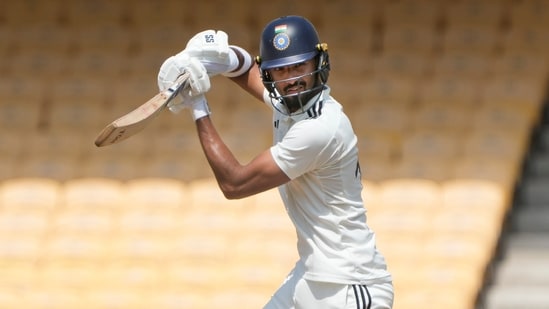
After such a disastrous performance in the first innings, the visitors’ camp needed someone to show the way. Padikkal took it upon himself with a superb 199 to help India amass 516 in the second innings, which put them in a dominating position and almost got them a win but for rain and bad light in the end.
Scoring runs at home is fine, but when a batter makes a mark in different conditions away at the start of his career, it stands out. Many players start with a full Test series at home. The first four Tests the 26-year-old left-handed batter has played have been on varied pitches — from the lively Dharamsala (debut v England) to the bouncy Perth (v Australia) to two Tests in Sri Lanka — spin-friendly Galle and the flat Sinhalese Sports Club Ground (Colombo). Padikkal adapted well to all the surfaces, scoring 418 runs at an average of 69.66 in six innings with two hundreds and one fifty.
As seen in the India A first innings, there is extra movement for pacers in New Zealand in red-ball cricket. After back-to-back centuries in Sri Lanka, Padikkal this week showed he also has the technique to negotiate the moving ball. The attack for the two Tests will be stronger but the two matches against New Zealand A will ensure he enters the Test series with confidence.
{{/usCountry}}As seen in the India A first innings, there is extra movement for pacers in New Zealand in red-ball cricket. After back-to-back centuries in Sri Lanka, Padikkal this week showed he also has the technique to negotiate the moving ball. The attack for the two Tests will be stronger but the two matches against New Zealand A will ensure he enters the Test series with confidence.
{{/usCountry}}The key to his adapting is precise preparation. Before heading to Sri Lanka, he planned his training around handling spin bowling. For New Zealand, he sharpened his game against the moving ball with guidance from his long-term batting coach Mohammed Nasseruddin at the Karnataka Institute Of Cricket (KIOC).
Batting in the rain on wet Astro-turf pitches against a light and soft ball that swings more is one of the methods Padikkal employed to get ready for NZ.
“Our training was focussed on not chasing the ball, just making sure to leave the ball which swung a lot. That is what we were mostly working on. And anything pitched up, just drive,” said Nasseruddin.
Padikkal assessed the value of timing the ball in NZ, maintaining shape and control over his hands to avoid following the moving ball. “Before going on the tour, we had three to four sessions. On the first day it was just facing a bowling machine, bowling over and around the wicket.
“The next day, we wanted to practice on a wet wicket and had planned to water it. But luckily, it started raining.
Most players would have said, ‘sir, it's raining’. But this boy said, ‘we'll practice here only’. It was really great that he came and practiced in those conditions. He played for almost two hours.
“To add to the degree of difficulty, we used a different ball — the wind ball. It's just like the leather ball with the seam, but it's light and soft so that it swings a lot.” Because the turf pitch gets wet, they played on AstroTurf. “Greenery is the same, conditions as we have in NZ also.”
How do you ensure that you don't chase the ball? “When the ball is swinging, instead of going with the stroke, hold it, just leave the ball. Build that muscle memory. We were practicing that way. And we saw the result in the tour opener.”
Padikkal's elaborate practice sessions were the reason for his success in Sri Lanka — he scored 167 and 117 to seal the No.3 spot. Unlike the lighter ball for the NZ series, he trained with Kookaburra balls for Sri Lanka.
“After returning from the India A tour of Sri Lanka, he had a short break and came up with the idea of practicing with Kookaburra balls, which helped him a lot because they use them in Sri Lanka. Since Test cricket involves a lot of spinners, we practiced against a wide variety of them, including two-three left-arm spinners,” said his coach.
Padikkal is a terrific 50-over batter, and an enterprising T20 player as seen in IPL, but his current priority to make a red-ball career is clear. If India are to do well in the New Zealand Tests, their No.3 will have to play a pivotal role.