


 Live Score
 Cricket Teams
 Cricket Players
A 15-year-old refuses to bend under burden: Vaibhav Sooryavanshi and the immense batting load he carries
Vaibhav Sooryavanshi, at just 15, is leading the Rajasthan Royals in IPL 2026, showcasing impressive stats with a strike rate of 237.65 and 404 runs.

 Prefer HTon Google


Vaibhav Sooryavanshi’s IPL 2026 season has moved beyond the excitement of age. The Rajasthan Royals opener is 15, but his numbers now sit in the territory normally occupied by senior overseas pros, established Indian anchors and franchise-defining batters. RR have not merely received flashes from a teenage talent; they have built a large part of their batting ceiling around him.
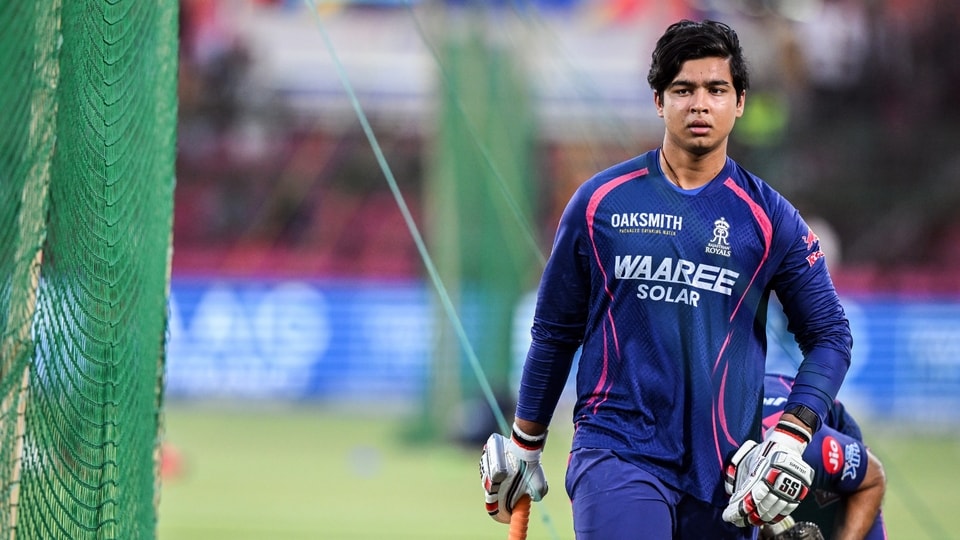
The clearest measure is the load. Sooryavanshi has scored 404 runs off 170 balls at a strike rate of 237.65, with 72 boundaries. Inside Rajasthan Royals’ batting group, he is the leading run-scorer, leading boundary-hitter, leading batting-impact player and leading overall performance contributor. That combination turns his season from a breakout story to a structural story.
The coefficient that captures RR’s dependence
A load-carrying coefficient helps explain the scale. The model combines four indicators: share of team runs, share of team boundaries, share of team batting impact and share of total player-performance impact. Sooryavanshi’s weighted load share stands at 22.82%. That means almost a quarter of RR’s weighted batting and performance output has come through the 15-year-old.
Notably, Sooryavanshi has carried 1.78 times the load of an average main Rajasthan Royals batter. Against the average of RR’s other principal batters, his coefficient rises to 2.05x. Yashasvi Jaiswal, RR’s next major batting contributor, has a weighted load share of 16.14%. Dhruv Jurel is at 15.23%. Donovan Ferreira at 14.34%, Riyan Parag at 9.96%. Sooryavanshi has separated himself from that group through both volume and violence.

The league-wide number is even more revealing. Among qualifying IPL 2026 batters, Sooryavanshi’s load coefficient is 1.56x against the league average. He ranks second in the tournament weighted load share, behind only KL Rahul. Names around him on the leaderboard include Shubman Gill, Ryan Rickelton, Mitchell Marsh, Sanju Samson, Heinrich Klaasen, Jos Buttler and Abhishek Sharma. That is the company his season has entered.
The exceptional part is the resource equation. Sooryavanshi has produced 22.89% of RR’s batting runs, 27.59% of their boundaries and 24.77% of their batting impact-score, while facing only 15.78% of the total balls the team has faced. That imbalance carries the real value. RR have not needed to allocate a large chunk of inning time to him for him to influence the match. He has created output at a rate that reduces pressure on the rest of the order.
Powerplay load and the risk attached to it
His season has been built in the powerplay. Of his 404 runs, 323 have come in the first overs. He has scored those powerplay runs off 132 balls at a strike rate of 244.70, with 59 boundaries. Rajasthan’s early overs have regularly become a Vaibhav event. When he lands, RR’s innings accelerate before the bowling sides can settle into a rhythm. That has allowed the middle order to operate from positions of advantage more often than the raw team totals alone show.

That match split clearly shows the burden. Against CSK, he made 52 off 17, contributing 42.62% of RR’s batting runs. Against RCB, he made 78 off 26, accounting for 39.20% of the team’s batting runs. Against SRH, he made 103 off 37, contributing 46.61% of RR’s batting runs and 44.77% of their player-performance impact in the match. Those are innings where a teenager became the main scoring architect.
His 30-plus innings underline the dependency. In seven innings of 30 or more, Sooryavanshi has scored 392 runs at an average of 56 and a strike rate of 251.28. In those games, his average RR run share is 31.87%, with an average impact share of 25.17%. When he has crores, the first layer of risk, Rajasthan have received a match-shaping contribution almost every time.
Also Read: INR 4.57 crore profit from 47 balls: Finn Allen's Delhi demolition rewrites KKR's auction ledger
The volatility remains part of the picture. His three low scores have brought only 12 runs at a strike rate of 85.71. His average run share in those matches is roughly 2.35%, and his impact share falls into the negative territory. That is the cost of a role built on early aggression. RR are asking him to change the innings quickly, and that job naturally carries exposure. The concern for Rajasthan is that its failures leave an immediate scoring vacuum unless Jaiswal, Jurel or Ferreira absorb the damage.

Even with that volatility, the overall balance tilts heavily in his favour. Sooryavanshi’s efficiency-adjusted load ratio is 1.47, the best among the qualifying batters in the league. Those numbers reward players who produce high output without using a commensurate share of deliveries. It separates productive accumulation from high-force innings sharpers. Sooryavanshi’s season sits in the second category.
For Rajasthan Royals, the implication is direct. Their batting has not simply benefited from a young opener’s form. Their batting model has drawn major value from his ability to produce disproportionate output early. His presence changes the innings' economy. He gives RR more runs per ball, more boundaries per opportunity and more impact per delivery than any other batter in their squad.
At 16, Vaibhav Sooryavanshi is carrying the load of a franchise batter. The age makes it remarkable. The combination of age and the impact coefficient makes it one of IPL 2026’s strongest analytical stories.
Method note
This analysis is based on an impact model designed by the author. The model studies a player’s contribution through batting output, boundary production, match impact and overall player-performance value, then compares that contribution with both his team’s batting group and the wider league.
For the load-carrying coefficient, four indicators were used: share of team runs, share of team boundaries, share of team batting-impact score and share of total player-performance score. These were combined into a weighted load share, which was then compared against Rajasthan Royals’ main batters and qualifying IPL 2026 batters league-wide.
The coefficient is an analytical estimate, not an official IPL metric. It is meant to show how much responsibility a player has carried within his team’s batting structure and how that load compares with the rest of the league.


