There’s no such thing as a benign Comptroller and Auditor General (CAG) report. The government’s auditor is expected to be finicky and puritanical when it comes to processes and finances — and it is usually that. The report by CAG on the Indian Air Force’s acquisitions that was tabled in Parliament on February 13, is just that, although not in a way that either the government or the opposition would want. The report is on 11 air force purchases, although much of the focus has been on one deal – the purchase of 36 Rafale fighters through an Inter-Governmental Agreement (IGA) between India and France.
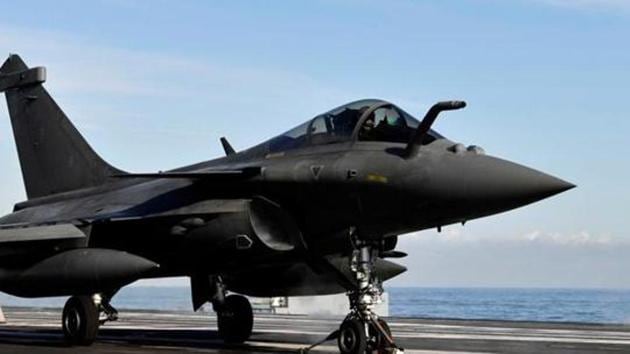
At one level, the report on Rafale, is a vindication of the government’s stance that it bought the aircraft at a lower price than in an older deal negotiated by the Congress-led United Progressive Alliance (UPA), and scrapped in March 2015. At another, by highlighting the absence, in the new deal, of financial and performance guarantees on around 25% of the cost of the old deal, the government’s auditor has explicitly articulated its point of view that Rafale maker Dassault Aviation has saved some amount of money and not passed it on to the government of India. This, the fact that the offsets part of the deal will only be dealt with in a subsequent report, and the report’s mere restatement of the government’s position on the lack of financial and performance guarantees in the new deal will likely provide enough material for the Congress and other parties to continue to ask questions about the deal. The big message in the CAG report, though, isn’t any of this. Anyone reading the report cannot but be appalled at the way the defence procurement process works in India. It is, at best, inefficient, and at worst, opaque.
Sample this: the government spent four years, between 2000, when it first set out to buy the much-needed fighter jets, and 2004, deciding whether the purchase should be done on a so-called single-source basis or through a competitive bid. The government in charge was the first edition of the National Democratic Alliance (NDA). Or this: in November 2004, having decided to opt for the competitive bidding route, the government put out a Request for Interest. The CAG report says the only thing this contributed to the process was a delay. Sure enough, the Request for Quotations didn’t go out till August 2007. The government of the day? The first edition of the UPA. The bureaucracy and the defence establishment seem to have done their bit too. The CAG report is especially harsh on the narrow definition of Air Staff Qualitative Standards or ASQRs, and the arrival of the benchmark price, which seems to be without basis — a committee under UPA-1 came up with a price 47% lower than the lowest bid in the case of the old deal; the Indian negotiation team for the IGA under the NDA, started with one that was 57% lower. The CAG terms both prices unrealistic.
{{/usCountry}}Sample this: the government spent four years, between 2000, when it first set out to buy the much-needed fighter jets, and 2004, deciding whether the purchase should be done on a so-called single-source basis or through a competitive bid. The government in charge was the first edition of the National Democratic Alliance (NDA). Or this: in November 2004, having decided to opt for the competitive bidding route, the government put out a Request for Interest. The CAG report says the only thing this contributed to the process was a delay. Sure enough, the Request for Quotations didn’t go out till August 2007. The government of the day? The first edition of the UPA. The bureaucracy and the defence establishment seem to have done their bit too. The CAG report is especially harsh on the narrow definition of Air Staff Qualitative Standards or ASQRs, and the arrival of the benchmark price, which seems to be without basis — a committee under UPA-1 came up with a price 47% lower than the lowest bid in the case of the old deal; the Indian negotiation team for the IGA under the NDA, started with one that was 57% lower. The CAG terms both prices unrealistic.
{{/usCountry}}In what must cause discomfort to the UPA, the report says Dassault was treated preferentially in the old deal. Indeed, the fighter didn’t meet nine of the ASQRs; the company was allowed to change its technology and price bid. CAG also says a competing bid from the European Aeronautic Defence and Space Company (EADS) was also non-compliant. Interestingly, after the deal was all but done, in June 2012, the then defence minister asked for an overview of the entire process. By the time this overview was complete, the government had changed. This overview, results of which were submitted in March 2015, found bids of both Dassault and EADS non-compliant and recommended that the process be restarted.
And so, 15 years after the process began, India found itself at the starting point again. A reading of the CAG report shows that this isn’t unique to the fighter deal. It mentions a 2012 acquisition of 11 Doppler Radars by the Air Force, which took 96 months, and points out that the India Meteorological Department, also a government department, took a mere 11 months to acquire the same equipment. Irrespective of what their positions may be on the Rafale deal, the government and the opposition need to agree that the defence acquisition process needs an overhaul. The new government (whichever one) that takes over in May would do well to set up a Joint Parliamentary Committee to do this.