Five years after a young paramedic was gang raped and murdered in Delhi by six men, one of them a minor, the Supreme Court on Friday upheld the Delhi High Court and the trial court’s decision to award the death penalty to the four eligible convicts. One of the accused had allegedly committed suicide while in jail and other, who was a minor at the time of the offence, was granted three years in a correction facility by the Juvenile Justice Board. This death penalty verdict, as expected, will be seen in positive light by most, especially the family. It will be a catharsis for them. This is understandable, they were the ones who lost a loved one and had been struggling to come to terms with the dreadful incident.
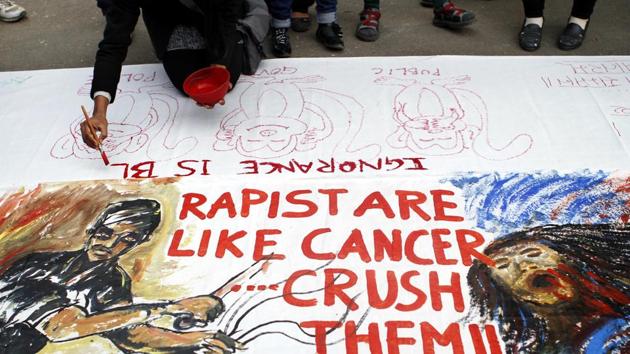
But much as they and many other people rejoice after the verdict, capital punishment is not the answer even in the rarest of the rare cases, and India must abolish this system.
There are many countries such as India, which cite the death penalty as a way to deter people from committing crimes. But, as several human rights groups have been saying for years, this claim has been repeatedly discredited, and there is no evidence that the death penalty is any more effective in reducing crime than imprisonment.
An Amnesty International report says that some of the countries executing the most people have deeply unfair legal systems. The ‘top’ three executing countries – China, Iran and Iraq – have often issued death sentences after unfair trials. Many death sentences are issued after ‘confessions’ that have been obtained through torture.
Sometimes death sentences are also discriminatory. In many countries, an accused is more likely to be sentenced to death if he is poor or belongs to a racial, ethnic or religious minority because of biases in the justice system. Also, poor and marginalised groups have less access to the legal resources needed to defend themselves.
{{/usCountry}}Sometimes death sentences are also discriminatory. In many countries, an accused is more likely to be sentenced to death if he is poor or belongs to a racial, ethnic or religious minority because of biases in the justice system. Also, poor and marginalised groups have less access to the legal resources needed to defend themselves.
{{/usCountry}}Read: At Death’s Door: An investigation into capital punishment in India
Even with the option of capital punishment, rapes have not decreased in India. According to the National Crime Records Bureau, there has been only a marginal reduction in crime against women in 2015 as compared to 2014. In fact, in its 262nd report, the Law Commission of India recommended abolition of the death penalty for all crimes other than terrorism-related offences and waging war — offences affecting national security. No less a legal luminary than the late JS Verma, who overhauled the laws on gender violence, and was also the chief justice of India and head of the National Human Rights Commission, was against the death penalty.
Read: Sentenced to Appeal for Life: Trial Courts in India sentence hundreds of convicts to death
It’s time India abolishes this inhuman law and focuses on implementing laws on gender violence with single-minded determination.