The India Meteorological Department (IMD), on Sunday, said Himachal Pradesh received the highest-ever rainfall for 24 hours, since records began almost 70 years ago. The situation in neighbouring Uttarakhand is equally grave. In both states, rainfall has triggered landslides, snapped road links, shut down hydropower projects, and forced the release of excess water from the dams in the region. Such intense and excessive rain in a short period is a clear indication that both states are bearing the brunt of climate change, a man-made phenomenon, and also paying a heavy price for unbridled development that has wrecked the ecologically fragile region. The heavy rainfall in Uttarakhand and Himachal Pradesh could also have a severe downstream impact. Flood alerts have been sounded in Delhi, Haryana, Punjab, and Uttar Pradesh.
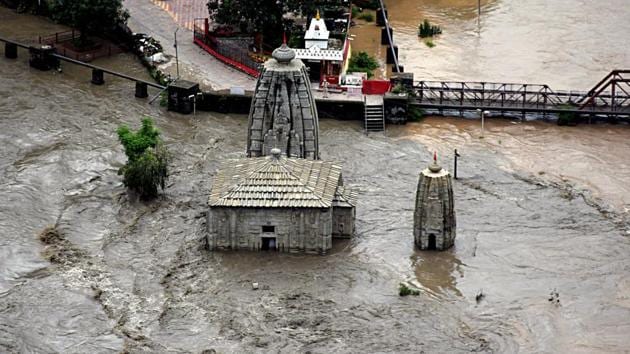
What we are seeing in the two states is also a result of successive central and state governments’ wrong development policies, which have a single-point focus: build more and more infrastructure, without taking into account a region’s natural environment. Let’s take two examples: The Delhi-Manali highway (Himachal Pradesh) and the Char Dham road (Uttarkhand). Both are being expanded for more vehicular traffic and tourists. In both cases, environmentalists and courts have raised red flags. In the case of the Himachal highway, they allege that the National Highway Authority of India is dumping construction debris into the river Beas, leading to floods. In the second case, the project will refurbish 900km of the damaged highways with two lanes, 12 bypass roads, 15 big flyovers, 101 small bridges, 3,596 culverts, and two tunnels. All these will be done blasting and cutting the mountains. Such large-scale development is taking in a place that has already seen a mega-disaster in 2013. In fact, the home ministry in 2013 had blamed deforestation, the building of roads and tunnels through mountains, construction of hydropower facilities, tourism-related construction in floodplains and hill slopes, as well as sand mining for it. Yet, we are going down that road again.
At a time when the central and state governments should put their minds together to assess the carrying capacity of the Himalayas vis a vis the ecosystem services (benefits that humans gain from the natural environment and properly functioning ecosystems) they provide, government planners are just doing the opposite - burdening an already fragile environment.
{{/usCountry}}At a time when the central and state governments should put their minds together to assess the carrying capacity of the Himalayas vis a vis the ecosystem services (benefits that humans gain from the natural environment and properly functioning ecosystems) they provide, government planners are just doing the opposite - burdening an already fragile environment.
{{/usCountry}}