
 E-Paper



It’s time for the next step in J&K
Focus on the safety and development of the region, and restart the democratic process

 Prefer HTon Google


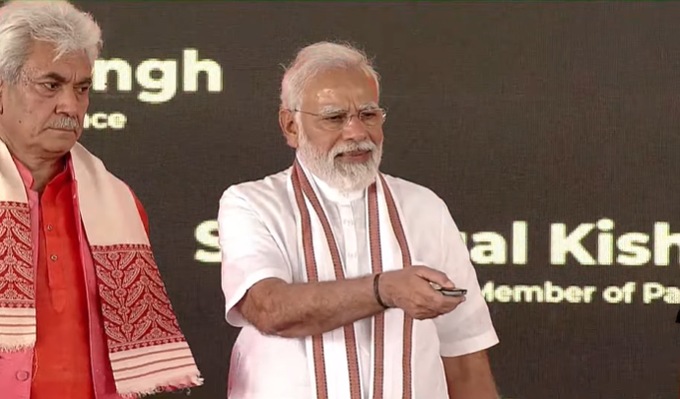
Prime Minister (PM) Narendra Modi’s first visit to Jammu and Kashmir (J&K) after the nullification of Article 370, which gave the erstwhile state special status, and its bifurcation into two Union Territories comes at an interesting time. On Sunday, during his visit to launch a clutch of projects, which came almost three years after the region’s reorganisation, Mr Modi spoke of development and democracy.
The visit comes with a report of the delimitation commission — it has recommended an increase in seats to 90 from 83, with six of the new seats in the Jammu region — before the Union government, which is expected to approve it in the coming months. That should pave the way for elections, as promised by both the PM and the home minister, and the eventual restoration of J&K’s statehood. It comes with an increased focus on infrastructure projects, including many related to connectivity. Looking beyond strategic imperatives, and the usual hype, there does seem to be a real effort to better connect J&K with the rest of the country. It comes with the PM’s Bharatiya Janata Party on a high — having won four of five recent state elections, including the all-important one in Uttar Pradesh, and with its strength in the Upper House of Parliament crossing the 100 mark. It comes at a time when the government has withdrawn the Armed Forces (Special Powers) Act in some parts of the country, raising expectations that it could do so in at least some parts of J&K (although this is unlikely). And it comes with a new regime in Pakistan, and the cautious optimism that this could reopen a window for talks, and for discussions on terror which has plagued the region, although bitter experience has shown that Islamabad’s script rarely changes.
On the flip side, it comes even as terror attacks in the Valley continue, with targeted attacks on civilians, including those from other parts of the country, remaining a matter of concern. And it comes at a time when regional political outfits are becoming impatient, and would like to see elections held at the earliest. All of this sets the stage for what should be the government’s next big step in J&K — an even more concerted effort to push development; a focus on making the region safe and secure, including for migrant workers who are, unfortunately, soft targets; and an accelerated effort towards electoral democracy in the region. It is time.


