The results of the Gujarat elections, where the Bharatiya Janata Party (BJP) won a record 156 seats in the 182-member House with a 52.5% share of the vote, are an outlier, and not just because of the number. They are an outlier also because Gujarat voted pretty much the way it does in national elections. As an analysis in HT shows, the party’s performance in the 2019 Lok Sabha elections, when it won all 26 parliamentary seats with a vote share of 62.21%, translates into 173 assembly seats. On Thursday, it came closer than hitherto fathomable to those improbable numbers.
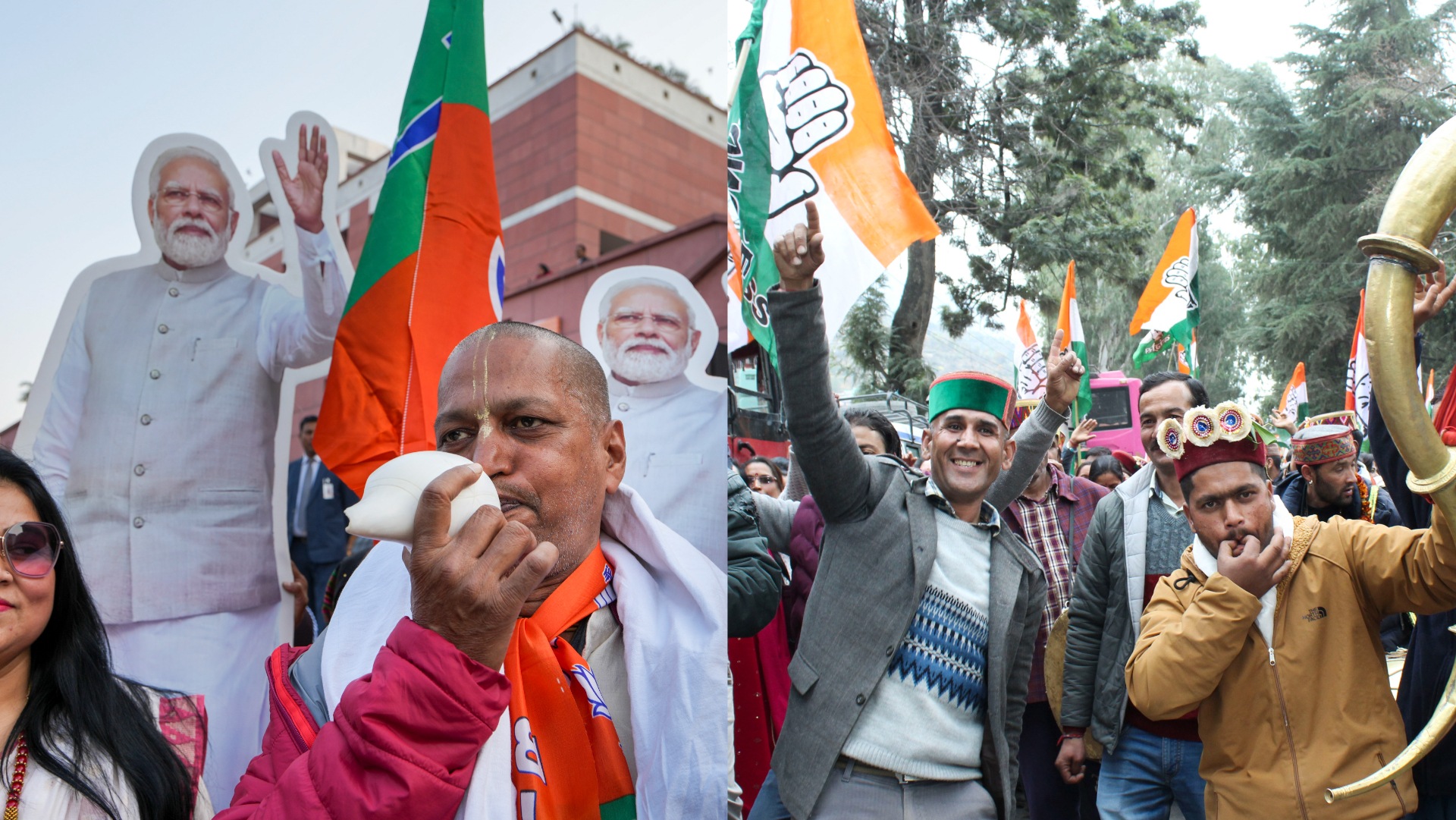
The results point to the singular factor responsible for the BJP’s victory: Prime Minister (PM) Narendra Modi. The Congress campaign in Gujarat — actually, the absence of one — contributed to the BJP’s win, as did the latter’s own aggressive one, orchestrated by home minister Amit Shah (like Mr Modi, a son of the soil), but when a party battling anti-incumbency (24 years in power; and 27 years without a loss in elections), and with no significant local leadership of note, turns in a performance of this magnitude, the factors behind this are usually outside the state. Mr Modi may be PM, but the result of this assembly election suggests that in Gujarat, he is perhaps chief minister for life.
It is unlikely that any other party, and in any other big state, can mirror the BJP’s performance in Gujarat (even the BJP cannot), but it is evident that the BJP enjoys the political equivalent of a conglomerate premium, a Modi-premium that helps it paper over the cracks in states where it does not have strong local leadership or is battling anti-incumbency or both. And in states where the party does boast strong local leadership — the Uttar Pradesh elections, which the party fought under the leadership of chief minister Yogi Adityanath earlier this year, is a case in point — this premium adds to the party’s appeal, increasing its electoral returns.
{{/usCountry}}It is unlikely that any other party, and in any other big state, can mirror the BJP’s performance in Gujarat (even the BJP cannot), but it is evident that the BJP enjoys the political equivalent of a conglomerate premium, a Modi-premium that helps it paper over the cracks in states where it does not have strong local leadership or is battling anti-incumbency or both. And in states where the party does boast strong local leadership — the Uttar Pradesh elections, which the party fought under the leadership of chief minister Yogi Adityanath earlier this year, is a case in point — this premium adds to the party’s appeal, increasing its electoral returns.
{{/usCountry}}The Modi-premium isn’t unprecedented. The Congress likely enjoyed a Nehru-premium, and an Indira-premium when Jawaharlal Nehru and Indira Gandhi (and the party itself) were at their pomp. This is simply the electoral advantage a national party gains in state elections on account of either being in power at the national level or from the sheer brand value of a national leader (or both). When parties articulate their aspirations of being part of a united Opposition grouping that can take on the national political hegemon or, more ambitiously, pitch themselves as the core around which such a grouping can evolve, they are, in effect, claiming that they already have this premium, or what it takes to acquire one.
The Gujarat elections featured one such aspirant, the Aam Aadmi Party (AAP) led by Arvind Kejriwal. Arguably the most successful political startup of the past two decades, the AAP has sought to build its brand around welfarism, the provision of high-quality education and health care, and the personality of Mr Kejriwal. It is in power in Delhi and Punjab (which it won earlier this year), and it was looking to unseat the Congress, which has traditionally been the Opposition in Gujarat (with a healthy vote share of around 40%). It fell well short of that goal, though — winning five seats and a 13% share of the vote. It may better that performance in 2027, but that’s five years away, and if the question was about a national rival (however small) to the BJP, then the answer is there for everyone to see.
The Gujarat and Himachal Pradesh elections mark the beginning of an almost uninterrupted 18-month-long election cycle culminating in the Lok Sabha elections of 2024. The coming year will see elections in Tripura, Meghalaya, Nagaland, Karnataka, Chhattisgarh, Madhya Pradesh, Mizoram, Rajasthan, and Telangana. It could also see elections in Jammu & Kashmir. And as this cycle begins, there is only one pole in national politics.
What of the Congress? It wrested Himachal Pradesh from the BJP on the back of an energetic campaign and strong local leadership. The two ingredients, a requisite to leverage anti-incumbency to its advantage, were absent in the party’s efforts in Gujarat. These ingredients have also been missing in most of the elections the party has lost since 2019. And sometimes, even in states where it does have strong local leaders, the party’s central leadership manages to find a way to undermine them. Its recent track record would seem to suggest that, just as the BJP benefits from a conglomerate premium, the Congress suffers the equivalent of a conglomerate discount.