E-Paper



HT@100 | 1924-1935: The early years
Set up to reform and revived to sustain the voice of anti-colonial rebellion, HT was forged in patriotism

 Prefer HTon Google


In September 15, 1924 Mohandas Karamchand Gandhi stood with a group of people outside a nondescript building in the grain market on Burn Bastion Road, near Delhi railway station, to welcome the birth of a newspaper which would play a critical role in the freedom movement, the Hindustan Times. On the 24ft x 24ft ground floor of its office stood a Dawson and Payne hand-fed stop cylinder press and a Miehle press. Journalists were allotted the top two floors.
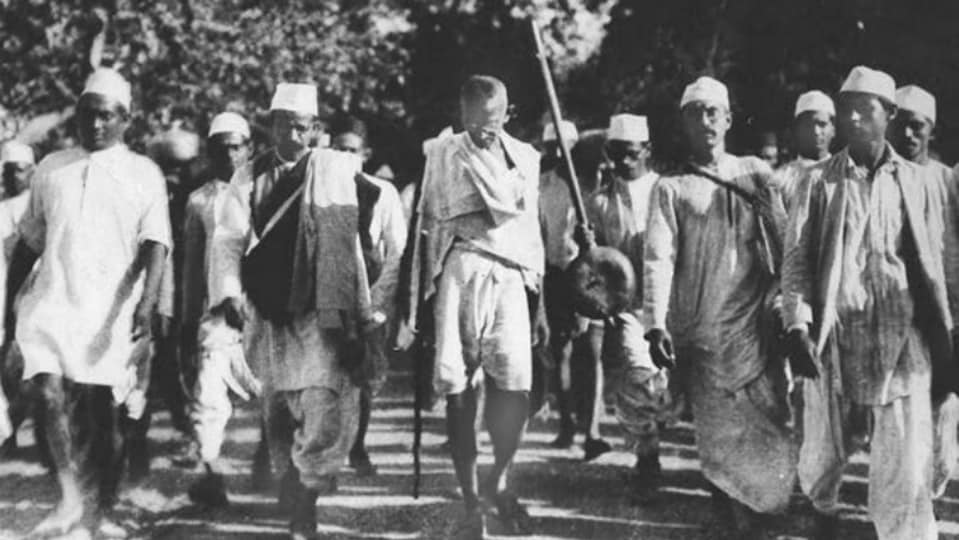
“Every word and sentence published in the paper should be weighed. There should not only be no untrue statements but also no suggestio falsi or suppressio veri,” Gandhi said, before inaugurating the Hindustan Times press. Seven days later, the first edition of the newspaper rolled out.
Gandhi wanted Indian editors to stand at the forefront of the revolution he had inspired. Writing in 1920 in Young India, an English weekly he edited, the Mahatma said: “I do hope that Non-Cooperation editors... will not refrain from expressing their thoughts for fear of the Press Act… It is a negation of one’s calling for an editor to have to suppress his best thoughts.”
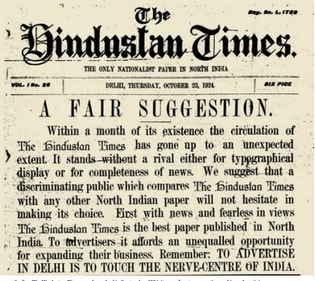
Gandhi was the freedom movement’s moral compass. Having returned in 1915 after leading a successful anti-colonial satyagraha movement in South Africa, he led a peripatetic life in India spreading the ideas of self-rule and non-violent civil disobedience. The unspeakable excesses of the Jallianwala Bagh massacre of 1919 in Amritsar had a radical impact. He decided that the moment had come for a mass agitation. Simultaneously, in Punjab, the Akalis had launched a gurdwara reform movement to rid their sacred sites of corrupt priests who often collaborated with the British administration. In February 1924, the British fired upon a large group of protesters (a “jatha”) marching peacefully towards the Gurdwara Gangsar Sahib in Jaito in the princely state of Nabha (present day Faridkot). Over 100 men, women and children were killed. The Akalis realised that a newspaper could help further their message of Sikh reform, and Hindustan Times was the result.
Sunder Singh Lyllapura and Tej Singh Samundri were among the other Akalis involved in starting Hindustan Times. The paper’s first editor, handpicked by Gandhi, was the redoubtable KM Panikkar, who went on to serve as independent India’s ambassador to China, and later, Egypt. The publisher of the paper was a young man named Krishan Das Kohli who had participated in the Akali and the Non-Cooperation movements.
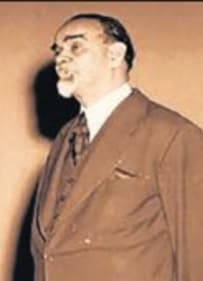
Eventually, the first owners discovered that the demands of running an enterprise efficiently were beyond them. They turned to Hindu Mahasabha leaders Pandit Madan Mohan Malaviya and Lala Lajpat Rai to bail them out. In 1926, the duo hired Jogendra Nath Sahni, who had recently completed his postgraduation in journalism from the University of Michigan in Ann Arbour, as editor.
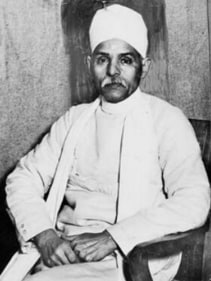
The Sahni-Kohli team lasted five years, but it brought lasting changes. The editor-publisher pair worked together to turn HT from an evening to a morning paper. Kohli added several Dak editions (which could be sent by the mail train, hence “Dak”), timed to catch the trains to several cities in Punjab, United Provinces (Uttar Pradesh) and Rajputana (Rajasthan). It was priced lower than its main competition, The Tribune. Sahni also made the paper more readable: he reduced the column width, increased the number of columns, made his editorials shorter, and brought a collection of the most important news right to the front page. By 1930, the paper acquired two new presses, the page size was increased and the number of columns went up to six. More importantly, its circulation was almost 30,000 copies.
All this cost money — and initially, there wasn’t much. Malaviya and Rai, who had already borrowed from a bank, could not extend their credit any further. So, they did the next best thing. Malaviya approached a young, quiet and patriotic industrialist who had won the affection and trust of Gandhi, and funded many of the Mahatma’s constructive programmes, Ghanshyam Das Birla.
GD, as he was popularly called, belonged to a Maheshwari family of traders settled in Pilani, Rajasthan, but with business interests in Calcutta and Bombay. But he was no common capitalist. His philanthropy was legendary. He also founded the Federation of Indian Chambers of Commerce and Industry (FICCI) in 1927 to argue for the better protection for Indian industries by the colonial government. He taught his sons and daughters that they were trustees, not owners, of their wealth.
In 1927, HT became a Limited Liability Company, and GD Birla, its “virtual proprietor”. In his autobiography, he writes that his impetus to keep HT afloat was his belief that newspapers were an important vehicle for raising national consciousness.
GD first met Gandhi in 1915 after the Mahatma returned to India from South Africa. The same year, the two began exchanging letters. Their innumerable conversations ranged from disagreements over the economic model India must adopt to GD’s “spiritual restlessness” to Gandhi’s diet. Over the years, GD took on the role of mentor, son, friend and bankroller to Gandhi; he also played intermediary — or to use biographer Alan Ross’s term, “emissary”— between the Mahatma and the British, as he often travelled back and forth to London establishing personal relationships with important political figures in the British government.
Many years later, writing about his father, Krishna Kumar Birla said: “Father knew [British prime minister Winston] Churchill too. Churchill invited him for lunch on several occasions, in fact as early as in 1935, and several times later.” The context to their meeting was the discussion around provincial autonomy in light of the Government of India Act (1935), which gave the governor of the state the power to dismiss elected provincial (state) governments.
When Gandhi travelled to Delhi, he often stayed at Birla’s home. Such proximity gave Hindustan Times an edge over other nationalist papers. Gandhi wrote often for Hindustan Times (his autobiography, The Story of My Experiments with Truth was serialised in the paper). GD eventually appointed Devadas Gandhi, Mahatma’s third son, as the paper’s managing editor in 1937.
Hindustan Times, a patriot’s paper, was forged in the rough and tumble of the greatest era of modern India’s history.