
 E-Paper



India retail inflation holds steady at 4.45% in July despite stress over rise in food, fuel prices
Retail inflation rose marginally to 4.45% in July from 4.38% in June, with food and fuel prices driving the recent increase.

 Prefer HTon Google


Retail inflation was flat in India between June and July, barely changing from 4.38% in June to 4.45% in July. This vindicates the position of RBI’s Monetary Policy Committee (MPC), which ruled out any widespread inflation pressure in the economy in its meeting held last week. The latest inflation reading is also in line with analyst expectations. A Bloomberg poll of economists expected this number to be 4.5%.
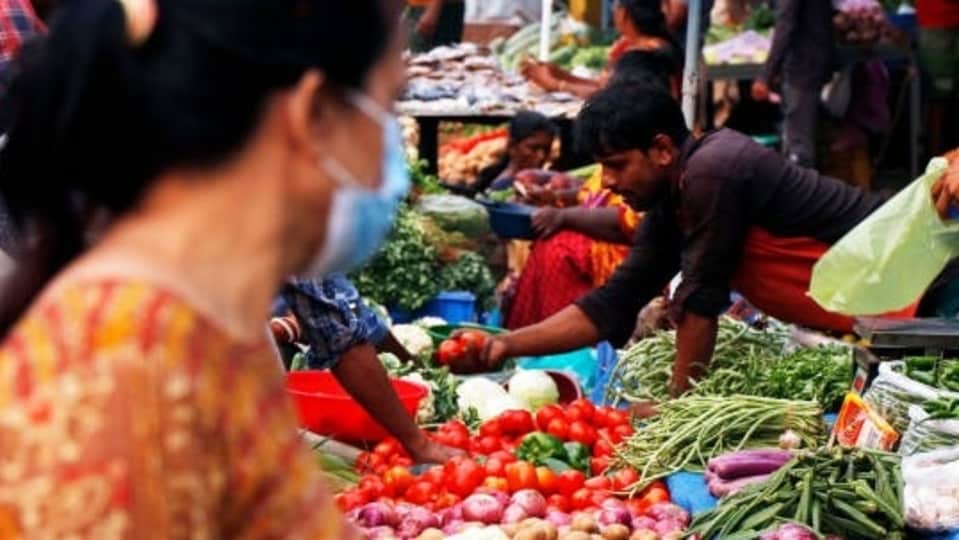
The plateauing of retail inflation numbers, as measured by the annual change in Consumer Price Index (CPI), follows a continuous rise in monthly data in the new inflation series which has a base year of 2024. Data from the Centre for Monitoring Indian Economy (CMIE) shows that inflation fell to a near-zero level (0.04%) in October 2025 and has risen every month since to 4.45% in July.
Also read: The RBI is emerging as an Asian rate outlier. Five charts show why
Food, fuel drive recent rise in inflation
Most of the recent increase in inflation has been in food and fuel prices, as can be seen in the trends in core and non-core inflation.
Core inflation measures the non-food non-fuel part of the CPI basket and is immune to seasonal fluctuations. According to CMIE data, core inflation in July 2026 was 4%, the same as in June and not very high from the 3.3% in January, the earliest period for which data is available in the new series. Non-core inflation, on the other hand, increased from 1.9% in January to 5.1% in July. Food inflation increased from 2.1% to 5.2% between January and July. Food items have a 36% weight in the new CPI basket.
Also read: How US bill proposing 100% tariffs over Russian oil purchase could hurt India
Transport fuel inflation rises amid West Asia war
While fuel is not a consolidated category in CPI data, it have nevertheless seen an increase in inflation because of the war in West Asia. LPG and PNG inflation (with a combined weight of 1.98%) has increased from 1.7% in January to 5% in July.
Fuels and lubricants for personal transport equipment (this category includes petrol, diesel, and CNG with a combined weight of 4.85%) has seen inflation increase from 0.07% in January to 7.55% in July.
To be sure, June and July numbers for personal transport fuels are almost exactly the same and likely to continue at almost the same level unless prices are lowered. This is because petrol and diesel prices were flat in 2025 and saw hikes in instalments that started and ended in May 2026.
Also read: World youth unemployment rate rose last year: UN
RBI sees inflation averaging 5% in 2026-27
MPC’s latest forecast, which was released earlier this month, expects annual CPI inflation to be 5% in 2026-27 with quarterly values being 4.7%, 5.9% and 5.5% in the quarters ending September 2026, December 2026 and March 2027. Inflation for the June quarter came at 4.3%, which was 30 basis points (one basis point is one hundredth of a percentage point) lower than RBI estimate.
“As increases in inflation continues to be driven by food and administered price increases, we expect the MPC to look through these higher inflation outcomes and persist with a pause for the remainder of 2026,” Aastha Gudwani, Chief India Economist at Barclays said in a note.


