
 E-Paper



The state of the economy, as MPC would have seen it | Number Theory
Sustained decline since the West Asia war broke out calls for caution against a possible underestimation of the war’s impact on the overall economic situation.
Published on: Aug 6, 2026, 07:28:14 IST

 Prefer HTon Google
Share via


Copy link

The Monetary Policy Committee (MPC) of the RBI finished its third bimonthly meeting since the outbreak of the ongoing war in West Asia. It noted that the economy continues to show resilience despite persisting headwinds and uncertainties on the external front. The MPC also improved its June forecasts for growth and inflation. It did not make any changes to its monetary policy toolkit, either on interest rates or the policy stance. Beyond these summary takeaways, what is the larger state of the economy as the MPC would have seen it? Here are four charts which answer this question.
The state of the economy, as MPC would have seen it
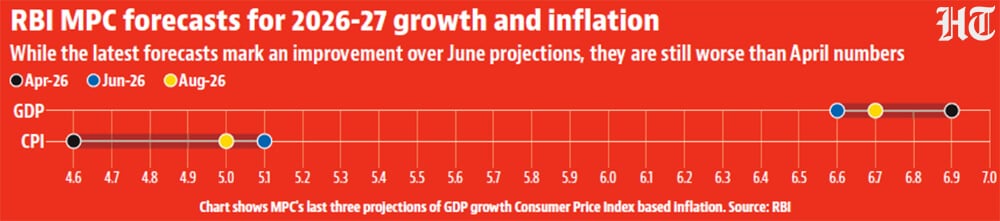
 Growth-inflation dynamic is favourable from June but still worse compared to AprilThe MPC’s growth and inflation forecasts at its April meeting were 6.9% and 4.6%, respectively. Because the MPC’s February meeting did not release full-year forecasts for growth and inflation – it was awaiting the release of the new GDP and CPI series – we do not really have a pre-war forecast. While the MPC’s latest projections are better than they were in June, they are still worse than the April numbers. The larger point is that the war is far from costless for the economy.
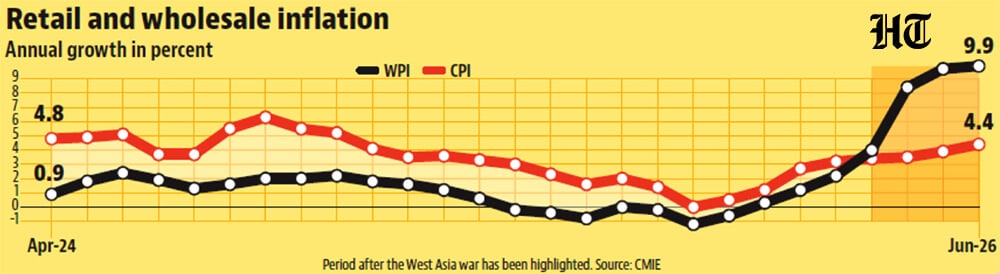
- Inflation is more benign on the retail front than the wholesale oneTo be sure, RBI’s inflation-targeting mandate treats the Consumer Price Index (CPI), or retail inflation, as the benchmark inflation rate. So, the MPC is not wrong to focus on it. However, the other inflation measure, the Wholesale Price Index (WPI), has shown a much larger increase since the outbreak of the war and is now at almost double-digit levels. Wholesale price pressures will eventually percolate into retail prices too.
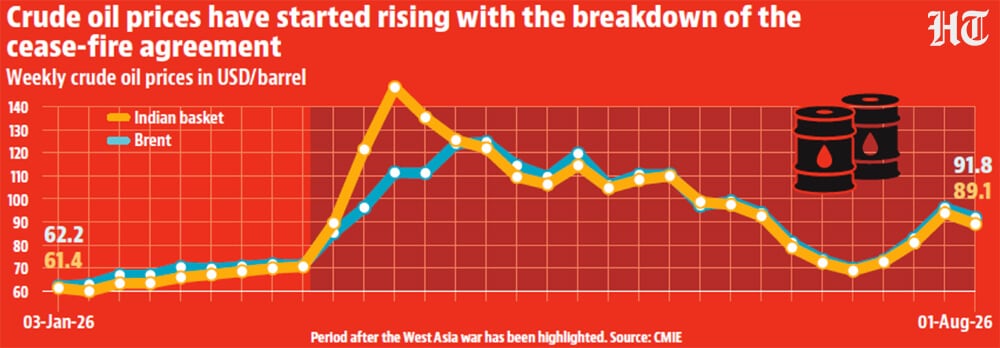
- The end of the ceasefire has been followed by oil prices rising once againCrude oil prices peaked in March following Iran’s closure of the Strait of Hormuz. Both the international benchmark Brent crude and India’s crude oil basket rose above the psychological benchmark of $100 per barrel. Prices cooled subsequently, first slowly and then sharply, following a ceasefire arrangement in June. But the end of that arrangement reversed the trend. As of now, the future trajectory remains unclear given contradictory statements by the US government and Iran on the prospects and timing of a deal.
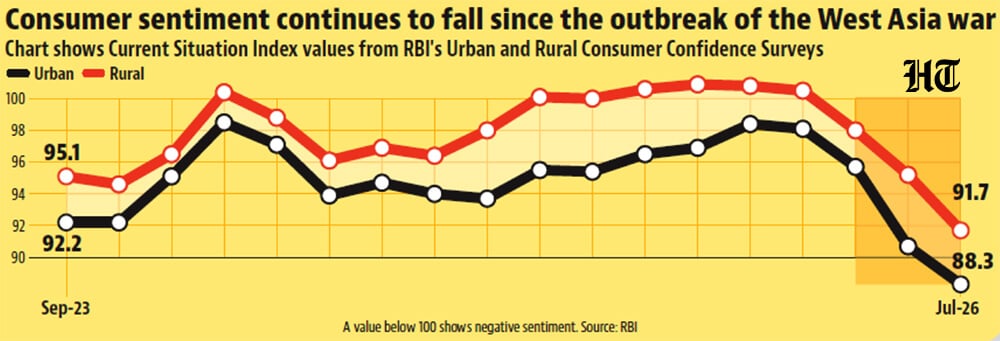
- But most concerning is the steady fall in consumer sentimentThe MPC resolution does not refer to it, and its tone mostly suggests resilient domestic demand. At least one set of statistics that the MPC would have seen raises a red flag against complacency on this front. Consumer confidence in both rural and urban areas, as measured by the RBI’s surveys aligned with MPC meetings, has seen a sharp and, more importantly, steady decline since the outbreak of the war. The Current Situation Index in both surveys is in negative territory. To be sure, negative sentiment in the consumer confidence surveys is not new and has been seen in the past even when the economy was doing well. However, the sustained decline since the West Asia war broke out calls for caution against a possible underestimation of the war’s impact on the overall economic situation.


Unlock a world of Benefits with HT! From insightful newsletters to real-time news alerts and a personalized news feed – it's all here, just a click away! -Login Now!


