“A future historian writing the electoral history of India would divide his work in two distinct phases—pre-Seshan and post-Seshan. Before him, the country had outstanding men as Chief Election Commissioners but all of them played their role within the Lakshman Rekha of the letter of the law in a political milieu which revelled in violating the law and the spirit of the Constitution.” This was noted in an editorial, “After Seshan, Who?” in the Hindustan Times in 1996.
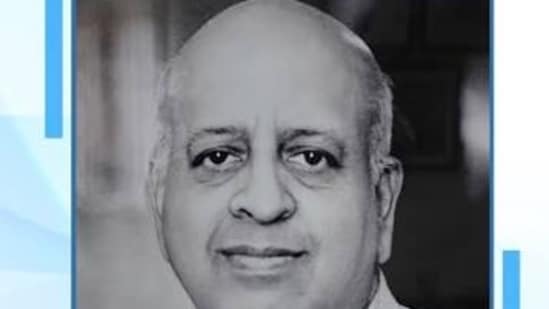
TN Seshan
“A future historian writing the electoral history of India would divide his work in two distinct phases—pre-Seshan and post-Seshan. Before him, the country had outstanding men as Chief Election Commissioners but all of them played their role within the Lakshman Rekha of the letter of the law in a political milieu which revelled in violating the law and the spirit of the Constitution.” This was noted in an editorial, “After Seshan, Who?” in the Hindustan Times in 1996.
TN Seshan was the 10th chief election commissioner (CEC) who served from December 1990 to December 1996. The words of the editorial echo as question are being raised on the integrity and credibility of the Election Commission (EC) itself.
Seshan said integrity was not an abstract virtue but the spine of electoral democracy. Today, the question is about that very spine, which people fear has weakened.
In fact, the all-pervasive scepticism could be equally painful for the politicians and political parties whose wins, even if on a popularity wave, are now considered manipulated. Examples of recent victories of the BJP in Bihar and West Bengal are being questioned despite the popularity of Nitish Kumar and the anti-incumbency factor against Mamata Banerjee.
The fact is, as the HT editorial said, Seshan not only created fear among candidates but also earned goodwill and respect.
“His methods were orthodox and authoritative. But they served the purpose of disciplining the hitherto unruly players of the game of electoral politics. By invoking the code of conduct for candidates, he dangled the threat of postponing or cancelling the poll by largely achieving the objective of curbing the politicians in power from misusing government machinery and funds,” the editorial noted.
“Illegal election expenses cover a range of malpractices, from bribing voters with cash, gifts or token with promises to any expenditure that exceeds the legal limit. If a candidate's expense exceeds the prescribed ceiling, this is treated as a corrupt practice under the Representation of the People Act, 1951, for which any candidate can file a case in the High Court within 45 days of completion of election,” former chief election commissioner SY Quraishi, wrote in his book, “An Undocumented Wonder: The Making of the Great Indian Election.”
“It is also punishable under IPC. If convicted, the offending MP, MLA is unseated from his position and disqualified from contesting elections for a period of six years,” Quraishi wrote.
As we remember Seshan
Journalists, who covered the elections in the 1990s, or bureaucrats serving at the time, remember the fear that Seshan unleashed.
I recall the face of a panic-stricken high-profile candidate in Ballia, hurriedly wrapping up his public meeting and pulling down the loudspeakers to meet the 10 pm deadline for campaigning imposed by the EC. He said, “Seshan is watching us.” We could not see any official but the fear of Seshan’s watchful eyes and ears kept them on their toes.
Asked if he was calling off the election campaign for the day, the candidate said, “No, it will be a door-to-door campaign,” and left with his guard in a lone white Ambassador. No sirens, no horns, no slogans or supporters chasing him in a fleet of cars.
In Etawah, I once saw a solitary Ambassador finding its way on a rough and patchy road running through fields. I stopped the car to get directions to a leader’s house and found a veteran political leader answering my query. He was out campaigning with no convoy following him, not even security jeeps. The same answer: “We travel in one or two cars only to keep the expenses in check.” The rules of EC were followed by chief ministers, ministers, opposition leaders and party presidents.
Wall paintings, hoardings, banners and buntings were conspicuously absent. The officials on duty worked incognito, clicking pictures and collecting data. They kept a hawk eye on candidates' movements. The walls, defaced by slogans, had to be white-washed by the candidates at their own expense.
A senior journalist recalled Seshan’s memorable lines such as “I eat politicians for breakfast” while asserting himself through masterly observations on the true role of the EC and his own responsibility as its head.
Seshan often mentioned how electoral frauds were committed and the strength of character he believed was required to check them. He often insisted that these frauds did not occur merely on the polling day, but were part of a carefully planned machination that unfolded over a period of time. So, the opposition needs to go beyond their campaign against EVMs.
The current controversy
A senior EC official said the centralisation of the electoral system, besides the change of the policy “from inclusion to exclusion” actually put a question mark on the credibility of the process itself.
The explanations that came forth for heavy deletions were not convincing as the “removal of infiltrators was not supported by data”— a few hundred Nepalese so far. Also, technology was not used to strengthen democracy but weaken it, critics of the process have said.
Quoting the HT editorial again: “The task of purifying the electoral process is not even half done. For Seshan’s successor, it will be a job keeping alive the Seshan legacy without the Seshan persona. While he has made the Election Commission a stronger and more effective institution, he may have also inadvertently made his successor’s job a lot more difficult. For one thing politicians would now ensure that someone harmless and pliable alone would occupy the CEC’s chair.”
Seshan’s claim was that he never allowed himself to be used and often had verbal duels with the people in power and he never minced words in retaliation to their decisions like the appointment of two more commissioners to force him to leave. In fact, he was assertive when dealing with even the prime minister and equally firm in actions against candidates.
Sheshan’s words echo today: “What is important is that the Election Commission and its composition should carry conviction with the parties, with the candidates and the people most of all.”
Seshan’s unsuccessful forays into electoral politics
Seshan could not win either of the two elections he fought after his retirement. He ran as a candidate for the Indian presidential election, with the support of the Shiv Sena, in 1997 but public representatives, who are the voters, did not oblige him. Two years later, in the 1999 general election, he fought against BJP’s LK Advani in Gandhinagar on a Congress ticket. Advani defeated by nearly 1.89 lakh votes.
One Subscription.
Get 360° coverage—from daily headlines
to 100 year archives.
Archives
HT App & Website