The University of Melbourne and IISER Tirupati have joined hands to launch the BSc Global Scholars Program, a 2+2 Dual Degree programme aimed at providing Indian students with international exposure and research-led science education. Under the programme, students will complete the first two years of their studies at IISER Tirupati before moving to the University of Melbourne, Australia, for the next two years, graduating with two Bachelor Honours degrees.
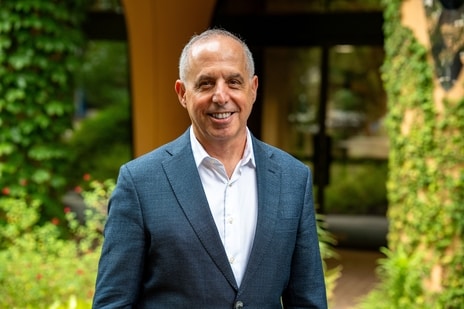
In an exclusive interview with HT Digital, Professor Frank Vetere, Pro Vice-Chancellor (Global) at the University of Melbourne, discusses how the new academic partnership will expand opportunities for Indian students, strengthen their research capabilities and prepare them for global careers.
He also shares his perspective on how AI is reshaping higher education, the skills students need to remain relevant in a changing job market, and why critical thinking, curiosity and adaptability will continue to be essential for future generations. Read the interview here.
Question 1: The University of Melbourne and IISER Tirupati have launched the BSc Global Scholars Program, a 2+2 Dual Degree programme. What opportunities will this partnership create for Indian students, particularly in terms of international exposure and academic learning?
Answer: This partnership between the University of Melbourne and IISER Tirupati, brings together two research-intensive institutions with a shared commitment to scientific excellence, innovation and global engagement. The Bachelor of Science Integrated Honours (2+2) Dual Degree Program creates unique opportunities for emerging scientists from India to learn from leading academics in two great Universities and to gain international experience while developing the skills needed to address complex global challenges. The Dual Degree program will also allow Indian students to complete the first two years of their studies at IISER Tirupati, before undertaking their final two years at the University of Melbourne in Australia. They will graduate with two Bachelor honours degrees from two globally renowned institutions. This is an education grounded in academic excellence and research-led learning and provides unique pathways in both countries.
Question 2: How will spending two years at IISER Tirupati and two years at the University of Melbourne help students build both strong scientific foundations and global skills.
{{/usCountry}}Answer: This partnership between the University of Melbourne and IISER Tirupati, brings together two research-intensive institutions with a shared commitment to scientific excellence, innovation and global engagement. The Bachelor of Science Integrated Honours (2+2) Dual Degree Program creates unique opportunities for emerging scientists from India to learn from leading academics in two great Universities and to gain international experience while developing the skills needed to address complex global challenges. The Dual Degree program will also allow Indian students to complete the first two years of their studies at IISER Tirupati, before undertaking their final two years at the University of Melbourne in Australia. They will graduate with two Bachelor honours degrees from two globally renowned institutions. This is an education grounded in academic excellence and research-led learning and provides unique pathways in both countries.
Question 2: How will spending two years at IISER Tirupati and two years at the University of Melbourne help students build both strong scientific foundations and global skills.
{{/usCountry}}Answer: The Bachelor of Science Integrated Honours (2+2) dual degree structure is designed to maximise educational and employment outcomes . Students begin with a strong scientific foundation at IISER Tirupati, one of India's premier research institutions, before transitioning to the University of Melbourne to deepen their expertise and gain an international perspective. This progression allows them to develop scientific knowledge whilst simultaneously building the skills essential for scientific careers, cross-cultural collaboration, exposure to different research methodologies, and working with international research communities. By the time they graduate with two honours degrees, they've gained a world-class science education across two continents and two distinct institutional cultures, positioning them as truly globally minded scientists.
Question 3: For Indian students considering this programme, what kinds of research, career and higher-education opportunities could this dual-degree pathway open up after graduation?
Answer: Graduates of this program will be well positioned for multiple pathways. They can pursue postgraduate study immediately, with opportunities to progress to a masters degree and potentially complete their qualification in a shorter timeframe through advanced standing, given their dual honours background. This combination of scientific training from two premier institutions and genuine international experience, opens doors to research, higher education and innovation-focused careers worldwide. Graduates will also have a competitive advantage in the employment market, with a uniquely global qualification.
Question 4: As AI and new technologies continue to reshape universities and workplaces, how do you see education changing over the next decade, and what should students do to remain adaptable in this changing environment?
Answer: We see AI not just as technological advancement, but as potentially transformational in parts of education and research. We are focused on ensuring our degrees continue to certify that students have earned their qualification with the capabilities stipulated for our subjects and programs. At the University of Melbourne our commitment is to equip students and staff with the skills, ethical frameworks and critical thinking needed to engage with AI responsibly and creatively. Staff and students have access to trusted guidance, approved tools and AI literacy resource. Staff also have access to professional development opportunities to support responsible and informed use of AI. As the influence of AI contributes to the evolution of higher education, students at the University of Melbourne are ideally positioned to critically embrace the change.
Question 5: You began your career as a secondary school teacher before moving into user experience engineering and then academia. How have these different experiences shaped the way you approach teaching, research and working with students?
Answer: My journey across these three sectors has helped shape my approach to research and teaching. My time as a secondary school teacher taught me that clarity and empathy are fundamental. You learn quickly that understanding students' misconceptions is essential. This principle remains central to my approach, whether I am writing research papers or guiding students through new concepts in my teaching. My work as a user experience engineering grounded me in evidence-based thinking and the importance of real-world contexts for theories and abstractions. Academic life brought me the intellectual freedom to synthesise and extend these experiences. It reinforced that teaching and research are intertwined. The best research questions often emerge from genuine pedagogical challenges, and the best teaching happens when students have the opportunity to find solutions to real problems. What ties these threads together is a commitment to human-centred thinking and ensuring our work is accessible, useful and enjoyable.
Question 6: Your work spans human–computer interaction, human-centred AI and technologies for well-being. What emerging skills should students start developing today to prepare for careers that may not even exist yet?
Answer: Fundamental human capabilities will always be relevant. Critical thinking, the ability to interrogate assumptions and recognise the limits of your knowledge are essential. Students need to critically engage with AI technologies, working to build systems that use the best tools and techniques to produce unambiguous benefits to people, but are also accountable when they fail. This will involve interdisciplinary literacy, cultivating genuine curiosity and becoming comfortable with ambiguity. The specific technologies will change, but the ability to quickly learn new tools, to critically assess them for human empowerment and to thrive in uncertain contexts, will remain essential.