Most of us have probably daydreamed about a big home makeover. Gwyneth Paltrow really did it and then took the idea much further. In 2016, when California was in the middle of a long drought, she purchased about 2.4 acres in Montecito. She tore down two older homes and built a roughly 14,000-square-foot estate. According to CNN’s report on her Architectural Digest cover story, she discovered the run-down lot on a real estate app in 2015. Paltrow said it was “like Grey Gardens.” That's a bold thing to say about a place you are about to buy. It also sets up a story that is more than just a pretty house.
A fixer-upper with ocean views
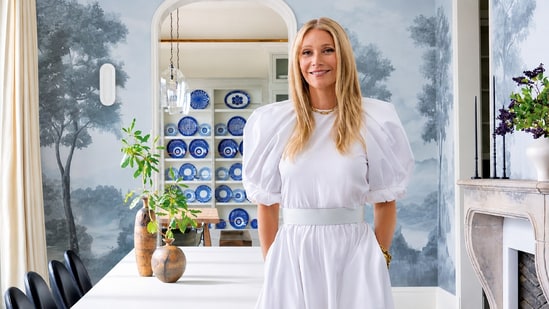
The 2016 price was reportedly about $4.9 million. The lot included two old homes that needed some work done on them. They were built in the late 1980s and offered great ocean views. Paltrow had been fond of the Santa Barbara area for years, frequently visiting during summers with her children. She tore the houses down and decided to build from scratch. Paltrow collaborated with Robin Standefer and Stephen Alesch of the design firm Roman and Williams, together with designer Brigette Romanek. In Paltrow’s own words, the vision behind the project was a Parisian apartment in an old European barn. The finished house is mainly a single level. It features stone walls and a shingled roof.
How bad was the drought nearby?
What sets this story apart is the timing. In 2016, Santa Barbara County, where Montecito is located, experienced severe water stress. Jameson Lake, the local supply for the Montecito Water District, fell to 10% of its capacity that year, according to a report from the Water Education Foundation. Another major source for the area, Lake Cachuma, dropped so low that a barge had to pump water from the middle of the lake, the same report said. Water agencies there declared drought emergencies in 2014. Montecito even resorted to rationing with penalties. The penalties were suspended in March 2017 when rain partially refilled the two lakes.
Approval, building and a six-year wait
{{/usCountry}}What sets this story apart is the timing. In 2016, Santa Barbara County, where Montecito is located, experienced severe water stress. Jameson Lake, the local supply for the Montecito Water District, fell to 10% of its capacity that year, according to a report from the Water Education Foundation. Another major source for the area, Lake Cachuma, dropped so low that a barge had to pump water from the middle of the lake, the same report said. Water agencies there declared drought emergencies in 2014. Montecito even resorted to rationing with penalties. The penalties were suspended in March 2017 when rain partially refilled the two lakes.
Approval, building and a six-year wait
{{/usCountry}}Big projects often take a long time. Back in 2017, the local design review board approved the 14,000-square-foot plan tentatively, even though one neighbor had objected fiercely. The home was completed after six years, with Paltrow opening her doors to the Architectural Digest tours at the beginning of 2022. Inside, it has a spa, complete with a sauna, steam room, hot tub, and cold plunge. Reports on the tour say the house is solar-powered and has a gray-water system. This kind of system recycles used water from showers and sinks to irrigate plants, among other things. Paltrow says that building the house taught her about patience and gratitude. Public reports don’t show how much water the home uses, so it’s hard to gauge its real impact.
What the story means for the rest of us
This is a kind of story that brings up the conflict between taste, money, and place. Most of us probably won't build a 14,000-square-foot home. But many young people these days think a lot about where they live and how much energy and water their homes use. Drought isn't a distant problem in places like California, and that makes choosing a home feel more personal. Climate and housing are closely connected, and water is a big part of that connection. Small steps like solar panels, water-wise yards, and efficient fixtures can work at various scales. It’s understandable to feel curious, inspired, or even a little uneasy after reading this story. The more useful question might be what a home costs the planet, not just what it costs to buy it.