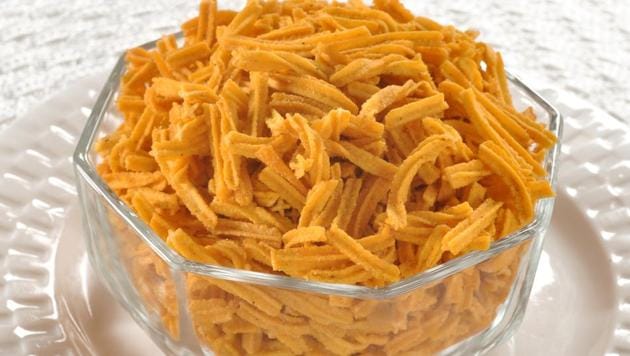
Ever wondered, why you love those French fries with sprinkled salt and cannot keep your hands off?
In first of its kind, a study finds that salty food diminishes thirst and increases hunger, due to a higher need for energy.
The results, published in the journal of Clinical Investigation, showed something different: salt stayed in the urine, while water moved back into the kidney and body.
“It’s not solely a waste product, as has been assumed,” said one of the researcher Friedrich C Luft from Delbrück Center for Molecular Medicine in Germany.
“Instead, it turns out to be a very important osmolyte -- a compound that binds to water and helps transport it. Its function is to keep water in when our bodies get rid of salt. Nature has apparently found a way to conserve water that would otherwise be carried away into the urine by salt,” Luft added.
The team carried out a simulated mission to Mars and an international group of scientists found exactly the opposite to be true, where Cosmonauts who ate more salt retained more water, weren’t as thirsty, and needed more energy.
They divided participants in two groups of 10 male volunteers sealed into a mock spaceship for two simulated flights to Mars and were examined for 105 days.
{{/usCountry}}They divided participants in two groups of 10 male volunteers sealed into a mock spaceship for two simulated flights to Mars and were examined for 105 days.
{{/usCountry}}The second group was sent for over 205 days.
Both the groups had identical diets and later they were given three different levels of salt in their food.
The results confirmed that eating more salt led to a higher salt content in urine -- no surprise there. Nor was there any surprise in a correlation between amounts of salt and overall quantity of urine.
The findings suggest that the increase was not due to more drinking -- in fact, a salty diet caused the participants to drink less. Salt was triggering a mechanism to conserve water in the kidneys.
Follow @htlifeandstyle for more
Catch your daily dose of Fashion, Taylor Swift, Health, Festivals, Travel, Relationship, Recipe and all the other Latest Lifestyle News on Hindustan Times Website and APPs.
Catch your daily dose of Fashion, Taylor Swift, Health, Festivals, Travel, Relationship, Recipe and all the other Latest Lifestyle News on Hindustan Times Website and APPs.