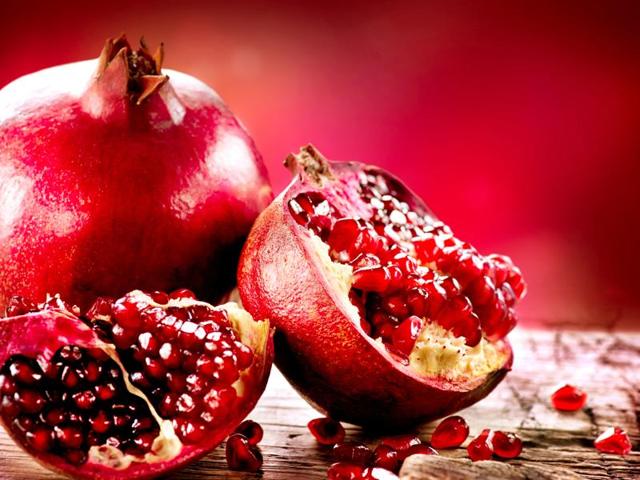
Good news for all of you worried about ageing. Researchers have found that a molecule in pomegranates, transformed by microbes in the gut, may enable muscle cells to protect themselves against one of the major causes of ageing.
As we age, our cells increasingly struggle to recycle their powerhouses. Called mitochondria, these inner compartments are no longer able to carry out their vital function, and thus accumulate in the cell, researchers said. This degradation affects the health of many tissues, including muscles, which gradually weaken over the years. A buildup of dysfunctional mitochondria is also suspected of playing a role in other diseases of ageing, such as Parkinson’s disease, they said.
Scientists from Ecole Polytechnique Federale de Lausanne (EPFL) and Amazentis company in Switzerland identified a molecule that, all by itself, managed to re-establish the cell’s ability to recycle the components of the defective mitochondria: urolithin A.
Read: A fresh take on food, farm-to-table is the new gourmet in Delhi
“It is the only known molecule that can relaunch the mitochondrial clean-up process, otherwise known as mitophagy. It is a completely natural substance, and its effect is powerful and measurable,” said Patrick Aebischer from EPFL.
{{/usCountry}}“It is the only known molecule that can relaunch the mitochondrial clean-up process, otherwise known as mitophagy. It is a completely natural substance, and its effect is powerful and measurable,” said Patrick Aebischer from EPFL.
{{/usCountry}}Researchers started out by testing their hypothesis on the usual suspect: the nematode C elegans. It is a favourite test subject among ageing experts, because after just 8-10 days it is already considered elderly, they said. The lifespan of worms exposed to urolithin A increased by more than 45% compared with the control group, they said.
The results led researchers to test the molecule on animals that have more in common with humans. In the rodent studies, like with C elegans, a significant reduction in the number of mitochondria was observed, indicating that a robust cellular recycling process was taking place.
Read: Six tips to tackle excess water in your body
Older mice, around two years of age, showed 42% better endurance while running than equally old mice in the control group. The fruit does not itself contain the ‘miracle molecule’, but rather its precursor. That molecule is converted into urolithin A by the microbes that inhabit the intestine, researchers said.
Because of this, the amount of urolithin A produced can vary widely, depending on the species of animal and the flora present in the gut microbiome. Some individuals do not produce any at all, they said. Researchers are currently conducting first clinical trials to test the molecule in humans. The findings were published in the journal Nature Medicine.
Catch your daily dose of Fashion, Taylor Swift, Health, Festivals, Travel, Relationship, Recipe and all the other Latest Lifestyle News on Hindustan Times Website and APPs.
Catch your daily dose of Fashion, Taylor Swift, Health, Festivals, Travel, Relationship, Recipe and all the other Latest Lifestyle News on Hindustan Times Website and APPs.