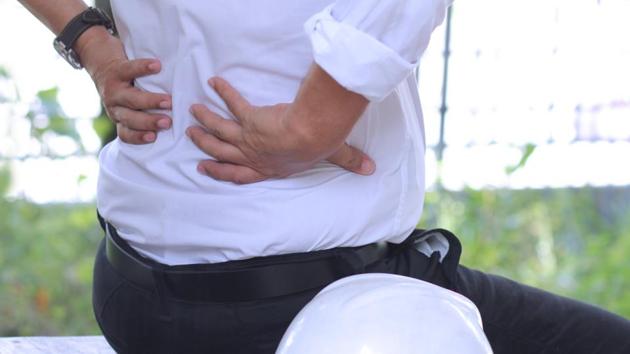
Have you been experiencing severe back pain, difficulty in walking, or weakness in your lower leg muscles? These could be symptoms of the Cauda Equina syndrome.
Never heard of the term before?
“Cauda Equina syndrome is a rare disorder that affects the bundle of nerve roots (called cauda equina) at the lower (lumbar) end of the spinal cord. In this condition, the nerve roots in the lumbar spine become compressed, due to which sensation and movement are cut off. Nerve roots controlling bladder and bowel functions are particularly vulnerable,” explains Dr Ramananda Srikantiah Nadig, head of the Clinical Advisory Board, healthi, Bangalore.
What causes of this medical condition?
“Some probable causes of this condition include a herniated disk, tumor, infection, fracture or narrowing of the spinal canal. Cauda Equina syndrome is a surgical emergency. If not treated immediately, it can cause complications such as permanent paralysis, impaired bladder and/or bowel control, and loss of sexual sensation,” says Dr Ramananda.
The symptoms of Cauda Equina syndrome progress slowly, and are visible only over a period of time. It is important to consult a doctor in case you have bladder and/or bowel dysfunction due to which you are unable to hold or retain urine. Apart from this, a person may also have severe or progressive problems in the lower extremities, including severely lessened or altered sensation between the legs, over the buttocks, the inner thighs and back of the legs (saddle area), and feet/heels.
{{/usCountry}}The symptoms of Cauda Equina syndrome progress slowly, and are visible only over a period of time. It is important to consult a doctor in case you have bladder and/or bowel dysfunction due to which you are unable to hold or retain urine. Apart from this, a person may also have severe or progressive problems in the lower extremities, including severely lessened or altered sensation between the legs, over the buttocks, the inner thighs and back of the legs (saddle area), and feet/heels.
{{/usCountry}}What to do if you have this condition
The Cauda Equina syndrome is often difficult to diagnose because the symptoms appear only over time, and can even mimic other conditions. Ways to confirm this condition usually include MRI scans, CT scans and bladder control tests.
“Surgical decompression within the first 48 hours of diagnosis is the first step for treating Cauda Equina syndrome. In case of an infection, antibiotics are accorded intravenously. In case the compression is caused by a tumor, radiotherapy or chemotherapy may be needed after surgical decompression. If symptoms persist even after decompression, a person may require pain medicine, physical therapy, supportive braces, urinary catheters and other treatments till there is optimal recovery of nerve and muscle,” says Padma Shri awardee Dr KK Aggarwal, national president of the Indian Medical Association and president of the Heart Care Foundation of India, New Delhi.
Follow @htlifeandstyle for more
Catch your daily dose of Fashion, Taylor Swift, Health, Festivals, Travel, Relationship, Recipe and all the other Latest Lifestyle News on Hindustan Times Website and APPs.
Catch your daily dose of Fashion, Taylor Swift, Health, Festivals, Travel, Relationship, Recipe and all the other Latest Lifestyle News on Hindustan Times Website and APPs.