
Two prestigious unsolved problems in mathematics may have been solved with the help of AI in the past week, although the author of one of the proofs said he cannot yet fully explain it.
Every school student learns that an answer without the working earns few marks, since the working is how a teacher follows the reasoning. Levent Alpöge, a mathematician at Anthropic, has shown all his working for the Riemann Hypothesis, except that it exists as computer code, which software can check step by step and which he admits he does not yet fully understand himself. If the code holds up, mathematicians will know that their most famous conjecture is true well before anyone can explain why, even though the explanation is what they have been after for the 167 years since Bernhard Riemann proposed it.
On November 20
Alpöge posted a four-page note on his website saying that he and Claude, Anthropic's AI model, had proved the hypothesis, which describes how prime numbers become rarer along the number line. He described a division of labour in which he chose the approach, steering the work towards a simpler version of the problem he already understood, after which Claude “far outpaced me” and supplied key steps, including the length of a crucial chain of mathematical transformations. He conceded in a footnote that he was not yet expert in the parts of the argument Claude had worked out, to the point that his own summary of them “might make zero sense”.
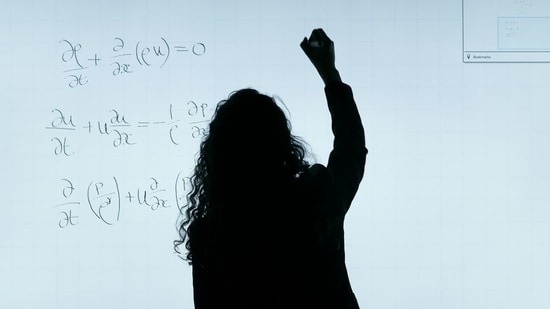
The same day, he and Tristan Buckmaster of New York University posted a 79-page paper on the Navier–Stokes equations, which engineers use to model how liquids and gases flow. Their paper claims that a fluid which starts out calm can, according to the equations, reach an infinite speed with nothing pushing it from outside, something mathematicians have tried for decades to establish one way or the other.
{{/usCountry}}The same day, he and Tristan Buckmaster of New York University posted a 79-page paper on the Navier–Stokes equations, which engineers use to model how liquids and gases flow. Their paper claims that a fluid which starts out calm can, according to the equations, reach an infinite speed with nothing pushing it from outside, something mathematicians have tried for decades to establish one way or the other.
{{/usCountry}}Both are covered under the seven Millennium Prize problems that the Clay Mathematics Institute named in 2000 with a reward of $1 million for each solution. Of these, only the Poincaré conjecture had been solved in the 26 years since.
The proofs could be right
The two proofs are plausible largely on the strength of Lean, a piece of software into which an argument can be rewritten so that every logical step is checked and any step that does not follow is rejected.
An AI model may propose thousands of flawed arguments along the way, though only those that pass the check are accepted, which is why a mathematician can trust a result that a model helped produce. James Maynard of the University of Oxford told The New York Times that he was 98 or 99% certain Alpöge’s proof was correct.
But, even after a proof passes, people still have one job to do, since Lean confirms only that the code proves the statement written at the top of the file. Somebody has to confirm that the statement is the real problem.
No one beyond the two teams has yet reported doing that for either proof, and the repository for the Navier–Stokes paper states that a numerical certificate on which the proof depends has yet to be released.
Explanation, and convincing
For most of the history of mathematics, convincing other people that a result is true and explaining why it is true have been the same act, since a proof could only be checked by someone who followed its reasoning.
Software such as Lean separates the two, so that a proof can be certified as correct while nobody yet grasps its ideas. Frank Calegari, a number theorist at the University of Chicago, wrote in his blog on November 23 that a proof and the understanding of it “are now clearly two quite different things”.
That separation can be significant for a problem like Riemann’s, which almost nobody had doubted. “We really wanted to know why it was true,” Maynard told the Times. Mathematicians have built a large body of work on the assumption that the hypothesis holds, and they had hoped a proof would bring new ideas they could use elsewhere.
Alpöge does not say that his proof offers those ideas yet. Writing on X on November 24, he admitted that the code “is full of garbage” even though it compiles, adding that he should have cleaned it up before posting. He also argued that the Riemann Hypothesis “should be easy”, and that any real difficulty in proving it shows mathematicians’ current setup was “just dumb at the moment”. He expects most of his argument to prove unnecessary once someone finds a simpler route.
Brian Conrad of Stanford University told the Times it was “frankly completely outrageous” of Alpöge to release a proof he did not fully understand. Calegari, who tells students that understanding is the goal and “not a race to be the first to prove something by button pressing”, nonetheless defended Alpöge, borrowing the mathematician Daniel Litt’s image of a library holding every possible book. Alpöge had found the volume containing the proof and taken it off the shelf, Calegari argued, without claiming to have written it in the traditional sense. “Now the work on RH can begin,” he wrote.
Beyond mathematics
AI companies point to results like these as evidence that their models can reason, and the same models are being put to work in fields that have nothing comparable to Lean.
In medicine or materials science, an answer that nobody can explain cannot be certified by software, so the gap between knowing something is true and understanding why will be harder to manage there than it is in mathematics.
Calegari wrote that mathematician Jacob Tsimerman was “completely correct” that anyone doing mathematics for personal glory is now in the wrong place, or the wrong time, while anyone doing it for understanding has much to look forward to. Until Alpöge or someone else writes his argument out properly, as he has promised to do, mathematicians may find themselves holding the answer to their most famous question while still waiting for the explanation they wanted from it.
ABOUT THE AUTHOR
Binayak Dasgupta is a senior editor at Hindustan Times, New Delhi, where he has worked since 2013. He heads the paper's Page 1 team and is part of the editorial leadership overseeing daily news operations. He has previously led the national news desk. His work sits at the intersection of specialist depth and emerging public consequence — stories where complexity and nuance are in themselves the journalistic challenge. He shapes Hindustan Times's coverage and editorial positions on technology and artificial intelligence, information security, environment, health and science — steering these subjects from the commissioning of reporting to editing and the framing of the paper’s institutional view. His work spans analysis, commentary and reportage and in the past has led the paper's coverage of Covid-19 pandemic science. His interviews and hosted sessions include Nobel laureates, technology leaders, economists and climate justice scholars. In recent months, Binayak has overseen the coverage of the Air India Flight 171 crash and its investigation, India's energy exposure during the West Asia conflict, the trade dispute with the US, Delhi's air quality emergency and the evolving conversations around AI, including the IndiaAI Summit.