Energy security has emerged as one of the defining strategic priorities of the 21st century. Geopolitical conflicts, supply chain disruptions and volatile crude oil prices have showed that a nation’s economic resilience is intrinsically linked to its ability to secure reliable and affordable energy. For developing economies with rising energy demand like India, the path to long-term energy security lies not merely in expanding energy supply, but in fundamentally transforming how energy is produced, delivered and consumed. India’s economy still depends heavily on ships bringing in crude oil, natural gas and LPG from halfway across the world. When that supply chain wobbles, so does our economy, our currency and the lives of millions of households and businesses.
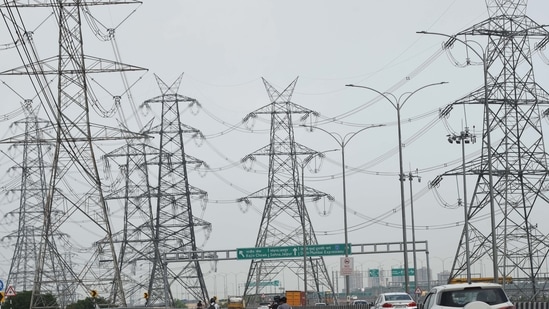
To understand the path forward, we need to look at India’s entire energy basket. Power generation gets most of the public attention, but it is only one slice of how India consumes energy. Petrol and diesel run our vehicles. LPG cooks food in millions of households. Natural gas and coal fuel our factories. All of this counts as energy consumption, and most of it depends on fuels we bring in from abroad.
The numbers make the scale of this dependence clear. Fossil fuels account for over 75% of India’s total primary energy supply, with coal alone contributing more than half. On the electricity side specifically, fossil fuels still generate close to 70% of real-time power, while solar, wind, hydro and nuclear together contribute roughly 30%.
Still, there’s genuine progress worth celebrating. India is breaking free from fossil fuels faster than anyone expected, with non-fossil sources now making up over 54% of its power capacity, crossing 285 GW. This progress on electricity generation sets up the real opportunity in front of us: electrification of energy consumption.
{{/usCountry}}Still, there’s genuine progress worth celebrating. India is breaking free from fossil fuels faster than anyone expected, with non-fossil sources now making up over 54% of its power capacity, crossing 285 GW. This progress on electricity generation sets up the real opportunity in front of us: electrification of energy consumption.
{{/usCountry}}India’s addressable potential of electrification spans nearly 70 to 80% of current fossil fuel consumption. By progressively shifting energy consumption from fossil fuels to domestically generated electricity, India can strengthen energy security, reduce import dependence and build a more resilient energy future.
Transport offers the clearest example. Indian Railways, now almost 100% electrified, has insulated itself from global diesel supply disruptions, saving around 185 crore litres of diesel annually and significantly reducing India’s dependence on imported fuel.
Light-duty passenger vehicles and two-wheelers are already converting to electric power at pace, with nearly full electrification expected over time for this segment. The estimates show that around 35 lakh petrol vehicles could be replaced during 2027–2030, resulting in crude oil import savings of nearly ₹1 lakh crore, as per a recent State Bank of India report. Agriculture presents perhaps the strongest case of all. Diesel pump sets are being converted to electric ones at scale, supported by schemes like PM-KUSUM and decentralised solar. Electrifying all agricultural diesel water pumps in India could displace ~8.55 billion litres of diesel annually.
This is precisely why electrification deserves to sit at the centre of India’s energy security strategy. Producing crude oil domestically at the scale we consume it is neither quick nor guaranteed. Building out electric mobility, cooking and agriculture is achievable through policy interventions such as EV incentives, charging infrastructure, appliance subsidies and stronger distribution networks.
The direction of India’s energy transition is clear. Every unit of demand that moves from imported fuel to domestically generated electricity is a small act of energy independence. Multiplied across vehicles, kitchens, farms and factories, these small shifts add up to something significant, a country that no longer flinches every time a crisis erupts a few thousand kilometres away. This is the quiet urgency behind India’s atma nirbharta in energy and electrification. It is not just a clean energy agenda; it is a strategic imperative for energy sovereignty and economic resilience.
(The views expressed are personal)
This article is authored by Anil Rawal, MD & CEO, IntelliSmart.