Digital payments have been built on a simple premise for years: A person decides, a machine does. The logic is still apparent even if we have standing instructions or auto-debits. A person gives authorisation for a defined merchant, amount or schedule. That's about to be complicated by agentic payments.
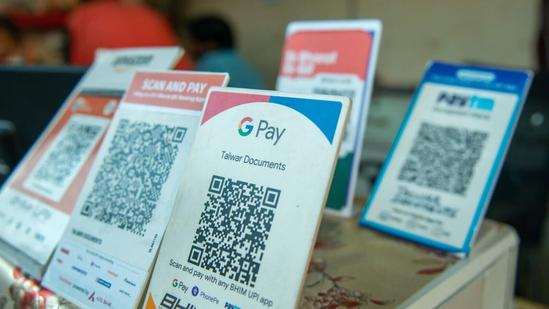
India is now getting ready for a future in which AI agents can make small purchases on behalf of their users via the Unified Payments Interface. NPCI is working on an agentic-payments framework and an AI-agent registry to identify and track approved agents. The use cases are intentionally simple, like groceries or everyday items. That is sensible. UPI is already huge, with over 24.5 billion transactions processed in August alone. Any modification to the basic architecture of authorisation should be given more attention than a normal product launch.
The main question is not whether an AI agent can actually make a payment. It's whether our notion of consent is sufficiently precise for a machine that can execute actions multiple times, understand instructions and select from options. The rules designed for auto-debits shouldn't simply be applied to agentic commerce in India. India should establish a new class of financial consent that is programmable.
Consider the difference. A streaming subscription can be authorised for a specific amount at a predetermined time. Instead, an AI shopping agent could be instructed to purchase household items when they are low in stock, spend no more than ₹3,000 per week, prefer specific brands and buy from the cheapest reliable seller. The agent is no longer just passing on a payment instruction. It is understanding a purpose, choosing a merchant, deciding when a purchase is needed and determining whether a specific transaction is in line with the user's preferences.
{{/usCountry}}Consider the difference. A streaming subscription can be authorised for a specific amount at a predetermined time. Instead, an AI shopping agent could be instructed to purchase household items when they are low in stock, spend no more than ₹3,000 per week, prefer specific brands and buy from the cheapest reliable seller. The agent is no longer just passing on a payment instruction. It is understanding a purpose, choosing a merchant, deciding when a purchase is needed and determining whether a specific transaction is in line with the user's preferences.
{{/usCountry}}This is a type of delegated economic agency. The user remains the main authority, and the software gets some discretion. The limits of that discretion therefore need to be made clear and enforceable in payment regulation.
There are at least five key components to a strong mandate for an AI agent. First, purpose. It's not a good idea to allow purchases of groceries to become a gateway to purchases of electronics just because they're both available on the same platform. Second, value. Users should have the ability to set limits on individual transactions and cumulative limits, not a single overall limit. Third, time. Authority should not be indefinite and should have to be renewed. Fourth, merchant or category restrictions should not allow an agent to stray into categories of transactions that the user would not have thought of. Fifth, revocation must be immediate and universal. The user should be able to revoke authority from one place and not have to go through multiple apps and platforms.
There's also a sixth requirement that conventional payment systems have not been forced to take as seriously: Memory. Each transaction initiated by an agent should leave an understandable audit trail that documents what the user requested, how the agent understood the request and why the agent made the payment. If the dispute is about whether the agent was authorised to select that merchant, a transaction log that simply records ₹1,850 paid to a merchant isn't enough.
This is particularly relevant if there is a problem. Assume that an agent pays twice, selects a different product, goes over a weekly budget because it reads two instructions separately, or buys a product after a user thinks permission has been revoked. Who loses out: The bank, the AI provider, the merchant, the payment app or the customer? A registry can tell us which agent acted. It does not provide any information on who is responsible.
India needs to put in place a default liability chain before agentic payments become commonplace. The consumer should not be responsible for the loss simply because the original mandate was written in a general manner if the agent acts outside it. If the mandate itself clearly authorised the action, then the normal rules of consumer disputes can apply. If there is ambiguity over the agent's actions, the provider who designed or deployed the agent should have a clear responsibility. Clear rules would be good for firms as well as users, as uncertainty over liability can slow down adoption.
Other jurisdictions are starting to face the same issue. The UK is looking at agentic payments as part of its payments-regulation reforms, including whether payments can be made for transactions started by autonomous software that is not part of a mandate. In addition, EMVCo, the global payments standards body, has been working on agentic payments recently and has been concentrating on how consumer intent can be determined and tracked over time. India can do more and make consent itself interoperable digital infrastructure.
That would follow the philosophy that has made UPI successful. What made it most notable was not another wallet. It was a common rail on which banks and applications were able to compete. The next layer could be a common language for delegated authority. The minimum audit record would be the same for any approved AI agent, bank or payment app.
It's easy to see how agentic commerce can be considered a convenience story: Your agent will order groceries before you realise you need them. The more important innovation, however, is institutional. We're transitioning from digital payments where people click to digital payments where people draw lines.
India should make those boundaries as programmable as the payments themselves. The nation that created one of the world's most successful financial systems for transferring money may now be shaping the regulations for handing over financial choices to machines. The test of that system will not be how fast an AI agent can spend. It will be how sure a citizen can be of its stopping point.
(The views expressed are personal)
This article is authored by Era Sakhuja, policy analyst and deputy programme director, Centre for International Security and Economic Strategy.