In a world where a single button press can unleash AI’s potential—crafting eloquent letters, solving complex math problems, or diagnosing crop diseases—knowledge, speed, and opportunity are at our fingertips. For India’s 37 crore youth, with 65% under the age of 35, this technology promises to shape a future rich with opportunity. Yet, the same technology can spread misinformation, generate deepfakes, or complete exams without fostering deep and meaningful learning. Without guidance, the line between learning and mere replication blurs, and
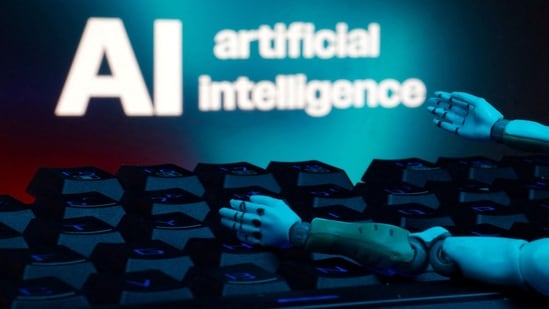
In a world where a single button press can unleash AI’s potential—crafting eloquent letters, solving complex math problems, or diagnosing crop diseases—knowledge, speed, and opportunity are at our fingertips. For India’s 37 crore youth, with 65% under the age of 35, this technology promises to shape a future rich with opportunity. Yet, the same technology can spread misinformation, generate deepfakes, or complete exams without fostering deep and meaningful learning. Without guidance, the line between learning and mere replication blurs, and many young users risk trusting AI’s outputs without questioning their validity or knowing what questions to ask. As India stands on the cusp of a technological revolution, with its AI market projected to reach ₹66,700 crores, empowering its youth is an urgent necessity.
India’s digital revolution has been nothing short of extraordinary. Internet subscriptions rose from 25 crore in 2014 to nearly 97 crores by mid-2024, while the smartphone penetration has reached 80 crore users, with 75% rural adoption. This unprecedented connectivity has revolutionised access to information, commerce, and opportunity, particularly for the youth poised to shape India’s future.
Yet, access alone cannot unlock India’s potential. The true measure of this transformation lies in Inclusive AI empowerment to bridge the digital divide, harnessing AI’s disruptive potential and embracing the gig future, and collective, responsible, and focused efforts for large-scale, youth-centric initiatives.
The digital divide in India is no longer just about connectivity. With smartphones and data plans becoming increasingly affordable and accessible, the bigger question is how young people are using these tools. Are they engaging with technology to learn, to acquire relevant skills, to contribute to civic actions and nation-building? Or are they more vulnerable than ever to screen addiction, algorithmic manipulation, and misinformation?
In this new paradigm, digital wellbeing is about quality, not quantity. While government efforts like Digital India, PMGDISHA, and the National AI Mission have laid the groundwork for digital infrastructure and policy, their long-term success depends on whether India’s youth—particularly those in schools and colleges—are being equipped to engage with these technologies ethically, critically, and productively.
India’s youth no longer dream only of conventional jobs in fixed offices. Increasingly, they are adapting to a gig-based economy where flexibility, autonomy, and multi-skilling are key. What was once considered precarious or informal is now becoming the dominant model for how organisations operate. While the formal sector is becoming less elastic, the gig sector is evolving; demanding greater reliability, offering more structure, even benefits.
This is not a passing trend. It is a permanent economic shift—and India must act quickly to help young people thrive in this new reality.
To enable this, we must embed AI-driven upskilling into mainstream education and workforce development. Every student must graduate not just with a degree, but with real-world problem-solving experience using modern digital tools. Adaptability, Disruptive thinking, Entrepreneurship Mindsets are the capabilities that will help our youth stand out. Our policies must recognise gig workers as full economic contributors. This includes ensuring portable benefits, accessible healthcare, and long-term career mobility.
Startups and small businesses—which already function in agile, flexible modes—should be encouraged to adopt gig-friendly hiring models without the heavy overheads of traditional employment, but also without compromising worker protections. What India needs is a new contract with its youth—one that acknowledges and supports their evolving relationship with work.AI is not the enemy. Outdated, inflexible systems are.
AI has introduced uncertainty and fear into the hearts of many young people. They wonder: ‘Will I be replaced by a machine?’ ‘Will there be any “human” work left to do?’ This anxiety has real consequences; it influences career choices, mental health, and faith in institutions. India needs to actively counter this fear with structured assurance.
This assurance must come from all quarters—philanthropists, educators, entrepreneurs, and the State. It starts with national campaigns that reposition AI not as a threat but as a collaborative tool. Young people must see examples of AI improving livelihoods; farmers using predictive models, doctors diagnosing faster, teachers customizing learning. The narrative must shift from replacement to augmentation.
Educational institutions must become hubs of experimentation where students use AI to solve local challenges. These spaces, AI for Livelihood labs in schools and colleges, can foster not just digital fluency but also innovation and resilience.
The education system must also teach digital resilience: how to question AI’s outputs, identify bias, protect one’s data, and engage responsibly online. We must prepare youth not just for a digital future, but for a digital future.
This transformation demands that the nation’s most powerful actors, from venture capitalists and tech founders to policymakers and media houses, redefine their roles. That means building safe digital spaces for young creators and learners. It means investing in AI tools that are transparent, locally relevant, and ethical by design. It means partnering with civil society to develop and scale skilling models that reflect India’s regional and linguistic diversity. And most of all, it means listening to the aspirations and fears of young people—not just speaking on their behalf.
We are at a critical juncture. The fear of being left behind in a hyper-digital world is real. But so is the opportunity to leapfrog into a future where Indian youth are not just consumers of technology, but creators of it.
Let us move from digital anxiety to digital agency. Let us build a future that doesn’t just accommodate our youth, but is imagined and led by them.
This article is authored by Saurabh Johri, director, Piramal School of Leadership, Piramal Foundation.
One Subscription.
Get 360° coverage—from daily headlines
to 100 year archives.
Archives
HT App & Website