Technology has always changed the way people work, the way they create and the way they solve problems. From the invention of the wheel to industrialisation to computers and the internet - every major technological shift has altered professional roles. It is the role of technology to challenge established ways of thinking. Artificial Intelligence (AI) is the successor of all of these technologies. It is challenging us in a way no technology has ever had. It is accelerating at an exponential speed - making tasks that once required hours of human effort possible in minutes, automating most tasks. Yet, as automation becomes increasingly accessible, two important questions emerge: When everyone can create everything, what is the value of anything? When producing something becomes easier, what makes the final result valuable?
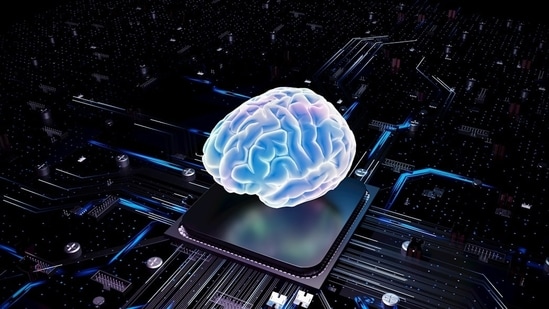
The answer lies in the distinction between generating an output and creating something meaningful. Knowledge is not a differentiator anymore. LLMs can process enormous quantities of information and give any answer we want at remarkable speed. It is better at pattern recognition than any human and it can produce content at the speed of electrons.
However, just having a faster cooker doesn’t mean the food will be tastier or healthier, and a more efficient car does not automatically make better drivers. We will still need good chefs and great drivers. As the modern world and organisations increasingly adopt automated tools, the ability to exercise judgement, recognise context and make deliberate decisions is becoming an essential professional skill.
Automation is redistributing human effort. Repetitive and time-consuming tasks are increasingly being handled by machines. This means professionals can now concentrate on activities that require interpretation and strategic thinking. In principle, this creates an opportunity for better work rather than simply more work. The challenge is ensuring that the time saved through automation is invested in getting better outcomes instead of merely increasing the volume of production. Automated systems can produce convincing information that contains factual errors, overlook contextual differences or reproduce existing biases. An output may appear polished without being reliable, they must be verified. That’s where we need humans in the loop.
{{/usCountry}}Automation is redistributing human effort. Repetitive and time-consuming tasks are increasingly being handled by machines. This means professionals can now concentrate on activities that require interpretation and strategic thinking. In principle, this creates an opportunity for better work rather than simply more work. The challenge is ensuring that the time saved through automation is invested in getting better outcomes instead of merely increasing the volume of production. Automated systems can produce convincing information that contains factual errors, overlook contextual differences or reproduce existing biases. An output may appear polished without being reliable, they must be verified. That’s where we need humans in the loop.
{{/usCountry}}In education, an inaccurate explanation can distort a learner's understanding; in journalism, an unchecked claim can undermine credibility and mis; and in business, a flawed recommendation can influence costly decisions. Human verification must therefore remain an integral part of automation. This distinction is particularly important in industries where accuracy, credibility and trust matter.
Organisations also need new skills and new kinds of professionals. Professionals who understand the inner mechanisms of why something is to be done and not just what and how. Technical proficiency alone is no longer sufficient. The tools can perform increasingly complex operations without any help. Organisations need professionals who understand the limits of the systems they use - ones who evaluate the outputs and recognise when intervention is necessary. Technology optimises for efficiency. If a machine is programmed to give the fastest answer possible - it will not optimise for the best answer, only the fastest. If a machine is programmed to make people laugh - someone will have to put a check in the machine to not use nitrous oxide (laughing gas) to induce laughter.
The answer we reach is that critical thinking, communication and ethical reasoning become particularly valuable because they help determine whether a technically impressive result is also appropriate, accurate and useful for an organisation. Human judgement becomes important.
Automation also has implications for education and professional training. Preparing people for this economy does not only mean teaching them how to operate the latest software. It must also involve developing the ability understand underlying principles and make informed decisions. Specific operational skills will become outdated, but the capacity to learn, adapt and evaluate evidence will remain relevant across occupations. Organisations that invest in these capabilities can help their workforce respond to the age of AI and automation with greater confidence.
Then there’s domain expertise. Technology doesn’t inherently understand a domain because it has been fed all the books. It only becomes useful when its capabilities are combined with an understanding of the problem it is intended to solve. There is a growing need for collaboration between technical specialists and professionals with domain expertise. Interdisciplinary collaboration can help bridge the gap between what a system is capable of producing and what people actually need. All occupations should exercise their perspective to use this technology to make better decisions. Engineers, designers, educators, filmmakers, researchers and business leaders can all become many times more efficient if they use this opportunity and leverage the technology. Combined perspectives can produce solutions that neither technical capability nor subject knowledge could achieve independently.
Another challenge is the declining cost of producing digital content. When almost anyone can generate aesthetic reports, images, presentations or marketing material quickly, the sheer availability of the output becomes less valuable. It is not a differentiator. Which brings us back to the original question - When everyone can create everything, what is the value of anything? When producing something becomes easier, what makes the final result valuable?
Audiences and customers must navigate an expanding volume of material. For them to notice a product - it must have originality, relevance and credibility. The competitive advantage may therefore shift from the ability to produce more to the ability to decide what deserves to be produced in the first place. Human judgement becomes a competitive advantage.
This does not mean that technological progress should be resisted. Automation can widen access to tools, reduce operational costs and enable individuals and smaller organisations to undertake work that previously required substantial resources. Its benefits, however, depend on how thoughtfully it is implemented. Organisations must establish clear accountability, appropriate quality checks and realistic expectations about what automated systems can accomplish. Technology should not be treated as a substitute for responsibility. It risks creating processes that are faster but less dependable.
The future of work will not be determined by technological capability alone. It will also depend on the choices people make about how that capability is used. As automation becomes embedded in everyday professional life, the distinction between those who use technology and those who do not may become less important. The more important distinction maybe between those who use it mechanically and those who use it thoughtfully.
In an economy where machines become more and more efficient, human judgement will help determine the value of that efficiency. The idea is not to make a washing machine only with the fastest rotor speed - it is to also ensure that the clothes come out clean. Technology may make production easier, but purpose, discernment and responsibility will continue to define the quality of what we create.
(The views expressed are personal)
This article is authored by Anupam Sidhant, co-founder and creative director, Bombay Locale.