
India has taken significant steps towards protecting children’s rights through stronger laws, enforcement mechanisms and wider access to education. Yet the persistence of child labour shows that legal and educational interventions must also be supported by a deeper understanding of the economic pressures faced by vulnerable families. Children in India are subjected to the worst forms of child labour, including commercial sexual exploitation, sometimes as a result of human trafficking. Children are also forced to perform dangerous tasks in garment production, stone quarrying, and brickmaking.
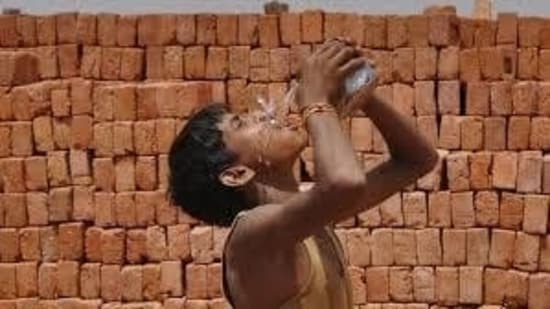
Recent evidence shows why child labour cannot be treated as a peripheral concern. A 2024 UNICEF Innocenti report on child labour and schooling in India, drawing upon the Periodic Labour Force Survey data 2018-2019, notes that an estimated that nearly five million children aged five-17 were engaged in work to generate income owing to poor family conditions. Of these, 1.8 million to 3.3 million children worked as child labours engaged in work that deprives them of their childhood, their potential and their dignity, also harmful to their physical and mental development. The report also highlights that most child labour in India is hazardous with higher risk of hazardous work, especially for children from poorer, rural and disadvantaged backgrounds, facing greater vulnerability.
Globally, ILO and UNICEF estimate that nearly 138 million children were engaged in child labour in 2024, including around 54 million in hazardous work. The UNCRC defined four core principles that shape all child rights policies and actions in India including; Non-Discrimination, Best Interest of the Child, Right to Survival and Development and Right to Participation. However, for India, the deeper question is not only how many children work, but why they continue to enter work despite laws, enforcement, schools and awareness. The answer is often found in the pressures surrounding the household economy.
{{/usCountry}}Globally, ILO and UNICEF estimate that nearly 138 million children were engaged in child labour in 2024, including around 54 million in hazardous work. The UNCRC defined four core principles that shape all child rights policies and actions in India including; Non-Discrimination, Best Interest of the Child, Right to Survival and Development and Right to Participation. However, for India, the deeper question is not only how many children work, but why they continue to enter work despite laws, enforcement, schools and awareness. The answer is often found in the pressures surrounding the household economy.
{{/usCountry}}Many vulnerable families depend on daily wages, agriculture-linked work, home-based production, migration-based labour, small trades and micro-enterprises with limited financial buffers. Any sudden shock can increase the risk of children being pulled away from school and towards work.
This, however, must never be seen as a justification for child labour. No economic hardship can make child labour acceptable.
India has a clear legal framework, and enforcement, rescue, rehabilitation, school reintegration and dropout prevention remain critical. Alongside these measures, livelihood support can help reduce the pressures that place children at risk.
The real challenge is to bring these responses together, with stronger family livelihoods working alongside law enforcement, education, rehabilitation and social protection to keep children safe and in school.
Prevention of child labour must be supported by stronger family economies, while continuing to place children’s rights, education and protection at the centre. A child is more likely to remain in school and away from work when adults in the household have dignified work, reliable income, relevant skills, access to credit and confidence to plan.
The Government of India has taken important steps to support vulnerable families and children through measures such as the Pradhan Mantri Garib Kalyan Anna Yojana, the Right to Education Act and PM POSHAN. These measures strengthen food security, access to education and school retention. At the same time, families facing income insecurity, debt, health shocks or irregular work may still experience pressures that affect children’s education and wellbeing.
Our response must, therefore, be more integrated. Child protection, education, nutrition, skilling, financial inclusion, entrepreneurship and social protection cannot work in silos. Rescue, enforcement, rehabilitation and school reintegration remain essential. This is why child protection efforts need to be supported by stronger household resilience and more stable income pathways for vulnerable families.
This is where enterprise support becomes important. A small loan, when combined with mentoring, can help a tailoring unit, food business, repair shop, dairy activity or local service enterprise become a more stable source of income. The impact goes beyond the entrepreneur. It can improve a family’s ability to manage school-related expenses, health costs and household needs without depending on exploitative debt or distress choices.
If India wants to make deeper progress on the prevention of child labour, four areas need sharper focus.
First, family livelihoods should be strengthened as a complementary preventive intervention through skilling, entrepreneurship training, formal credit, mentoring, market linkages and support for women-led enterprises.
Second, district-level convergence must become stronger. Since child labour is often local, hidden and informal, rescue must be followed by education linkage, healthcare support, rehabilitation and livelihood assistance where needed. Recent steps in Maharashtra to place District Collectors at the head of reconstituted District Child Labour Action Committees point to the importance of local accountability.
Third, companies and CSR programmes can play a more sustained role by combining education support with livelihood creation, mentoring networks, entrepreneurship development, responsible supply chains, adolescent skilling and community-based monitoring.
Fourth, public awareness must also address the demand side of child labour. Responsible hiring, stronger enforcement and community vigilance are essential to ensure that children are not engaged as domestic help, informal workers or low-cost labour in commercial activities.
Education is central to ending child labour, but child welfare and education must also be supported by household economic stability. India has made progress in reducing school dropout rates. Government data for 2024-25 shows dropout rates at 2.3% at the preparatory stage, 3.5% at the middle stage and 8.2% at the secondary stage. The higher dropout rate at the secondary level is a reminder that adolescence remains a vulnerable transition point, where education, protection, family support and economic stability all become critical. Women-led micro-enterprises can also help reduce pressures on children’s schooling, especially for girls.
India’s progress on child labour will depend on how effectively we connect child protection, education, rehabilitation, social protection and family livelihoods. We cannot build an inclusive economy while children remain trapped in work that limits their future potential. At the same time, efforts to eliminate child labour become stronger when the adults in those children’s lives are also supported.
The question before us is not only: How do we rescue a child from labour?
The deeper question is: How do we build a support system where that child never has to enter, or return to, child labour?
The solution lies in how well we integrate child protection with livelihood creation, entrepreneurship development, financial inclusion and local economic growth, also determining the next phase of India’s progress.
(The views expressed are personal)
This article is authored by Lakshmi Venkataraman Venkatesan, founding and managing trustee, Bharatiya Yuva Shakti Trust (BYST).