India’s digital economy is expanding at an unprecedented pace. Smartphones, laptops, televisions and connected devices have become indispensable to everyday life, powering everything from education and health care to commerce and entertainment. Yet this rapid growth has created a parallel challenge: a mounting volume of electronic waste. Rather than viewing e-waste solely as an environmental problem, India has an opportunity to transform it into an economic and sustainability advantage through a circular electronics economy.
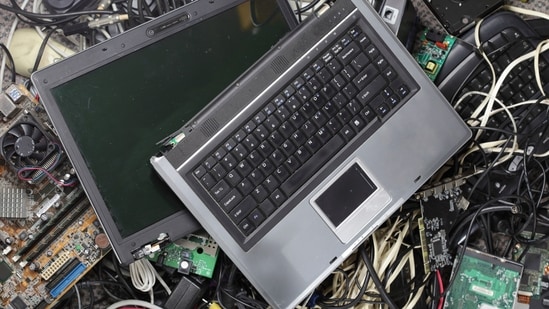
The scale of the challenge is significant. According to data shared by the Central Pollution Control Board (CPCB), India generated nearly 1.4 million tonnes of e-waste in FY 2024-25, representing a year-on-year increase of approximately 10% over the previous year. At the same time, global e-waste generation reached a record 62 million tonnes in 2022 and is projected to rise to 82 million tonnes by 2030, making it one of the fastest-growing waste streams in the world.
A major driver of this growth is the increasing consumption of electronic devices combined with relatively short product lifecycles. Many devices are discarded not because they have reached the end of their functional life, but because repairing them is often expensive, inconvenient, or inaccessible. For consumers, particularly those in smaller cities and rural areas, finding reliable and authorised repair services or affordable spare parts can be difficult. While many turn to informal repair providers to extend the life of their devices, these channels often operate without standardised quality controls or proper e-waste handling and recycling processes.
This trend carries both environmental and economic consequences. Every prematurely discarded device represents lost materials, lost value and additional pressure on waste management systems. E-waste contains valuable resources such as gold, copper and aluminium that can be recovered and reused. However, when products are discarded too early and processed through informal channels, much of this value is lost. Meanwhile, hazardous substances can pose risks to both human health and the environment if not handled responsibly.
{{/usCountry}}This trend carries both environmental and economic consequences. Every prematurely discarded device represents lost materials, lost value and additional pressure on waste management systems. E-waste contains valuable resources such as gold, copper and aluminium that can be recovered and reused. However, when products are discarded too early and processed through informal channels, much of this value is lost. Meanwhile, hazardous substances can pose risks to both human health and the environment if not handled responsibly.
{{/usCountry}}Repair sits at the heart of a circular electronics economy because it extends the useful life of products and delays their entry into the waste stream. Research consistently shows that extending product lifespans is one of the most effective ways to reduce the environmental impact of electronics. A device that remains in use for an additional two or three years reduces the demand for manufacturing a replacement, conserving resources and lowering associated emissions. Repair can also restore a device to a condition where it is ready for a second life, enabling it to be reused by another consumer rather than becoming waste.
Europe has recognised this opportunity and is moving decisively to strengthen repairability through regulation. In 2024, the European Union formally adopted its Right-to-Repair Directive, designed to make repairs easier, faster and more affordable for consumers. The legislation requires manufacturers of certain products to offer repair services, improve access to repair information, and support consumers in choosing repair over replacement. It also aims to create incentives for longer-lasting products and expand employment opportunities within the repair sector.
The EU's broader repair-focused strategy is expected to reduce waste, lower resource consumption and support economic growth. European policymakers estimate that stronger repair frameworks can stimulate billions of euros in investment while reducing the environmental burden associated with unnecessary product replacement.
India has already taken important first steps. The Government launched the Right-to-Repair framework and portal to improve consumer access to repair information, service networks, warranty details and spare-part information. The initiative aims to reduce dependence on manufacturers for repairs while supporting local repair businesses and reducing e-waste.
Turning this vision into a nationwide circular economy will require broader ecosystem development that extends beyond repair alone. Protection plans sit closest to repair. They cover its cost, so the consumer is more likely to fix a fault than replace the whole device. The device stays in use for longer. Trade-in programmes pick up where use ends. When a consumer is finally done with a device, a trade-in gives them a reason to hand it back instead of discarding it. The device can then be refurbished, reused or recycled. ABB make that handover more certain. The consumer is promised a fixed value for the device at the point of sale. That promise pulls the device back into the value chain rather than into a drawer or a landfill.
Together, these solutions complement repair by extending product lifecycles and strengthening the foundations of a circular electronics economy. Access to genuine spare parts, repair manuals, diagnostic tools and skilled technicians must become more widespread. Consumers need greater confidence that repairing a device will be cost-effective and reliable. At the same time, independent repair businesses need the training, resources and policy support necessary to operate sustainably and at scale.
The economic benefits could be substantial. A thriving repair ecosystem would create employment opportunities across urban and rural India, particularly for technicians, refurbishers and small business owners. It would also strengthen local economies by keeping value within communities rather than directing spending solely towards new device purchases. Repair and refurbishment activities can generate jobs that are both skilled and difficult to offshore, making them particularly valuable in a rapidly digitising economy.
A stronger repair culture will also complement India's broader sustainability goals. Extending device lifespans reduces demand for raw material extraction, lowers manufacturing-related emissions and decreases pressure on landfills and recycling infrastructure. Importantly, it empowers consumers by giving them greater control over the products they own and the choices they make.
India's e-waste challenge is often framed as a problem of disposal. In reality, the larger opportunity lies much earlier in the product lifecycle. By making repair more accessible, affordable and trusted, India can keep devices in circulation for longer, unlock economic value, create jobs and reduce environmental impact. As device ownership continues to rise, building a robust repair ecosystem may prove to be one of the most effective ways to turn electronic waste from a growing burden into a driver of sustainable growth.
(The views expressed are personal)
This article is authored by Keyur Shah, Group Strategy Officer, Servify.