
 E-Paper



A new innings: How cricket is quietly strengthening India–Japan ties
This article is authored by Noriaki Abe, minister, political, Embassy of Japan, New Delhi and advisor, Japan Cricket Association.

 Prefer HTon Google


Diplomacy is often conducted across negotiating tables and within carefully worded joint statements. But every so often, a gesture outside the formal script captures the spirit of a relationship more vividly than any dossiers.
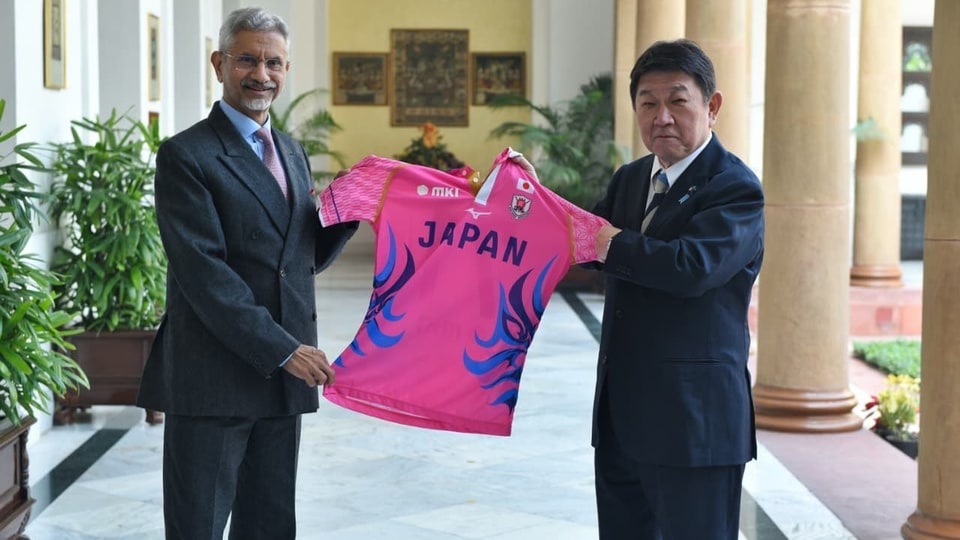
When Japan’s foreign minister Motegi Toshimitsu presented a Japan national cricket team jersey to external affairs minister S Jaishankar during their strategic talks on January 16, and received in return a bat signed by the Indian cricket team, it was one such moment. It was light-hearted, warm and spontaneous. Yet, it also carried meaning. Cricket, a sport deeply woven into India’s social fabric, is emerging as an unexpected but powerful bridge between our two nations.
For many Indians, the idea of Japan and cricket still comes as a surprise. But cricket has been played in Japan since 1863 even before baseball reached our shores. For much of its early history it remained on the margins, but over the past two decades, it has taken root steadily and seriously. Today, Japan has more than 3,000 active players, over 200 recognised teams, a national league structure, youth and women’s programmes, and an ICC-certified international cricket ground in the city of Sano.
What is perhaps more important than numbers is the way cricket is growing in Japan. It is being introduced in schools in Japanese, taught by trained physical education teachers, adapted to local conditions and embraced by children not as a foreign sport but as a new option in their sporting lives. Cricket in Japan is not driven by commercial glamour; it is built patiently, with discipline and strategic thinking, qualities that resonate strongly with Japanese culture.
Here, India’s role has been invaluable. India possesses the world’s most complete cricket ecosystem from grassroots to elite performance, from coaching depth to fan engagement. Japanese cricket has begun learning from this experience through coaches, trainers, resident Indian players and institutional exchanges. Indian-origin players have already represented Japan at the international level, and Indian coaches are contributing to the development of Japan’s men’s and women’s teams. This collaboration reflects a broader truth: when India’s sporting wisdom meets Japan’s organisational strength, progress follows.
The timing is significant. In the ICC World Cup U-19 category, the Team Nippon is about to make a history in the Group A in Zimbabwe and Namibia from this week. Cricket will feature at the Asian Games in Nagoya in 2026, offering Japan its largest-ever opportunity to showcase the sport at home. Cricket’s inclusion in the Los Angeles Olympics in 2028 has further elevated its status, encouraging investment, parental support and youth participation. Japan has shown, through sports like football and rugby, that patient planning yields results. Cricket could well be the next chapter.
Beyond the boundary ropes, cricket also reflects the multicultural future Japan is building. It is one of the few sports where Japanese, Indian, Bangladeshi, Sri Lankan, Nepalese and other communities play together regularly. In that sense, cricket mirrors the people-to-people connectivity that underpins India–Japan relations today.
The jersey exchanged in Delhi was not merely sporting memorabilia. It symbolised trust, shared values and a willingness to engage beyond conventional diplomacy. As our leaders work together on strategic, economic and regional challenges in the Indo-Pacific, sport adds a human dimension to the partnership.
Cricket teaches patience. Progress comes one run at a time. That is also how enduring partnerships are built. India and Japan have entered a new innings in their relationship, and if cricket is any indication, it promises to be steady, collaborative and full of promise.
This article is authored by Noriaki Abe, minister, political, Embassy of Japan, New Delhi and advisor, Japan Cricket Association.


