Yesterday’s devastating flood in the Bhotekoshi river of Nepal was an eye-opener. Although it is time for rescue and 24x7 rehabilitation rather than fact-finding missions and commissions, we need to map our vulnerability and examine the intersection of environmental fragility and State cooperation, particularly in South Asia where the entire organisation called SAARC is in limbo for quite some time without much effort to revive it.
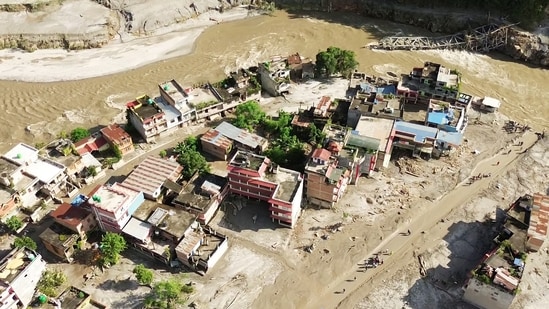
We often gloss over the fact that recurring climate-induced catastrophes frequently test State resilience and alliance systems where terms of trade and strategic considerations predominate while disaster management frameworks take a backseat. On the other hand, according to academic evaluations of Himalayan hydrology and disaster response, phenomena such as glacial lake outburst floods (GLOF) and sudden tectonic tremors expose the fragility of high-altitude infrastructure development.
Analysing the broader socio-ecological context of transboundary river basins, scholars have noted that rapid, unchecked hydropower expansion along fragile Himalayan slopes often enhances ecological risk with multiplying effects that become difficult to contain in the absence of long-term plans. Thus, when sudden glacial collapses and seismic-triggered floods inundate districts like Rasuwa along the Nepal-Tibet border, the ensuing humanitarian crises flag the urgent need to re-evaluate lopsided regional development paradigms. Rather than treating recurring environmental disasters as isolated accidents to be taken care of in an ad hoc manner, it is high time that we factor in hydrology, geology of the hilly areas, of river basins, safety of the people, their traditional village economy, and above all, international cooperation, particularly sustainable transboundary cooperation between nations like Nepal and India in our reciprocal obligations and pivot toward holistic watershed management and proactive disaster diplomacy.
Nepal’s recurring environmental catastrophes are not new. It only mirrors historical crises in mountainous regions like Sikkim and Uttarakhand, particularly during the monsoon, exposing a dangerous cycle of ecological neglect driven by anthropogenic activities, tourism, mushrooming of hydroelectric projects, and accumulated climate stress. While diplomatic rhetoric endlessly champions the humanitarian impulse, actual State behaviour is increasingly governed by narrow, egotistical minilateralism and genuine cooperative security is easily forgotten. Consequently, governments frequently prioritise rigid national security over human needs, and attach restrictive conditions to aid delivery.
{{/usCountry}}Nepal’s recurring environmental catastrophes are not new. It only mirrors historical crises in mountainous regions like Sikkim and Uttarakhand, particularly during the monsoon, exposing a dangerous cycle of ecological neglect driven by anthropogenic activities, tourism, mushrooming of hydroelectric projects, and accumulated climate stress. While diplomatic rhetoric endlessly champions the humanitarian impulse, actual State behaviour is increasingly governed by narrow, egotistical minilateralism and genuine cooperative security is easily forgotten. Consequently, governments frequently prioritise rigid national security over human needs, and attach restrictive conditions to aid delivery.
{{/usCountry}}We are certain that Nepal’s devastating earthquake shall evoke India’s evolving Humanitarian Assistance and Disaster Relief (HADR) diplomacy, reinforcing its established regional posture as an immediate first responder to such an extraordinary calamity and emergency. Unlike certain western and European powers that historically attach some covert political, economic, or ideological conditions to their foreign aid tranches, India’s humanitarian assistance is notably unconditional and never contingent upon whether its smaller neighbours formally accept its regional leadership. This distinct diplomatic approach reflects a pragmatic yet principled framework of regional solidarity, remaining deeply consistent with the ancient civilisational ethos of Vasudhaiva Kutumbakum, which views the entire world as one interconnected family.
(The views expressed are personal)
This article is authored by Gouri Sankar Nag, professor & head, department of political science, SKB University, Purulia and Mihir Dey, assistant professor, Sushil Kar College, Kolkata, WB.