
 E-Paper



Human cost of sending Afghan women 'home'
This article is authored by Rajeev Parashar and Parul Gupta.

 Prefer HTon Google


On January 5, 2022, we highlighted in a leading news platform the impending crisis confronting Afghan women under Taliban rule. As Afghan women faced a curtailment of their rights to education, employment and basic freedoms, we called attention to the role of global initiatives in safeguarding their fundamental rights. In the face of increasing repression, many Afghan women sought refuge in neighbouring countries such as Iran, where access to education and opportunities offered a lifeline. These cross-border movements became a testament to their resilience and the critical importance of international support in defending women’s rights under authoritarian regimes.
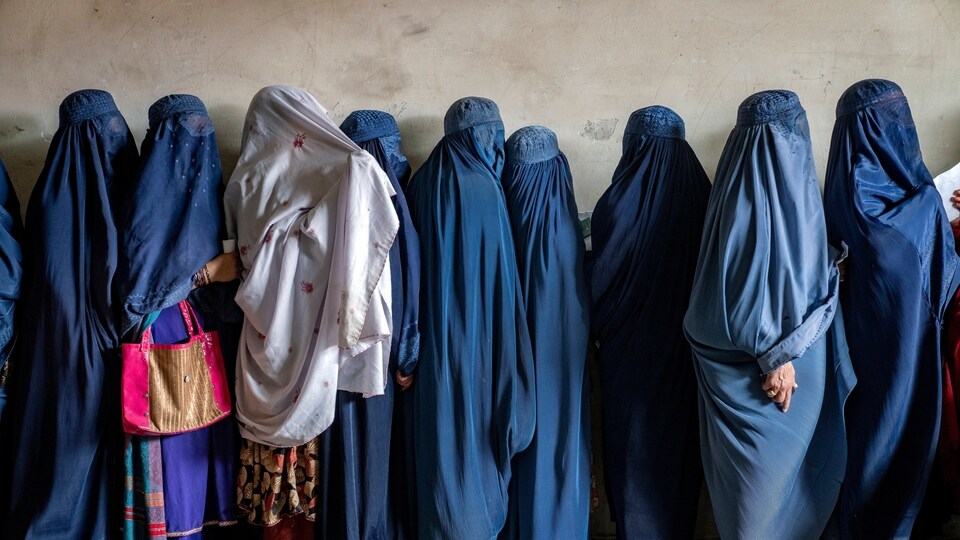
As Afghanistan enters the fifth year under Taliban rule, its women are caught in a worsening crisis, due to a geopolitical pincer closing in.
On one side, Pakistan is forcing over a million Afghans out of its borders. On the other, Iran is doing the same, with nearly half a million facing imminent expulsion. It is not difficult to imagine that forcing women back into the confines of their ‘homes’ would mark the death knell to their opportunities and fundamental rights, even as the vision of a modern and inclusive Afghanistan fades into seeming impossibility. This human rights issue draped in geopolitical attire deserves immediate attention from the global community. To this effect, we put forth a set of measures aimed at mitigating the severity of the unfolding situation, with India spearheading these efforts.
First, India should build upon a practical and culturally sensitive engagement with the Taliban. The message should be straightforward: real progress on women’s education will help open doors to recognition and partnership. It is crucial to recognise that Taliban is not a monolith: It enforces draconian rules at home even as some of its leaders quietly send their own daughters abroad for school. At a time when Taliban longs for legitimacy and foreign aid, an uncomfortable but necessary deliberation with its leaders is unavoidable. The conversation should centre on a bold but culturally grounded proposal: a nationwide network of all-women schools and universities built for and run by women. This isn’t a foreign idea. It's rooted in the region’s own traditions. India has experience with a number of all-women institutes which appeal to conservative families. Some of these institutes such as Lady Shri Ram College and Miranda House are nationally acclaimed. The establishment of such institutes constitutes a measured approach towards restoring women’s access to education and is likely to face less resistance from the Taliban leadership.
Further, New Delhi should employ its diplomatic heft to advocate for a pause in the deportations from Iran. A humanitarian appeal framed around regional stability, shared cultural ties, and practical support may find traction in Tehran, especially if it is linked with offers of assistance or collaboration. Forging stronger bilateral ties would be in the interest of Iran, given its own economic challenges and domestic unrest.
Finally, India must show leadership through action. While we acknowledge India’s limited consular presence in Pakistan, India can surely offer support to those facing expulsion from Iran. A targeted program of humanitarian visas and scholarships for the most vulnerable Afghan women would be a meaningful gesture. It would reflect India's values, while signalling to the region that India is committed to the cause of protecting women’s rights.
Political boundaries cannot be an excuse to ignore human rights anymore. Women’s education should not remain a peripheral concern. It is the foundation for peace, stability, and development. It is high time we wake up to the human face behind the unfolding geopolitical unrest.
This article is authored by Rajeev Parashar, research scholar (economics), Shiv Nadar Institution of Eminence, Delhi NCR and Parul Gupta, assistant professor (economics), Dhirubhai Ambani University, Gandhinagar, Gujarat.


