Nepal's Prime Minister (PM) Balendra Shah will embark on a three-day official visit to India from November 22. This will be Shah's first official bilateral foreign visit since becoming prime minister in March. This visit can be a moment for the reset in the India-Nepal bond.
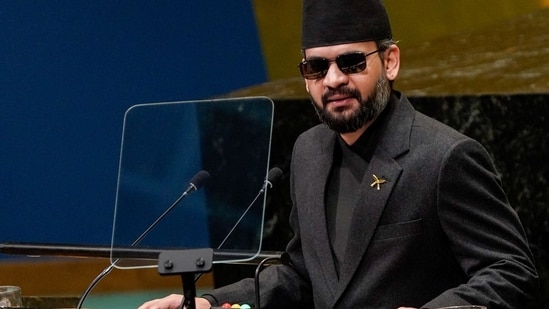
A leader who once kept New Delhi waiting has now made it his first port of call. Yet a genuine reset will take hold only if both governments judge the visit by what gets built and what gets settled.
Shah enjoys a freedom of manoeuvre his predecessors lacked. Having taken office after the Gen Z protests toppled KP Sharma Oli’s government last September, he owes little to the establishment parties whose leaders alternated between courting New Delhi and campaigning against it as the political season demanded. His opening posture was guarded, compounded by unease in New Delhi over his past display of a Greater Nepal map. Yet caution is a reasonable starting point for a smaller neighbour that has often felt taken for granted. Since then, Shah has accepted Narendra Modi’s invitation, and New Delhi dispatched foreign secretary Vikram Misri to Kathmandu to lay the groundwork. His instruction to cap his delegation at fewer than 15 people signals an intent to work rather than parade. New Delhi has compelling incentives of its own: It wants stability along a long, open border and a reliable partner in hydropower and energy trade, sectors where Indian-backed projects have repeatedly stalled. For now, both sides appear invested in making this work.
Geography leaves Nepal little choice. On August 26, floods ravaged the Rasuwa–Bhotekoshi corridor, the primary overland route to China, severing Nepal’s northern trade. India stepped in as a first responder, dispatching relief supplies and rescue teams, a gesture Shah was quick to acknowledge. Kathmandu has since turned to New Delhi with a request for roughly $2 billion in credit, grants, and reconstruction aid. Nepal should certainly continue building out its northern infrastructure, but a mountain range is not a trade policy. The vast majority of Nepal’s imports still flow through India.
{{/usCountry}}Geography leaves Nepal little choice. On August 26, floods ravaged the Rasuwa–Bhotekoshi corridor, the primary overland route to China, severing Nepal’s northern trade. India stepped in as a first responder, dispatching relief supplies and rescue teams, a gesture Shah was quick to acknowledge. Kathmandu has since turned to New Delhi with a request for roughly $2 billion in credit, grants, and reconstruction aid. Nepal should certainly continue building out its northern infrastructure, but a mountain range is not a trade policy. The vast majority of Nepal’s imports still flow through India.
{{/usCountry}}The agenda is concrete enough to be judged on delivery. The two PMs are expected to inaugurate a police academy in Panauti, an integrated check post at Bhairahawa, and a bridge over the Mahakali River. They are also slated to break ground on the Lower Arun hydropower project and a petroleum pipeline running from Siliguri to Charali in Jhapa, while a rail link between Ayodhya and Janakpur stands ready to begin service. None of this is glamorous. All of it is the real dividend of a working relationship.
Trade grievances are narrower, yet felt daily. Nepal’s trade deficit with India continues to widen, and domestic industrialists want Shah to press New Delhi to lift the anti-dumping duty imposed on Nepali jute products. Concessions on that front would offer Nepal’s private sector tangible proof of what a reset looks like in practice.
Sceptics will say Delhi and Kathmandu have done this before, and they are partly right. The two countries run several bilateral mechanisms. The hard part is turning what they agree into something built. The Pancheshwar project, conceived under the 1996 Mahakali Treaty, remains largely on paper. Officials say they have narrowed the cost split, with Nepal paying 25 to 30%. What remains is water-sharing, a decision for two leaders rather than two committees. The same standard applies to the harder questions. Nepali officials say the boundary disputes over Kalapani and Susta did not come up in Misri's meetings in Kathmandu. They should come up next week, if only to set a process and a timetable. Nepal has also asked since 2014 for more air-entry routes for its airports at Bhairahawa and Pokhara, a request on which Delhi, Nepali officials say, appears positive. If the Panauti academy opens while Pancheshwar remains on the shelf, New Delhi and Kathmandu will have staged a brisk three days of optics and little else. Both governments must now prove they will not keep their own promises waiting.
(The views expressed are personal)
This article is authored by Brabim Karki, columnist and author, Nepal.