
Imagine developing an infection and being prescribed an antibiotic. You take the medicine faithfully, expecting to recover within a few days. But the infection refuses to subside. Your condition worsens and you are admitted to a hospital. There, from the hospital, you contract another infection. Doctors prescribe more antibiotics to fight the infections, but nothing seems to work. The bacteria causing the illness, have evolved to survive the very drugs designed to kill them. It may sound like science fiction, but it is a growing reality across the world.
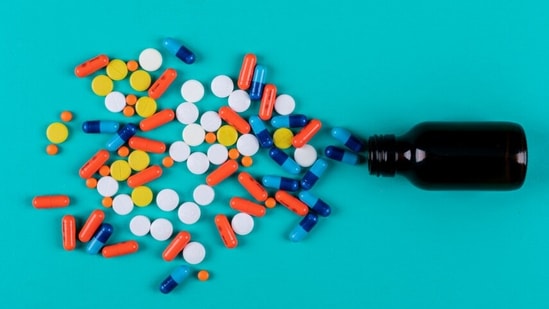
For decades, antibiotics and other antimicrobial medicines have been among humanity's greatest scientific achievements. They transformed once-fatal infections into treatable illnesses and saved countless human and animal lives. Today, however, these miracle drugs are steadily losing their effectiveness. Disease-causing microbes are evolving into drug-resistant superbugs capable of surviving treatments that once destroyed them with ease. This phenomenon, known as antimicrobial resistance (AMR), is now recognised as one of the most serious threats to global health.
Often described as the silent pandemic, AMR is advancing quietly but relentlessly. In 2021, drug-resistant bacterial infections were associated with more than 4.7 million deaths worldwide, including over 1.1 million deaths directly attributable to AMR. For India, one of the world's largest consumers of antibiotics, the implications are particularly concerning. In 2021, India recorded an estimated 267,000 deaths directly linked to antimicrobial resistance. About one in six laboratory-confirmed bacterial infections globally is now resistant to antibiotics. If decisive action is not taken, drug-resistant infections could claim about 40 million lives by 2050.
While discussions on AMR often focus on hospitals and human health, one of the most important battlegrounds lies beyond hospital walls, within our farms and animal husbandry systems. The global estimate of antibiotic consumption in farmed animals is as high as 1,06,000 tonnes annually and this could reach 1,43,000 tonnes by 2040 under a business-as-usual scenario. Some studies have estimated that 73% of all antimicrobials sold globally are used in farm animals and birds. Such huge and often unnecessary antibiotic usage exposes large populations of microbes to antibiotics, creating opportunity for microbes to adapt and develop resistance. Through mechanisms such as horizontal gene transfer, knowledge of how to become resistant is shared amongst microbes and over time, resistant organisms move between animals, humans, food systems and the environment. AMR is, therefore, fundamentally a One Health challenge, connecting the health of people, animals and ecosystems.
{{/usCountry}}While discussions on AMR often focus on hospitals and human health, one of the most important battlegrounds lies beyond hospital walls, within our farms and animal husbandry systems. The global estimate of antibiotic consumption in farmed animals is as high as 1,06,000 tonnes annually and this could reach 1,43,000 tonnes by 2040 under a business-as-usual scenario. Some studies have estimated that 73% of all antimicrobials sold globally are used in farm animals and birds. Such huge and often unnecessary antibiotic usage exposes large populations of microbes to antibiotics, creating opportunity for microbes to adapt and develop resistance. Through mechanisms such as horizontal gene transfer, knowledge of how to become resistant is shared amongst microbes and over time, resistant organisms move between animals, humans, food systems and the environment. AMR is, therefore, fundamentally a One Health challenge, connecting the health of people, animals and ecosystems.
{{/usCountry}}Yet, within this challenge lies a powerful and often overlooked solution: Animal welfare. The fight against antimicrobial resistance will not be won by newer drugs alone. It will be won by reducing unnecessary antibiotic consumption and preventing disease before it begins. And that prevention starts with animal welfare.
This welfare-centric approach is especially relevant for India, which possesses one of the largest livestock populations in the world, accounting for nearly 20% of the global total. India is also among the world's largest consumers of antimicrobials for farm animals, because antibiotics are frequently used as a substitute for good animal management and welfare.
Particularly concerning has been the widespread use of critically important last-resort antibiotics in farm animals. Colistin, one of the few remaining treatment options for severe multidrug-resistant TB infections in humans, was once commonly used in poultry farming for disease prevention. Such misuse has fuelled the emergence of mobile resistance genes, allowing colistin resistance to spread across animals, humans and the environment. It is a stark reminder that poor husbandry and overreliance on antibiotics at the cost of animal welfare can create risks far beyond the farm gate.
Animals raised in overcrowded, stressful, unhygienic, or nutritionally inadequate conditions are more susceptible to disease. Higher disease burden leads to more antibiotic use, and more antibiotics can fuel the emergence of antimicrobial resistance. Conversely, animals kept in good management systems where they are maintained in a state of higher welfare with proper nutrition, clean water, adequate housing, ventilation, clean environment, preventive veterinary care and humane handling are healthier and more resilient. Healthy animals require fewer medicines and hence there is less opportunity for resistant microbes to emerge and spread.
We already have compelling global examples demonstrating the power of animal welfare in the fight against AMR. Denmark's pig farming sector dramatically reduced unnecessary antimicrobial use through investments in better housing and improved welfare standards. Similarly, the Netherlands transformed its poultry husbandry through a combination of strict antibiotic stewardship, mandatory monitoring of antimicrobial use, vaccination programmes and welfare-focused housing systems. These interventions reduced disease incidence, lowered the need for prophylactic antibiotic treatments and maintained the animals and birds in good health, offering a sustainable pathway to tackling the threat of AMR.
Thus, every case of diarrhoea prevented through better hygiene, every case of mastitis avoided through improved management, every outbreak controlled through vaccination and every infection prevented through better animal welfare practices translates into fewer antibiotics being administered. Each avoided antibiotic course represents one less opportunity for resistant microbes to evolve and spread.
In essence, good animal welfare is part of good management practices and leads to good antimicrobial stewardship.
This preventive and welfare-centric approach is increasingly promoted by the World Organisation for Animal Health (WOAH) and the United Nations Food and Agriculture Organization (FAO) as a key strategy for combating AMR. Improving animal welfare has the potential to deliver substantial benefits for animal health, public health, and antimicrobial stewardship.
Recognising this critical link, India's National Action Plan on AMR advocates a One Health approach to combat antimicrobial resistance. Furthering this vision, Humane World for Animals India is implementing a programme across five states that integrates animal welfare with antimicrobial stewardship through capacity building of veterinary care ecosystem. Such initiatives reflect a growing recognition that animal welfare is not only an ethical obligation, but also a pathway to healthier animals, healthier people and a more resilient future.
Every infection prevented is an antibiotic spared for more important use and an opportunity denied to antimicrobial resistance. If we want antibiotics to continue saving lives tomorrow, we must act on all fronts today. Animal welfare is a crucial part of that effort, as healthier and happier animals may well be humanity's strongest allies in securing a future where antibiotics work when it is truly needed.
(The views expressed are personal)
This article is authored by Dr Sonu Mahesh, programme director, Animal Health and Rural Livelihood Programme, Humane World for Animals India.