
 E-Paper



Flamingos are still being sighted at Rajasthan’s Sambhar Lake, signaling developing habitat suitable for their nesting
Flamingos at Rajasthan’s Sambhar Lake, turning it pink months after winter. Experts link it to better habitat with enough water, food, and shifting climate cues

 Prefer HTon Google


It’s June, but Sambhar Lake in Rajasthan is still alive with pink. Flamingos, which usually begin arriving around November, have touched down months after their arrival in schedule — painting the shallow salt flats in sweeping, graceful waves of pink and white.
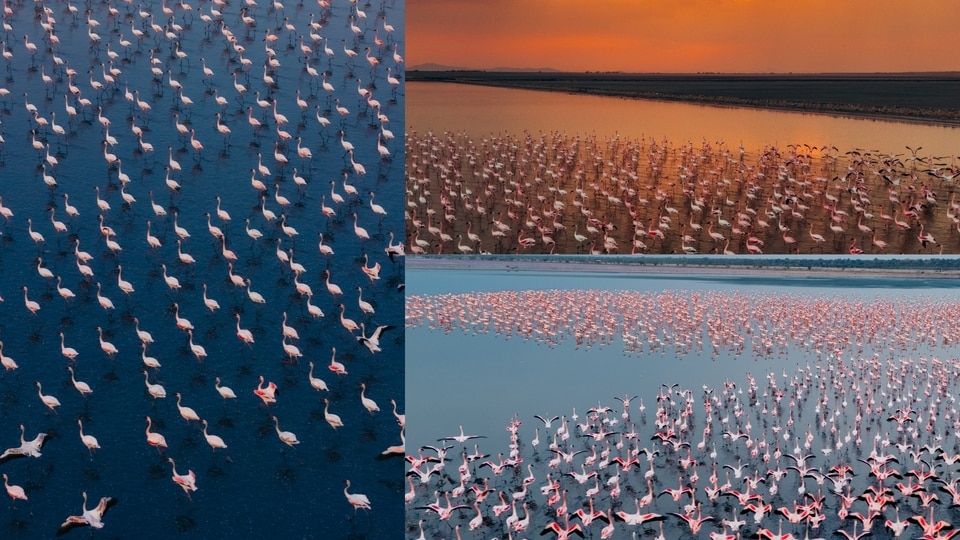
This delayed departure has surprised many. Experts say flamingos typically migrate to Sambhar during winter, drawn by shrinking water levels that make feeding on brine shrimp and algae easier and they start to depart by March. But this year, favorable conditions — including unseasonal showers and abundant food — may have signaled the birds to stay.
According to the The census, conducted in January 2025, documented over 104,000 migratory birds, including a large number of Lesser and Greater Flamingos, a substantial rise from the previous year's count of 7,147 birds. Experts attribute this increase to favorable environmental conditions like good rainfall and water availability.. Bird watchers and locals are still spotting the flocks in motion, some at sunrise, casting reflections over the silvery lakebed.
Yogesh Sevkani(firangi_photowala) a photographer behind these viral photographs who hail from Jaipur, Rajasthan says, “Flamingos starts coming late October in lacs, they stay till march most of them leave, but some stay and lay their eggs here.”
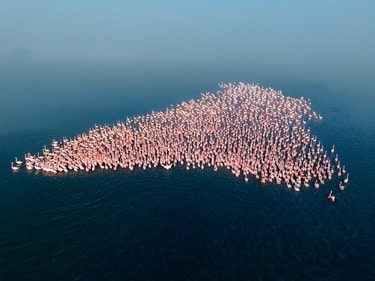
The spectacle isn't just beautiful — it's important. Sambhar is one of the most critical wintering grounds along the Central Asian Flyway, a major migratory route. While flamingos steal the show, India welcomes over 250 species of migratory birds each year. From bar-headed geese at Chilika Lake to cranes in Khichan and pintails at Bharatpur, the subcontinent becomes a vast, seasonal sanctuary.


