E-Paper



Adanis make first filing in US SEC fraud case
The SEC filed civil charges against the Adanis in November 2024, alleging they engaged in securities fraud related to a $750 million bond offering that raised more than $175 million from US investors

 Prefer HTon Google


Fourteen months after US securities regulators filed fraud charges against billionaire Gautam Adani and his nephew Sagar Adani, lawyers representing the Indian executives made their first filing in court this week, signalling willingness to negotiate on accepting the summons after India’s government twice refused to deliver them.
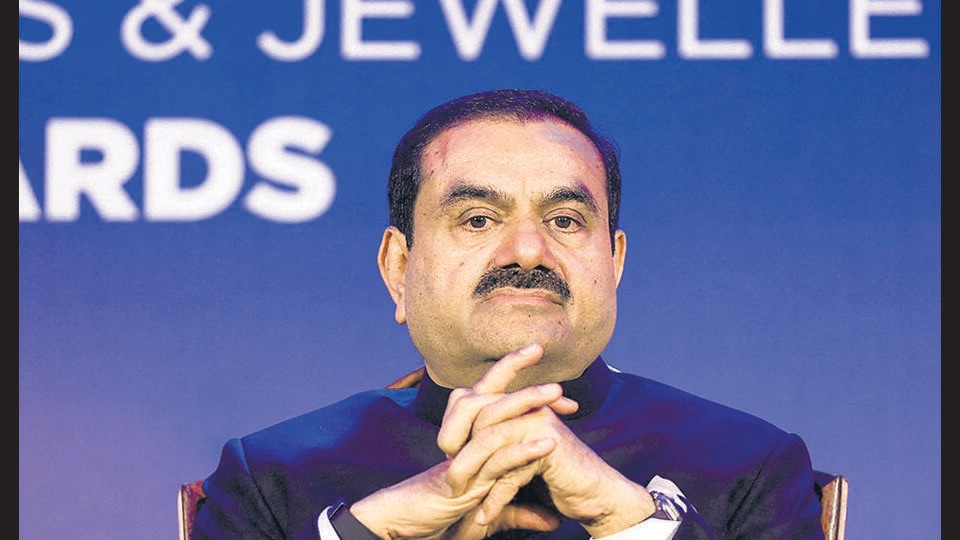
In a January 23 letter to a New York federal judge, Sullivan & Cromwell LLP, writing on behalf of the Adanis, said they are discussing an agreement with the US Securities and Exchange Commission (SEC) to resolve how the summons will be served, requesting the court defer ruling while the parties hold talks. The letter did not specify the terms being discussed.
The development came two days after the SEC asked the court to bypass the Indian government entirely and authorise serving the summons through email and the Adanis’ American lawyers — a request prompted by the ministry of law and justice refusing on two separate occasions to deliver the legal documents under an international treaty.
The ministry first cited missing signature and seal requirements in May, then in December invoked an SEC internal rule to say the summons “does not cover in the above said categories”, according to court documents. The SEC has characterised both objections as baseless and called India’s position an improper challenge to the regulator’s authority.
Officials at the law ministry in New Delhi did not respond to requests for comment.
“We decline comment beyond our public filings on the matter,” an SEC spokesperson said.
When reached by HT on Saturday, Adanis’ law firm Sullivan and Cromwell did not offer comments and asked to be reached on Monday.
On Friday, after information about SEC’s motion emerged, Adani Group shares plummeted between 3.4% and 14.54%.
The SEC filed civil charges against the Adanis on November 20, 2024, alleging they engaged in securities fraud related to a $750 million bond offering that raised more than $175 million from US investors. The Adani Group has called the allegations “baseless.”
The SEC submitted a formal request to serve the summons through the Hague Convention — the convention governing service of legal documents — on February 17, sending the request to the law ministry, the country’s designated authority for such matters.
On May 1, the ministry declined to serve the documents, stating they lacked an ink signature on the SEC’s cover letter and an official seal on the standard Hague Convention forms, according to the SEC’s court filing.
The SEC responded, stating in its filing that “the Hague Convention requires neither a cover letter (signed or otherwise) nor a seal on the Model Form,” and resubmitted its request on May 27. The agency noted that it “regularly sends such requests to other countries’ central authorities without seals... and these requests are regularly executed without objection.”
However, on December 14, the SEC received letters from the ministry offering a different objection. In letters dated November 2025 for both Gautam Adani and Sagar Adani, the ministry cited Rule 5(b) of the SEC’s internal procedures.
“The documents have been checked and in view of the Rule 5(b) of the Securities and Exchange Commission (SEC)’s Informal and Other Procedures... it is found that the above mentioned summon does not cover in the above said categories,” the ministry wrote. “Therefore, the same is return herewith.”
The letters were signed by Krishna Mohan Arya, deputy legal adviser, and Niranjan Prasad, section officer (judicial) in the ministry’s department of legal affairs, according to documents seen by HT.
In its memorandum to US district judge Nicholas G Garaufis, the SEC rejected the ministry’s reasoning. “This objection has no basis in the Convention, which governs service procedures, not the SEC’s underlying authority to bring enforcement actions,” the agency stated.
Concluding that no alternative means exist under Indian law, the SEC stated: “Given the Ministry’s position... the SEC does not expect service to be completed through the Hague Convention.”
“Nations who signed The Hague Convention have a duty to forward legal process received from another signatory nation. Here, since that appears not to have worked, SEC has a right to ask the Federal Judge for alternative means of service, which can include: an email, a WhatsApp text message, and include even service on the target lawyers. The law does not permit a defendant to evade legal process,” said Ravi Batra, an attorney who practises in the state of New York.
“Every defendant’s lawyer’s job #1 is to help their client legally avoid harm as much as possible. I’d expect that the discussions would be to resolve all issues favorably, perhaps, even at a civil level with a fine imposed by SEC,” Batra added.