
Issues concerning cyber security and data protection must be addressed to gain confidence of the excluded section in use of technology, which is necessary for promoting financial inclusion, Reserve Bank Governor Shaktikanta Das said on Wednesday.
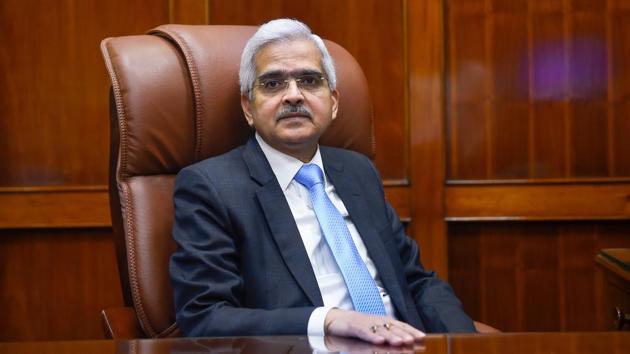
“Technology, though being a great enabler, can also lead to exclusion of certain segments of society,” Das said in his keynote address at a webinar on ‘Investing in Investor Education in India: Priorities for Action’, organised by the NCAER.
The RBI Governor added that it was imperative to build trust in formal financial services among the hitherto excluded population.
“Adequate safeguards need to be reinforced to address issues of cyber security, data confidentiality, mis-selling, customer protection and grievance redress through appropriate financial education and awareness. These cast great responsibility on financial education providers,” he emphasised.
Financial inclusion in the country, he said, is poised to grow exponentially with digital savvy millennials joining the workforce, social media blurring the urban-rural divide and technology shaping the policy interventions.
For harnessing the near universal reach of bank accounts across the length and breadth of the country, there needs to be greater focus on penetration of sustainable credit, investment, insurance and pension products by addressing demand side constraints with enhanced customer protection, Das said. T
{{/usCountry}}For harnessing the near universal reach of bank accounts across the length and breadth of the country, there needs to be greater focus on penetration of sustainable credit, investment, insurance and pension products by addressing demand side constraints with enhanced customer protection, Das said. T
{{/usCountry}}he interventions in financial education would have to be customised in local language and local settings keeping the different target audience in mind, he pointed out.
The scaling up of Centre for Financial Literacy (CFL) projects across the country at the block level would be the cornerstone of community-led participatory approaches in the journey towards greater financial literacy, he added. The Governor also stressed that in a large country like India with an aspiring population, financial education cannot remain just the responsibility of financial sector regulators.
This aspect has been highlighted in the National Strategy for Financial Education (NSFE 2020-2025) document which recommends a multi-stakeholder led approach to achieve financial wellbeing of all.
“Going forward, increasingly, educational institutions, industry bodies and other stakeholders like think tanks, research institutions should come forward to shoulder the responsibility of increasing financial literacy through appropriate awareness campaigns,” Das said.
Financial inclusion initiatives in India started in the aftermath of first All India Rural Credit Survey in 1954 with promotion of cooperatives.
This was followed later by expansion of branch network after nationalisation of major private sector banks, launch of Lead Bank Scheme, promotion of Self Help Groups (SHGs), Joint Liability Groups (JLGs), implementation of Banking Correspondents (BC) model, expansion of banking outlets, creation of payments banks and small finance banks, among others.
The largest impact in recent years came from the opening of Jan Dhan accounts and implementation of the Pradhan Mantri MUDRA Yojana (PMMY).
The launch of the Pradhan Mantri Jan Dhan Yojana (PMJDY) in 2014 has resulted in almost every household having access to formal banking services along with a platform for availing low value credit, insurance and pension schemes, the governor said.
“This has been ably supported by initiatives to ensure last-mile delivery of banking services through innovative banking channels like the BC model.
Thanks to technology, there has been massive improvement in deepening of digital financial services,” he said. The Jan Dhan, Aadhaar and Mobile (JAM) ecosystem has made a significant difference in the universe of financial inclusion, Das added.
NCAER’s Investor Education and Protection Fund (IEPF) Chair K P Krishnan said with the RBI Governor’s address setting the context, the next in NCAER’s series with financial regulators will delve deeper into investor education and protection issues in the securities market, and subsequently with other sectoral regulators in the following weeks.
Speaking at the event, NCAER Director General Shekhar Shah said the pandemic has driven digitalisation in a few months that would have otherwise required years.
“We need to capitalise on this transformation to now build smarter and more effective investor education and protection platforms so that an ever-growing part of our population is financially savvy,” he said.
NCAER said it was the inaugural event for a five-part virtual workshop series with financial regulators on investor education and protection.
ABOUT THE AUTHOR
Follow the latest breaking news, major developments and agenda-setting stories from India and around the world with the newsdesk at Hindustan Times. Operating round the clock, the desk brings together experienced editors, reporters and correspondents to deliver fast, accurate and contextual reporting across subjects that influence public policy, governance, business, society and international affairs. The HT News Desk covers politics, elections, government policies, the economy, business and markets, science and technology, the environment, law and order, infrastructure, education, climate issues and geopolitics, while closely tracking developments across states, institutions and global capitals. The team also leads coverage of major breaking news events, policy announcements, court proceedings, natural disasters, public emergencies and significant international developments. Reports published by the newsdesk are based on information gathered from reporters on the ground, official statements, government agencies, court records, regulatory filings, recognised institutions and other authoritative sources. Stories undergo editorial scrutiny and verification processes to ensure accuracy, fairness and relevance, and are updated as events evolve and additional information becomes available. Whether covering a key political decision in New Delhi, an economic policy shift affecting millions, a landmark court ruling or a major global event, the HT News Desk aims to provide readers with reliable, fact-based journalism that delivers not only the latest developments but also the context and analysis needed to understand their wider implications.