Lashkar-e-Tayyiba and Jaish-e-Mohammed, the terrorist groups that have been mostly active in Jammu and Kashmir for years, are rapidly mobilising operatives to radicalise, train and fight in Afghanistan on directions of Rawalpindi GHQ over the last few months, people familiar with the development told Hindustan Times on Thursday
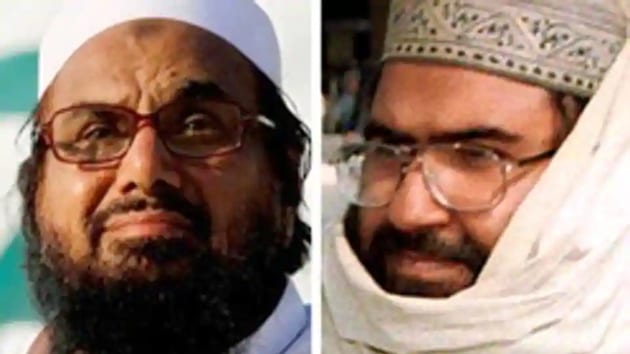
The two terror groups are estimated to have 1,000 terror operatives in the war-torn country, most of them inducted after the February pact between the Taliban and the United States. And counting.
In the last few months alone, about 200 Lashkar operatives had infiltrated into Afghanistan’s Kunar province from Bajaur Agency in Pakistan. In the last week of May, another group of 30 Lashkar-e-Tayyiba terrorists led by an ex-ISI officer Bilal aka Zarqawi slipped into Kunar’s Dangam district.
A fortnight earlier, 45 Jaish operatives shepherded by Taliban commander Mullah Nek Mohammad Rabhar had entered Nangarhar’s Sherzad province through Kurram Agency in Pakistan.
Counter-terror officials in Delhi and Kabul said the focus on Afghanistan by these two terrorist groups underlines how their deployments and actions mirror the priorities of Pakistan’s ISI.
For now, the ISI’s emphasis appears to be to prepare the ground to continue terror activities in case the Taliban-US peace process leads to a political settlement, one official said. From Kashmir to Afghanistan, the Pakistan state has used terror groups as its strategic arm to achieve outcomes its diplomacy can’t. This is another example, an official said.
But the deployment in Afghanistan is also designed to serve as the new terror factory that can dish out terrorists for any cause that serves Pakistan interest.
Bilal aka Zarqawi, the ex-ISI official who led the team of 30 LeT terrorists that entered Afghanistan was earlier incharge of a major terror training centre in Pakistan-occupied Kashmir capital Muzaffarabad.
One of the early attacks this year in which Lashkar operatives are believed to have played a role is the massacre at Guru Har Rai Gurdwara in Kabul’s old city that left over 25, most of them worshippers at the shrine, dead. The attack had been linked to a centre being run jointly by the Islamic State Khorasan Province (ISKP) and the Taliban’s sword arm Haqqani Network.
{{/usCountry}}One of the early attacks this year in which Lashkar operatives are believed to have played a role is the massacre at Guru Har Rai Gurdwara in Kabul’s old city that left over 25, most of them worshippers at the shrine, dead. The attack had been linked to a centre being run jointly by the Islamic State Khorasan Province (ISKP) and the Taliban’s sword arm Haqqani Network.
{{/usCountry}}Fresh information emerging from Afghanistan indicates that Maulvi Samiullah, a Pakistani national who is incharge of the newly formed Lashkar group in Afghanistan, was also involved.
Counter-terror officials said they had come across evidence to indicate that Lashkar operatives were, on occasions, also carrying out their missions in Afghanistan under the aegis of the cover of Jamat al-Dawa and Jaish-e-Salafi.
The effort to map the presence and activities of the two terrorist groups in Afghanistan is still work in progress, one of them said. “But we have been able to identify some of those playing key roles,” he added.