E-Paper



Ahead of EAM’s visit, China says Tibet-related issues ‘thorn’ in bilateral ties
Jaishankar will be visiting China this week, first trip since bilateral ties hit 60-year low amid military standoff in Ladakh sector of LAC

 Prefer HTon Google


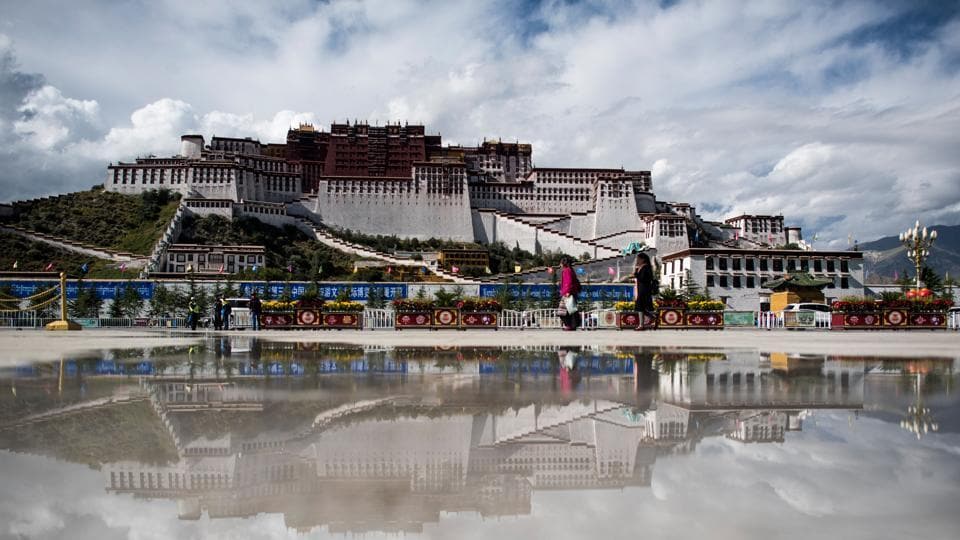
Ahead of external affairs minister S Jaishankar’s first visit to China since the deadly border clashes in 2020, Beijing on Sunday said that Tibet-related issues such as the reincarnation of the Dalai Lama are a “thorn” in bilateral relations that have become a “burden” for New Delhi.
Jaishankar is set to visit China this week for the first time since bilateral ties plummeted to their lowest point in six decades because of the military standoff in Ladakh sector of the Line of Actual Control (LAC). The two sides are currently engaged in the delicate task of normalising their relations after agreeing in October last year to end the face-off in Ladakh.
China reacted angrily after the Dalai Lama announced ahead of his 90th birthday on July 9 that only a trust set up by him can recognise his reincarnation. The Dalai Lama’s remarks were endorsed by Union minister Kiran Rijiju, who was one of two ministers who attended the spiritual leader’s birthday celebration in Dharamshala. Beijing said that the next Dalai Lama would have to be approved by the Chinese government.
On Sunday, Chinese embassy spokesperson Yu Jing said on social media that members of the strategic and academic communities, including former officials, had made “improper remarks” regarding the reincarnation of the Dalai Lama. Such professionals, she said, should be “fully cognisant of the sensitivity of issues related to Xizang”, using the name by which China refers to Tibet.
The succession of the Dalai Lama is “inherently an internal affair of China, brooking no interference of any external forces,” Yu said.
“In reality, Xizang-related issue is a thorn in China-India relations and has become a burden for India. Playing the’Xizang card’ will definitely end up shooting oneself in the foot,” she said.
Also Read: Jaishankar to visit China for SCO meeting, his first after standoff in 2020
Earlier, Chinese ambassador Xu Feihong too had weighed in on the Dalai Lama’s reincarnation, saying on social media that the Chinese government regulates religious affairs that involve national interests. He also accused the Dalai Lama of engaging in “anti-China separatist activities”. Xu said: “Chinese government opposes any attempts by overseas organisations or individuals to interfere in or dictate the reincarnation process.”
Xu added, “No interference by any external forces will be allowed.”
Also Read: India-China relations at 75: An uncertain thaw
The Dalai Lama has lived in exile in India since he fled Tibet amid a Chinese military crackdown in 1959. Following China’s strong reaction to the Dalai Lama’s recent remarks, the external affairs ministry said on July 4 that the government does not take any position or speak on matters related to beliefs and practices of faith and religion.
Jaishankar is expected to meet his Chinese counterpart Wang Yi during his visit to China on July 14 and 15 to attend a meeting of foreign ministers of the Shanghai Cooperation Organisation (SCO). The two foreign ministers are expected to take forward discussions to normalise bilateral relations and address the long-standing border dispute between India and China.