Artificial intelligence will make applying for a visa faster and smoother, but for now, it will not be the one deciding whether you get permission to travel, VFS Global founder Zubin Karkaria said at the 24th Hindustan Times Leadership Summit.
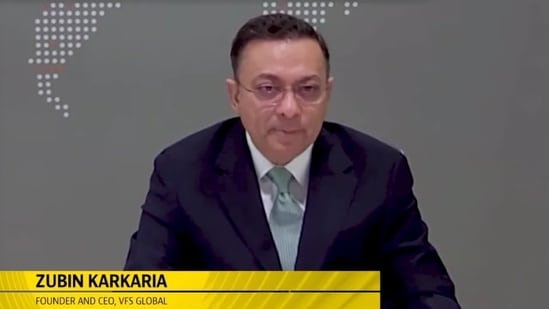
“It will make things frictionless. But it would not make decisions, especially for a person who’s entering a country,” said Karkaria, whose company processes visa applications for 71 governments. “It won’t take the place of a visa officer.”
Asked if AI could ever replace the human element in immigration, Karkaria did not rule it out. It would come down to legislation, he said. “In future, what will be the legislation of different countries allowing? Currently, the legislation of countries don’t allow an AI tool to take decisions.”
Deep Dive
Can AI decide whether a visa applicant is approved or rejected?
Could AI replace human visa officers in the future?
How is technology making visa applications easier?
Until that changes, he said, AI’s role stays limited: “AI again will play a role to make things easier, but it will not be the decision maker for a person to get a visa or not to get a visa.”
Borders are a sovereign matter, he added, and for governments “security is paramount”. Even as processes become frictionless, “there will always be a security parameter built in”.
{{/usCountry}}Borders are a sovereign matter, he added, and for governments “security is paramount”. Even as processes become frictionless, “there will always be a security parameter built in”.
{{/usCountry}}Karkaria pointed to how much the process has already eased. Two decades ago, Indians outside Delhi, Kolkata, Chennai and Mumbai often took an overnight train and queued from the night before to apply on a first-come, first-served basis. India now has more than 23 application locations and doorstep visa services.
The UK process shows where things are going, he said. A decade ago, applicants submitted documents and passports, gave fingerprints and then waited for a visa sticker. Now, for many, it is largely a fingerprint appointment.
Technology is also being used to keep out bots that grab appointment slots. Using firewalls and facial recognition to ensure the person booking is the actual applicant, VFS says it has cut such traffic by almost 50%. Its systems get about 200 million hits a month.
The takeaway for travellers: expect faster checks and fewer trips to a visa centre, but for now, the yes or no will still come from a person.